[MOVIE]
Edition History
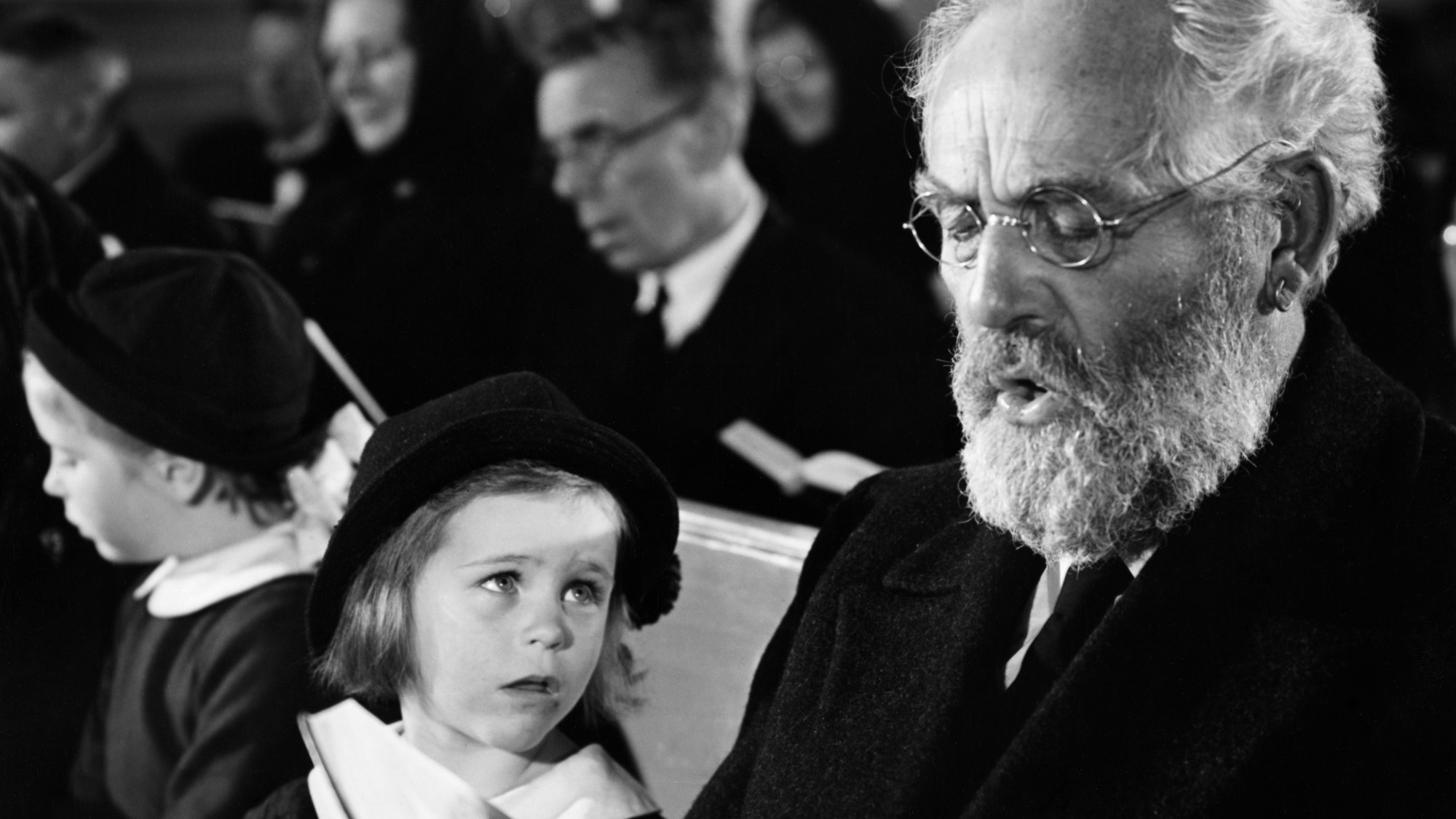
Victor Sjöström had just been appointed creative supervisor of production at studio Svensk Filmindustri in 1943, when he was approached by actor-writer Rune Lindström, who wanted to make an adaptation of Ordet, a play by Danish priest and author Kaj Munk, who was also a member of the Danish resistance, fighting against the Nazi occupation during the war. Gustaf Molander hadn’t read the play, neither had he seen it on stage, but he did listen to a radio adaptation in January 1943, and was delighted when Sjöström assigned him with the project.
Ordet has been unjustly neglected over the years, mainly because of Carl Th. Dreyer’s adaptation of the same play 12 years later. Molander’s film may lack the austerity of Dreyer’s version, but the drama of faith, non-belief and miracle has a tense, dramatic atmosphere and the visual imagery at times evokes that of silent cinema. Sjöström is magnificent in the role of the ageing patriarch, clenching his fists to the sky in the manner of his character in Terje Vigen. In Molander’s version of Ordet, the action is set on the west coast of Sweden, traditionally a stronghold for Schartauanism, a very severe form of Lutheranism. The setting indeed seems to be an isolated outpost of the world, a kind of finis terrae, and not only because the characters, as in Epstein’s film, are seen gathering kelp on the beach.
Two of Swedish cinema’s finest actresses, Gunn Wållgren and Inga Landgré, whose screen careers lasted until the mid-1980s and 2010s respectively, made their first major roles under Molander’s direction in Ordet. Kaj Munk never got to see the film; he was killed by the orders of Gestapo just ten days after the film’s release.
Jon Wengström

courtesy of SF Studios.
Ordet has been unjustly neglected over the years, mainly because of Carl Th. Dreyer’s adaptation of the same play twelve years later. Molander’s film may lack the austerity of Dreyer’s version, but it has a tense, dramatic atmosphere and the visual imagery at times evokes that of silent cinema. Victor Sjöström is magnificent as the ageing patriarch, clenching his fists to God in the manner of Terje Vigen. In Molander’s version of Ordet the action is set on the West coast of Sweden, traditionally a strong-hold for schartauanism, a very grim form of lutheranism. Shooting took place at the studio in Råsunda and on location in the south-west of Sweden between August and October 1943, and the film was released at Christmas 1943. The war tragically cast its shadow over the film as Munk, a priest involved in the Danish resistance, was killed by orders from the Gestapo in January 1944, just ten days after the film’s release.
Jon Wengström – Svenska Filminstitutet

Print made in the 70’s from an original negative picture and soundtrack. Head titles inserted in 2005 from a track interpositive