[MOVIE]
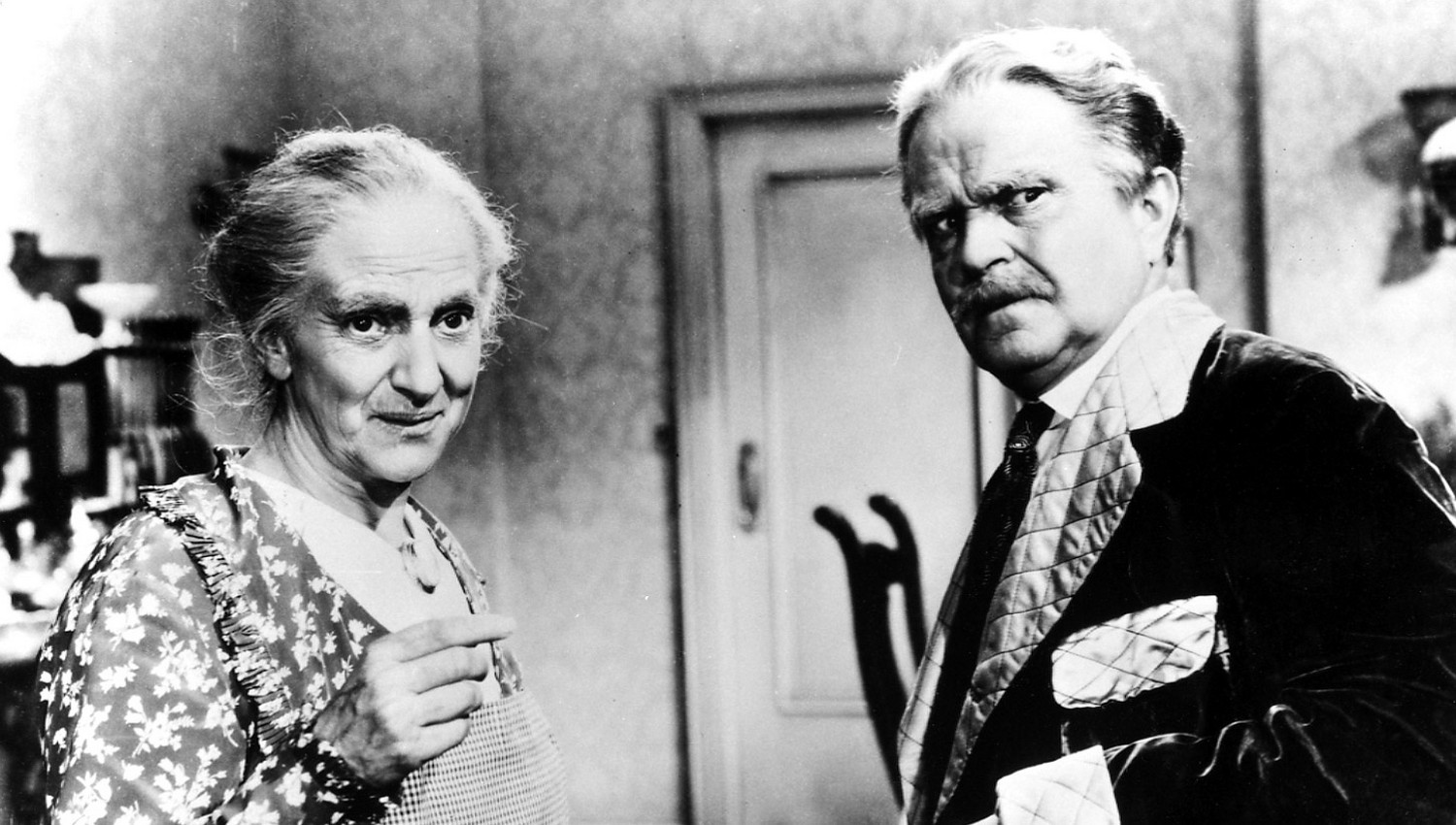
T. alt.: The Years Are So Long; T. it.: Cupo tramonto; Sog.: Dal romanzo The Years Are So Long di Josephine Lawrence; Scen.: Vina Delmar; F.: William C. Mellor; Mo.: LeRoy Stone; Scgf.: Hans Drier, Bernard Herzbrun, A.E. Freudman; Mu.: George Antheil, Victor Young, Boris Morros; Su.: Don Johnson, Walter Oberst; Int.: Victor Moore (Barkley Cooper), Beulah Bondi (Lucy Cooper), Thomas Mitchell (George Cooper), Maurice Moscovitch (Max Rubens); Prod.: Adolph Zukor, Leo McCarey per Paramount Pictures; Pri. pro.: 9 maggio 1937 35mm. D.: 91’. Bn.
Edition History
Accepting his Oscar for directing The Awful Truth, McCarey famously told the members of the Academy, “Thanks, but you gave it to me for the wrong picture”. McCarey was, of course,referring to his other film of 1937, Make Way for Tomorrow, a film that had failed so resoundingly at the box office that Paramount declined to renew his contract. If, today, the film is acknowledged as one of McCarey’s greatest achievements, one is still hard pressed to choose between it and The Awful Truth – here are two equally profound, equally personal and equally revolutionary films on the same subject (the sanctity of marriage, considered in the full religious sense of the term), shot with the same deep sense of improvisatory freedom, yet situated on entirely different emotional levels.
Where The Awful Truth explodes with the joy of love tested and proved triumphant, Make Wayfor Tomorrow is, in the words of Jacques Lourcelles, “the masterpiece of the cinema of cruelty, surpassing, in the almost unbearable intensity of its closing sequences, the best work of the greatest specialists of the genre (including, for example, Buñuel)”. The story of an elderly couple, played by Victor Moore and Beulah Bondi, whose lifetime of sacrifice for their children (and each other) results in their final, brutal separation, the film imagines the utter, systematic failure of the network of relationships that binds together McCarey’s universe – a network that begins with the romantic couple, extends through family, friends and community, pointing upward to the glory of democratic government, and finally to the splendor of a benevolent, if frustratingly distant, God above all. With Make Way for Tomorrow, McCarey dares to ask himself the question that every great artist must confront: what if his most deeply held beliefs are wrong? For McCarey, the most supremely social of filmmakers, here is the most awful truth: the knowledge that man is born alone, and that alone he will die.
Dave Kehr

Make Way for Tomorrow is almost the same exact story as Yasujiro Ozu’s Tokyo Monogatari: a story about feeling like a stranger with one’s own children, old age and the possibility of death. It was John Ford’s favorite film, and it was also McCarey’s favorite personal work – which is not saying little, considering that during that same decade he directed Duck Soup, The Awful Truth and Love Affair. An old couple is forced to separate. They are nothing more than an embarrassment to their children, even if they are not aware of it, or at least they do not want to admit it: they behave with humility and graciousness. Performing polite gestures and cold reasoning are basic elements of everyday life, and probably no one has studied them like Leo McCarey. A rather courageous move is the way he lets the old couple’s not very diplomatic behavior become offensive. They become annoying and irritating to the point of being cruel and vulgar. The few gags accentuate the social drama of the generational gap: what is it like being old and intimidated in a society of superficial efficacy and simulated haste? Time is like a protagonist in this drama. At first it takes the form of boredom: the old couple no longer checks the time, silence, non-events – and their life looks this way from the point of view of the neurotic middle age. Then time becomes denser in the last half-hour. The old couple has just five hours to see each other and say goodbye to their children. The story ends on a station platform. The husband is on the train, and the wife stays behind in the station. They both know that this is their last goodbye and the final scene of their life together. The departure is like a small death. Words are not needed, but he says that every moment was like a party, the simplest expression of the meaning of love to be found in film. The final scene is a wonderful example of what Jean Renoir meant when he said “Leo McCarey understood human beings – perhaps better than anyone else in Hollywood”.
Peter von Bagh