[MOVIE]
T. int.: Lemonade Joe, or the Horse Opera. Sog.: dai racconti e dalla pièce omonimi di Jiří Brdečka. Scen.: Jiří Brdečka, Oldřich Lipský. F.: Vladimír Novotný. M.: Miroslav Hájek. Scgf.: Karel Škvor. Mus.: Jan Rychlík, Vlastimil Hála. Int.: Karel Fiala (Limonádový Joe), Rudolf Deyl (Doug Badman), Miloš Kopecký (Hogofogo), Květa Fialová (Tornado Lou), Olga Schoberová (Winnifred Goodman), Bohuš Záhorský (Ezra Goodman), Josef Hlinomaz (Gunslinger Grimpo), Karel Effa (Pancho Kid). Prod.: Bratri v Triku, Kratky Film Praha, Barrandov Studios. DCP. D.: 100’. Col.
Edition History
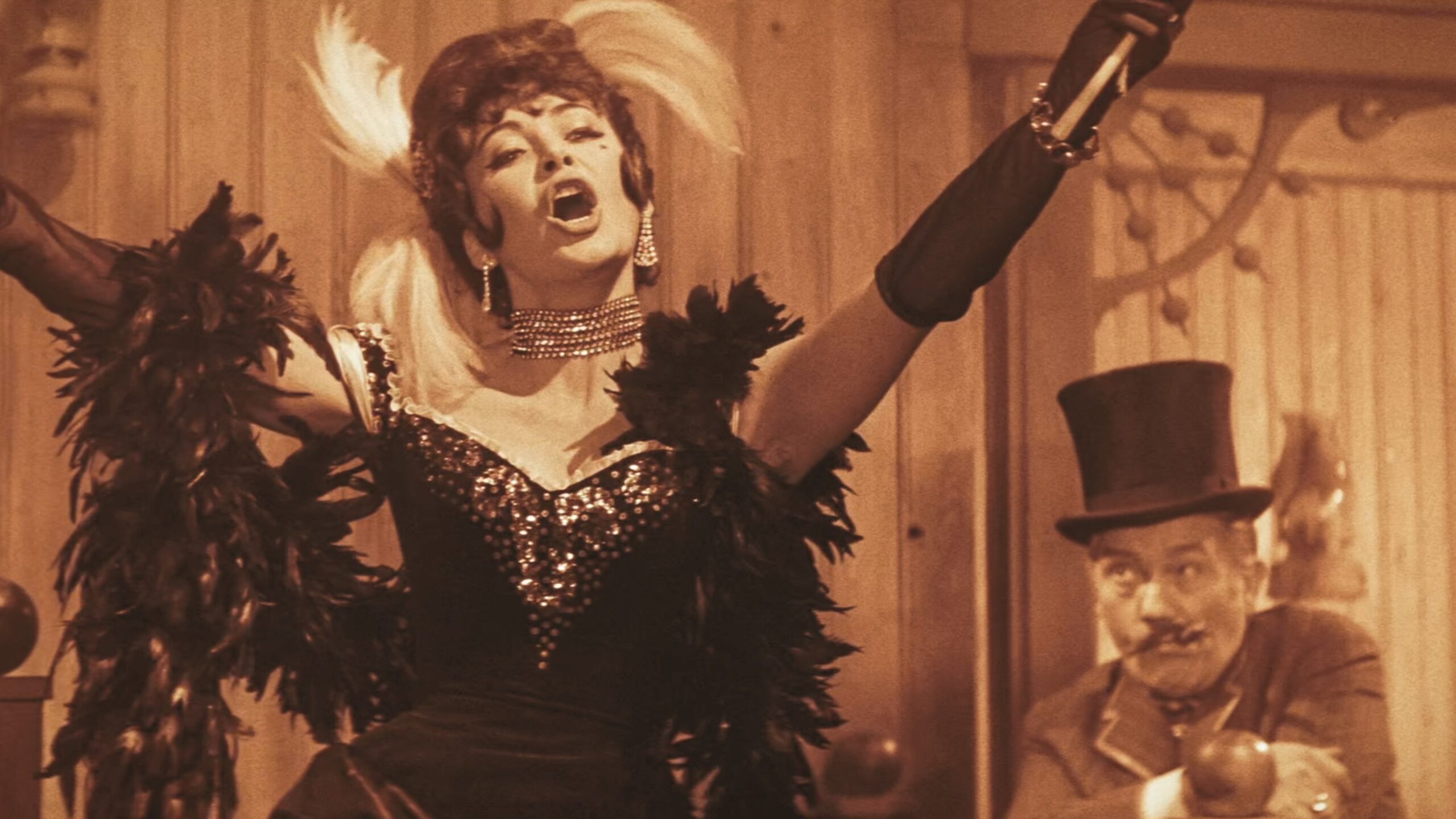
A comedy? A western? A musical? Or even an homage to silent cinema? If Limonádový Joe is the best possible feature film adaptation of Jiří Brdečka’s 1930s short story cycle – early adapted for the stage but also into an animated film in 1949 by Jiří Trnka – it is because it skilfully blends genres and styles in a way that translates the parodic spirit of the original text into cinematic form. All the western archetypes are present, though in exaggerated form: endless saloon brawls involving every character to the tune of a player piano; a handsome lone cowboy wandering through a preferably deserted town at sunset; brainless, hard-drinking thugs always ready for a fight organised by a true villain; a saloon girl; a sweet and perhaps not-so-naive young woman; and a gang war. Yet the real issue at the heart of the conflict is whether the town’s inhabitants will end up drinking the non-alcoholic Kolaloka promoted by the “good” guy or the whiskey defended by the villain – and, ultimately, who will win the business war and, of course, the heart of the sweet girl. But Limonádový Joe cannot merely be reduced to a conventional parody based on the exaggeration of western tropes. Beyond the delightfully absurd humour in the dialogue, in the song lyrics parodying English language with Czech accent, in the tricks or in the many details scattered throughout the sets, the playful evocation of silent-film aesthetics – with accelerated motion, slapstick gags, and monochrome colour effects simulating a Desmetcolor film restoration, but three decades before – contributes to making the film an abundantly creative parody. Nowadays it has become a cult favourite. One of the most popular comedies in Czechoslovak cinema, Limonádový Joe would not have been the same, or so inventive, had it not been made in the mid-1960s. At this time, the local New Wave benefited from the liberalisation of the socialist regime and the partial relaxation of censorship, but so did also popular films experimenting with genre conventions and a wide range of visual forms. Oldřich Lipský is one of the most famous directors of innovative Czech comedies. In Happy End (1967) and Adéla ještě nevečeřela (Dinner for Adele, 1978) he continued playing with genres, animation, tricks, narrative and decorative inventions.
Jeanne Pommeau
Restored in 4K in 2024 by Národní filmový archiv in collaboration with Karlovy Vary International Film Festival at Universal Production Partners and Soundsquare laboratories, from the duplicate positive and the original sound negative. Funding provided by Milada Kučerová and Eduard Kučera
The road of the hero of Lemonade Joe on cinema screens was a tortuous one. But eventually the waiting paid off. This unique literary parody of Wild West stories has at last earned an excellent film adaptation. At the time of its premiere, Czech critics were not unanimous, but abroad it received positive attention. Decades later, it became one of the most popular films of Czechoslovak cinema, finally appreciated by contemporary scholars. The mind behind the stories of a handsome cowboy who prefers lemonade to alcohol and is more successful than others at fighting crime was that of writer Jirˇí Brdecˇka. An admirer of adventure stories, he started publishing his humorous serial already in 1940, and at the end of the war, he adapted it into a theater play. He also inspired Jirˇí Trnka’s short puppet film Arie prerie (1949). Brdecˇka modified Joe and his adventures for the radio and again for the theater. The 1955 production of the play became a foundation for the feature-length film version. Because of the exoticism of the required locations, director Oldrˇich Lipský considered undertaking a co-production with the then-Yugoslavia. But in the end, the sets for the little Western town were built on the Barrandov Studio lot, and the rocky outdoor locations were found near Prague. The rest was taken care of by visual effects. The film was shot in widescreen, but its poetics recalled silent cinema (tinting and accelerated movement in some scenes) as well as some obsolete technologies (background projection and double exposures). Live-action scenes were occasionally combined with animations by Jirˇí Trnka. An exaggerated but tasteful parody was evident in the dialogue, and certain expressions from the film even entered everyday popular speech. The popularity and importance of this film is testified by its renewed premiere in Czechoslovak cinemas in 1984 as well as a volume dedicated to the film by the National Film Archive at the end of the 1980s.
Tomáš Hála