[MOVIE]
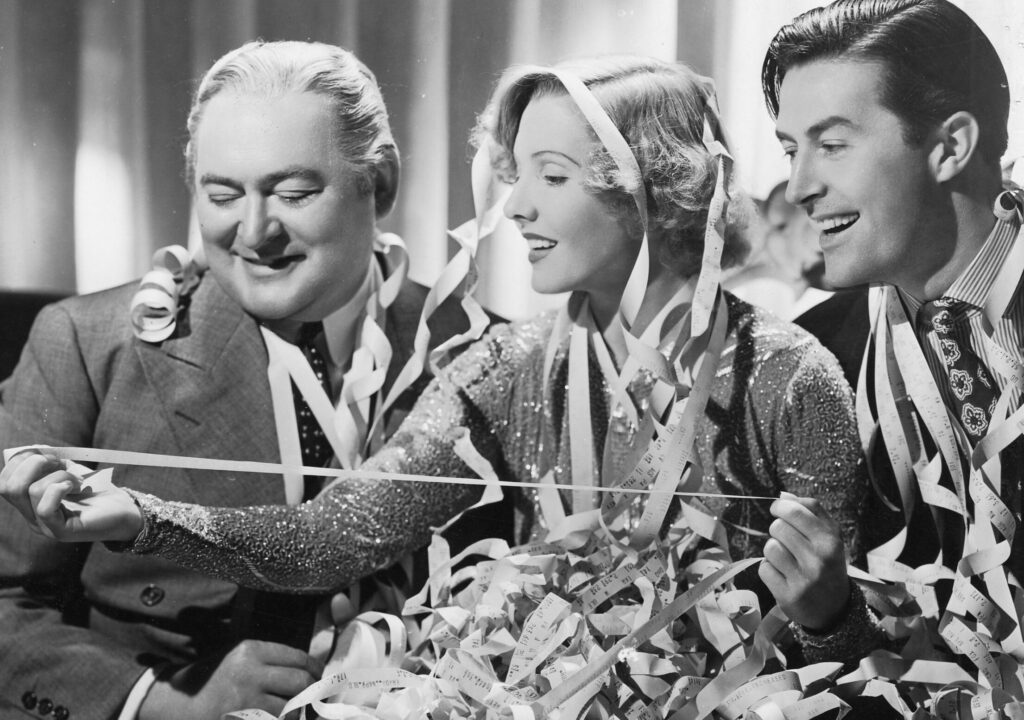
P.: Pathé. D.: 1’ a 16 f/s.
Edition History
Bodies
In the foreword to his extraordinary “Panorama of the Nineteenth Century” (1938, english trans. 1977), Dolf Sternberger describes his method as “purely physiognomical, arranging, descriptive”, and neither critical nor analytical. It is an attempt to study the “face of the past” and to redraw some of its features. The quotations take a central role, as they reveal the “phenomenon and the thoughts, the figures and the gestures” of the past. The quotations are “the writing of time itself”.
Sternberger defines his procedure also as configurative, because, with the selection, combination, and arrangement of the quotations, all necessarily arbitrary activities, the tangle of the past becomes, here and there, “at least in part”, a readable writing, which we “observe and attempt to decipher”.
In viewing the cinematic tangle of 1905 I had no theoretical or thematic approach. In selecting and grouping the films into programs I have adopted a purely physiognomical and configurative method. The program “Bodies” developed around two disturbing films, Les martyres de l’inquisition and The White Caps.
Mariann Lewinsky
“Fernando Pereda is one of the most important Uruguayan poets of the 20th century. The attraction for the seventh art, cinema, and in particular for the silent period made him – from 1935 onward – to collect masterpieces from the past and to fall madly in love with the early cinema. As he kept strong ties with Europe, his collection was admired by many artists, such as Henri Langlois, Rafael Alberti and Giuseppe Ungaretti. In the last years of his life Pereda decided to bequeath his collection to Sodre Archive. During the FIAF Congress held in Montevideo I was able to discover this important bequest, which a few years later I explored together with Vittorio Martinelli within the framework of Recherche des film perdus, promoted by Proiecto Lumière. Thanks to the co-operation of Archivio Nacional de la Imagen – Sodre and Cinemateca Uruguaya we have been able to identify great part of the material and to make this important collection, composed of early films and classics from the teens and twenties, often in prints of extraordinary quality, known also in Europe. Thanks to the co-operation with Cineteca of Bologna, Cinémathèque Belge and Archivio Nacional de la Imagen – Sodre, it has been possible to launch an International project for the protection of this material which today is at last brought back to the screen”.
Gian Luca Farinelli
“…Bearing witness of a life that was and that leads us within the realm of cinematographic fiction, where that time full of light and shadow, sparkling ramparts, white gloved hands, scented violets, gallantry and romantic gestures from a past era have been entangled together, fosters in us an infinite sadness and the unique emotion of approaching another animated world, different from our everyday life which in its turn and unmistakably one day will cease to be”.
Fernando Pereda