[MOVIE]
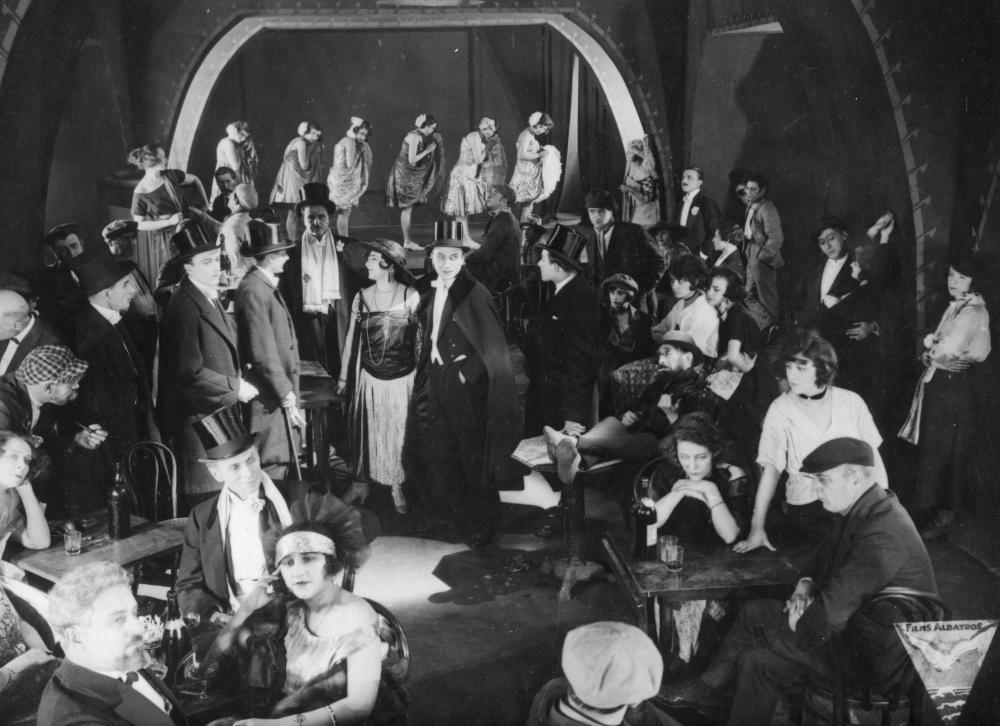
R.: Ivan Mosjoukine, Alexandre Volkov. Sc.: Ivan Mosjoukine. F.: Jean-Louis Mundwiller, Nicolas Toporkov. Scgf.: Alexandre Lochakov, Edouard Gosch. In.: Ivan Mosjoukine (il detective Zed), Nathalie Lissenko (la donna), Nicolas Koline (il marito), Huguette Delacroix, Camille Bardou, François Zellas, Paul Franceschi, Jules de Spoly. P.: Film Albatros. D.: Pathé-Consortium- Cinéma. L.: 2200 m. D.: 119’ a 16 f/s.
“Maybe Le Brasier ardent would even be more ardent, if it did not reveal a slightly faded originality. There is enough talent over there, so that artificial flowers should not be deemed necessary, and Ivan Mosjoukine has shown to be an all-around artist, when he crosses the path of great filmmakers”.
Louis Delluc, Ecrits, II/1
“Apart from German expressionism and American comedy, the French avant-garde was of great importance in the formation of the Russian style. Until 1925 (with Coeur fidèle) the films of the French avant-garde did not appear on Russian screens. Further reason why Brasier ardent by Ivan Mosjoukine, strongly influenced by this avant-garde (particularly by Abel Gance), made such an enormous impression on Russian directors. The testimony of the Soviet director Leonid Trauberg concerning a meeting of a Soviet film-makers’ group with Mosjoukine in Berlin, five years after the release of Brasier ardent, is telling in this context: ‘At the moment, in Russia, we are following your path’. But Trauberg added shortly after: ‘Mosjoukine represents in flesh and bone the generation who came to film-making without having the least idea what this art was about’.
What was it in Mosjoukine’s film that attracted Soviet cinema’s future innovators? Firstly the rapid editing of the dream scene at the start of the film. Then Mosjoukine’s unexpected eccentricity. Unlike the major part of his colleagues from the Ermoliev group, Mosjoukine was not a partisan on the side of the conservation of the Russian style in exile. On the contrary, he considered his move to Europe as a chance to change his own image. In 1926, to the correspondent of the French journal Cinea-cine pour tous, he stated: “When I arrived in Paris, in 1919 (sic), I already had eight years of film-making experience […]. I believed I was a great film-maker. Alas! My illusions disappeared into thin air on the very day of my arrival in France […]. In France I rounded off my technical apprenticeship and a new artistic apprenticeship. The Russian style of acting no longer satisfied me”.
Natalia Nussinova-Yuri Tsivian, Cinegrafie, n. 10, 1997

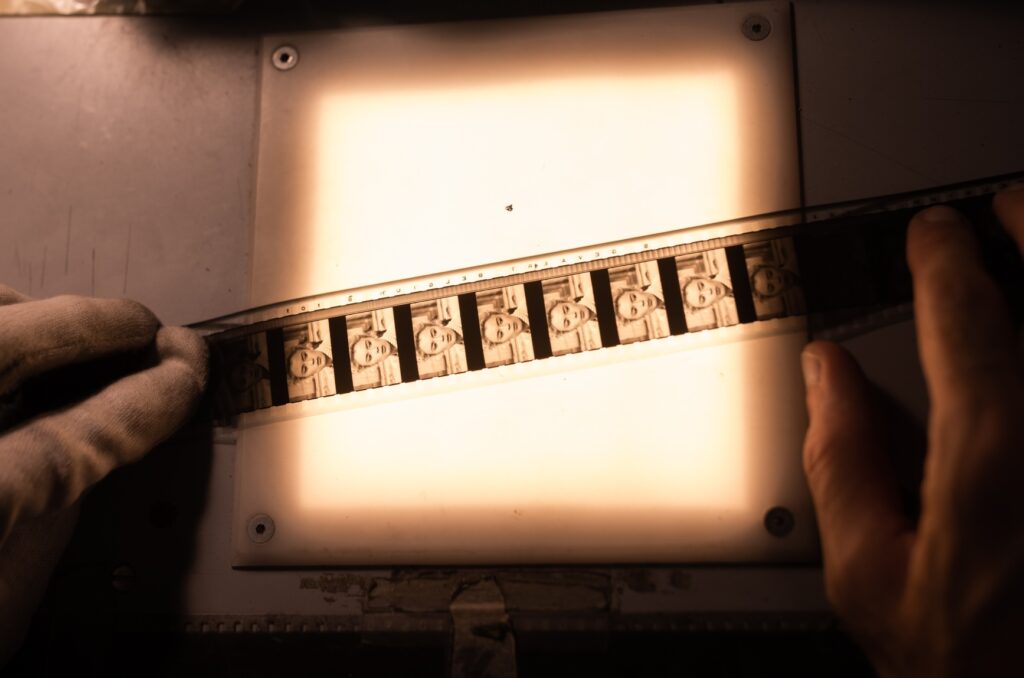
The restoration has been carried out by the laboratory of Cinémathèque Belge starting from the original negative and a print made at the time of the screening, which presented its original colouring, particularly brilliant in the first reel, coming from the Sodre Archive.