[MOVIE]
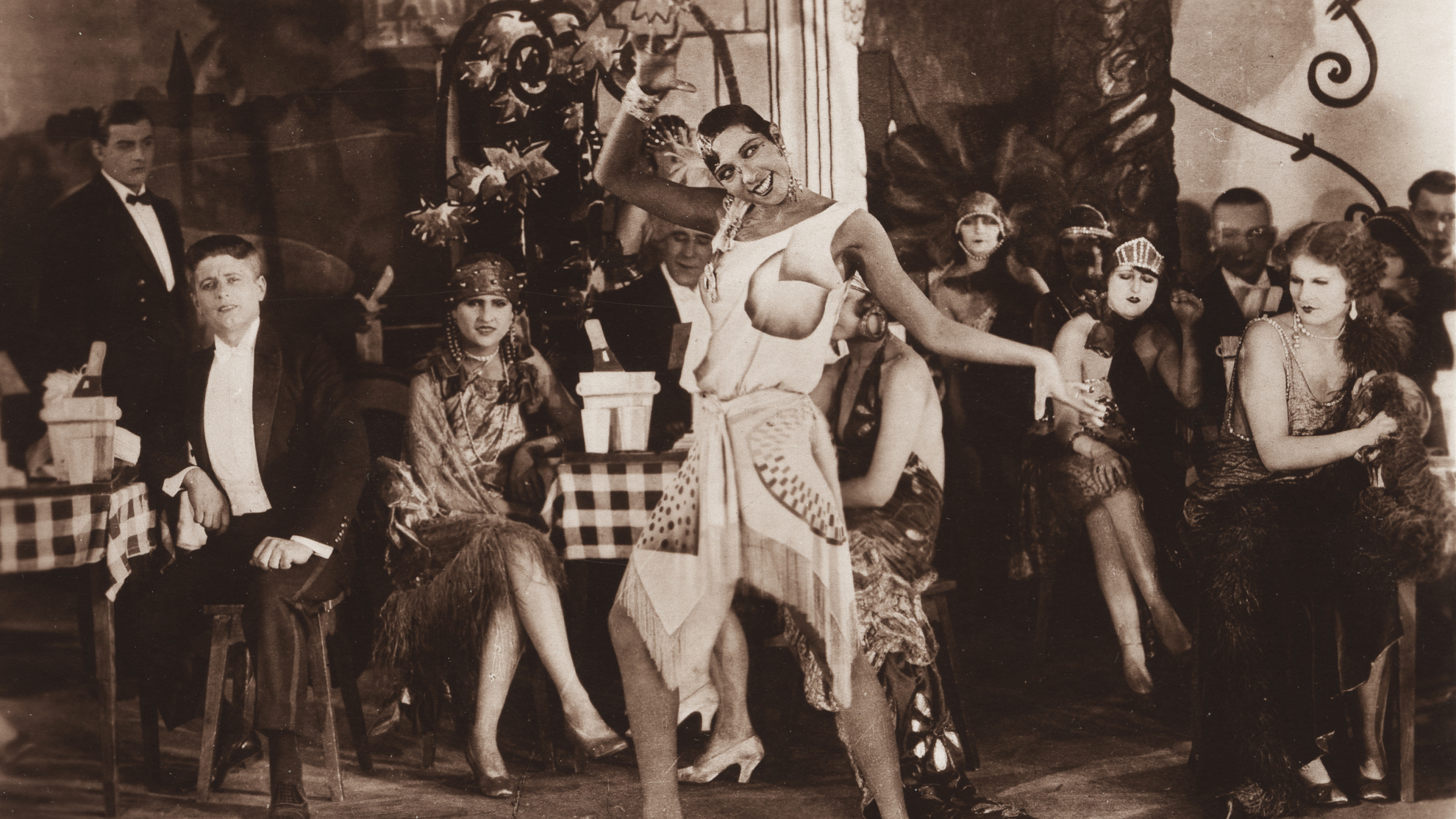
T. it.: La sirena dei tropici. Ass. regia: Luis Buñuel. Scen.: Maurice Dekobra. F.: Albert Duverger, Paul Cotteret, Maurice Hennebains. Scgf.: Jacques Natanson. Int.: Joséphine Baker (Papitou), Pierre Batcheff (André Berval), Georges Melchior (il conte Severo), Régina Dalthy (la marchesa Severo), Kiranine (Alvarez), Adolphe Candé (il direttore), Régina Thomas (Denise). Prod.: La Centrale Cinématographique. 35mm. L.: 2225 m. D.: 97’ a 20 f/s. Col. (imbibito / tinted).
Edition History
I filmed La Sirène des Tropiques without reading the screenplay. No one cared or was considerate enough to have it translated into English for me. Why bother, right? Besides, this famous screenplay was only put together during the shoot … So, I was Papitou in La Sirène: at the Nathan studio on Rue Francoeur, and at Théâtre Mogador, and in the middle of a Negro village in Epinay, and in Fontainebleau and in the Hague … I saw ghosts of all colours and they saw me in all colours in this film… They transformed the Éclair studios, in Épinay, into a Negro village … They were filming Madame Récamier next door. We were odd neighbours, to say the least. Negroes and sans-culottes became drinking companions in a corner of the studio. This made Monsieur Barre, administrator of the Établissements Louis Aubert film company, say: “See? The Niger’s not as far from the Seine as they say…” And I danced the Charleston while they held their executions … I had absolutely no training in cinematography. I fell into cinema without a clue, “comme une fleur” like they say [Folie du Jour-Folies Bergère] here. Actually, I was quietly pushed, like this. And then: “You’re on your own, Mademoiselle”. I had what you might call “a name that sold well”. That’s always a good lifebelt. Not one director thought to give me the basics, not one thought to help me, to teach me what I didn’t know, what you should know before you start filming. So I swam… And by that I mean I couldn’t, I didn’t know how. If I had to go to a cinema court today for what I filmed, I have no doubt that I’d be found guilty – but also, first and foremost, irresponsible … So what, sometimes there’s a high price to pay for experience. I know that now. I don’t ever want to dance, sing, perform or shoot just because of my name.
Joséphine Baker, Fearless and Free. A Memoir, Vintage, New York 2025

“She had been filmed a couple of times, doing dances from the 1926 Folies-Bergère show and then dances from the 1927 show. These had not been pleasant experiences. She knew nothing about lighting or makeup for film. Her eyelids, without oil on them, burned under the hot lights, which also blinded her. But now she was to have the lead in a feature film for which Maurice Dekobra, a well-known novelist, did the screenplay, with suggestions from Pepito (Abatino). La Sirène des Tropiques was produced and directed by Mario Nalpas, and its assistant director was a young Spaniard named Luis Buñuel. The silent film was shot in the summer of 1927 in the forest of Fontainebleu outside of Paris, a fact all too obvious in the film, which is supposed to take place largely in the Antilles. It tells the basic story with which it would be Josephine Baker’s cinematic lot to be associated”.
(Phyllis Rose, Jazz Cleopatra. Joséphine Baker in her Time, Doubleday, New York, 1989)