[MOVIE]
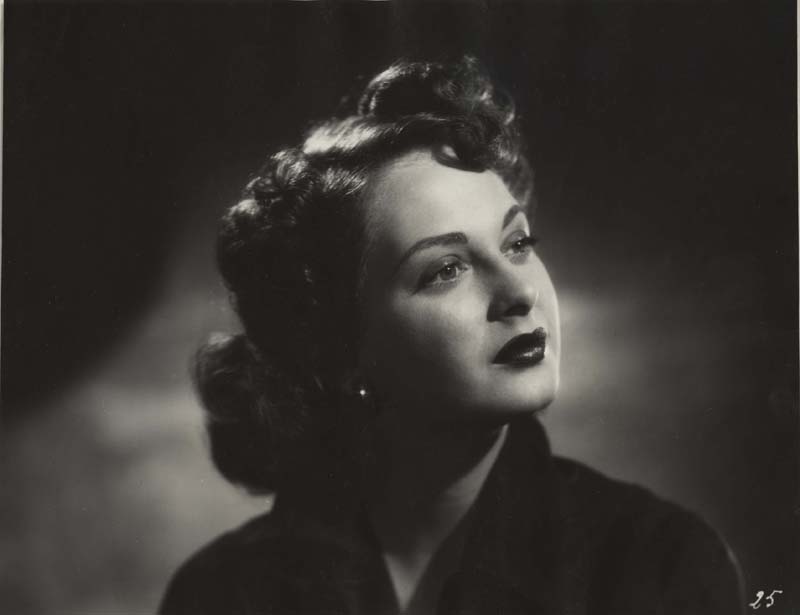
Sog.: Eduardo De Filippo, Filippo Sarazani; Scen., Dial.: Sergio Amidei, Giancarlo Vigorelli, Franco Brusati, Liana Ferri, Roberto Rossellini; F.: Enrico Betti Berutti, Tino Santoni; Mo.: Jolanda Benvenuti; Eff. spec.: Eugenio Bava; Mu.: Renzo Rossellini; Su.: Mario Amari; Ass. regia.: Massimo Mida, Renzo Avanzo; Int.: Gennaro Pisano (Celestino Esposito), Marilyn Buferd (turista americana), William Tubbs (turista americano), Helen Tubbs (turista americana), Giovanni Amato (il sindaco), Clara Bindi (Giulietta Del Bello), Joe Falletta (Joe), Giacomo Furia (Romano Cuccurullo), Camillo Buonanni, Pietro Carloni; Prod.: Roberto Rossellini e Luigi Rove-re per Universalia Film, Tevere Film; Pri. pro.: 14 maggio 1952
DCP. D.: 80′. Bn
La macchina ammazzacattivi might be the strangest of all of Rossellini’s films. It is also a fantastically original creation, among other things by showing how a great film can be fast like a flashing thought – and as good proof of his importance as any of his canonical masterpieces that chronologically exist around this film. It is definitively the least known film of Rossellini’s most famous period – indeed so little known, that even a fine connaisseur of European cinema as Herman G. Weinberg claimed in the pages of Sight and Sound in the 70s that this is a lost film. It also belongs to the least noticed “category” in Rossellini’s oeuvre. All of us know about the “fascist period” films, neo-realistic masterpieces, the intimate films (with Ingrid Bergman), even “the historical neorealism” – but when have we seen anything written about Rossellini as the brilliant and profound humorist? Perhaps the silence can be explained by the nature of the humour. It is pretty indivisible with the director’s general sense of anecdote – something that makes films like L’invidia or Il generale Della Rovere so satisfying. But it is also – as be fits Rossellini – identical with wisdom, a subtle form of personal philosophy, and as such similar to the dynamics of films like Sullivan’s Travels or A King in New York – I feel strongly that Preston Sturges and old Chaplin are soul brothers of the director of La macchina ammazzacattivi. (…) It’s a film full of typical Rossellini themes, but with a difference: the blending of fantasy and total, obsessive documentary “realism” is entirely unexpected and strange – it borders on lunacy. The film is all about camera, and the other way around: it is as careless about the traditional technique as a home movie. One more example: the divine use of amateurs and the seemingly total nonchalance about acting – it couldn’t interest the director less. And yet at the same time Rossellini achieves things that are miraculously prophetic both in the fields of future modern fiction and documentary.
The film starts with miniatures and marionettes – an arrested world then returning to life. The events take place in the post- war Italy where an American, on his liberating mission, arrives with the purpose to build a hotel. According to his calculations around a couple of million Americans are willing to refresh their memories about recent war experiences. The hotel business must thus have a great future. This might be the first film reflecting the Marshall Aid, along with another masterpiece, Jacques Tati’s Jour de fête. Bienvenido Mr. Marshall (Bardem-Berlanga), or Un Americano a Roma (Steno) are important, but as for me, Rossellini’s film remains the greatest (and least seen). That has much to do with the deep originality of the storyline and the dramaturgy that has the grace of a strange dream. And yet all the elements are directly from the everyday. Rossellini catches the unholy alliance between Americans and Italians, whose familiar village farce is full of good stock characters: half-saints and half-wits, characters full of hate against the bureaucrats.
Peter von Bagh, Filmihullu, 1994


Restoration credits
Restored by L’Immagine Ritrovata.
The digital restoration was based on combined lavender and sound duplicate prints kept at Cinecittà Studios, scanned with 2K resolution. The scan sought to restore the luster and richness of the original photography. As for sound, it was cleaned digitally, and the background noise caused by wear was reduced, maintaining, however, the dynamics and particularities of the lm’s original sound.