[MOVIE]
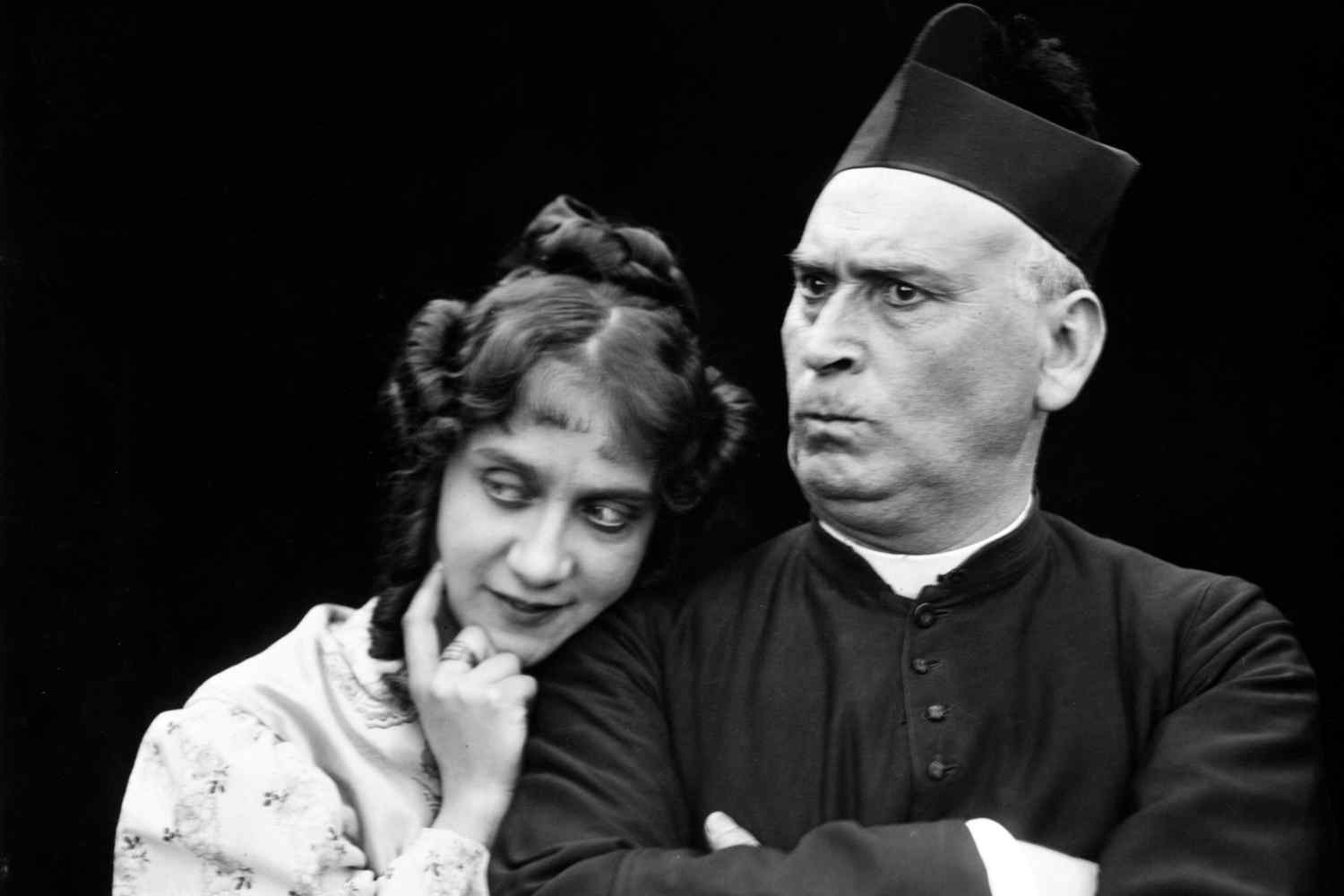
Sog., Scen.: Arrigo Frusta. F.: Giovanni Vitrotti. Int.: Fernanda Negri-Pouget (la nipote), Umberto Scalpellini (il curato), Luigi Chiesa (il tenente Carlo), Luciano Manara (Zufolo). Prod.: S.A. Ambrosio DCP. D.: 42’. Tinted
Edition History
Two years after Nozze d’oro, the seasoned duo Frusta-Maggi took on a theme dear to Italian film of the time: the heroic events of the Risorgimento, which necessarily entailed reducing the Austrian invaders to victims of patriotic cunning and courage. Audiences went wild, imprecating so vehemently when the enemy appeared on the screen that some police headquarters blocked the film. Like Nozze d’oro, the narrative is told as a memory and gives the main characters a chance to fall in love. The ‘narrating voice’ is a grandmother’s, unwilling to accept a modern electric lamp: in fact, it was her old oil lamp that helped her get rid of the enemy and marry a handsome lieutenant. The film excels at the use of space: the small town under siege is like a warren full of hideouts and leading to a series of tricks revolving around the sacristy and the bell tower. Unable to control the terrain and see beyond appearances, the Austrians surrender. Like in many of Frusta’s stories, the person who uses hidden ravines, disguise and double-dealing wins.

Restored in 2018 by Cineteca di Bologna and Museo Nazionale del Cinema in collaboration with BFI – National Archive at L’Immagine Ritrovata laboratory from a tinted nitrate print preserved at BFI and belonging to the Joye collection
In the wake of the immense success enjoyed by Nozze d’oro (Golden Anniversary, 1911) and by I Mille (The Thousand Men, 1912), in 1913 the Ambrosio Studios intensified its commitment to the production of films surrounding the theme of the Risorgimento with three films on the subject: Il notturno di Chopin (Chopin’s Nocturne), Le campane della morte (The Death Knells) and La lampada della nonna (Grandmother’s Lamp). The latter of these, which recounts an episode from the Second War of Independence, makes use of what was at the time a popular narrative expedient in historic-patriotic films: the flashback. Through the tales of their grandmother, the children relive the heroism of the Risorgimento, with a common ideal uniting past and present: the name and honor of the Nation. The film, noteworthy for the stunning cinematography by Giovanni Vitrotti, was withdrawn from the theatres due to public protests against Austria, which in 1913 was still Italy’s ally.
Giovanni Lasi