[MOVIE]
Edition History
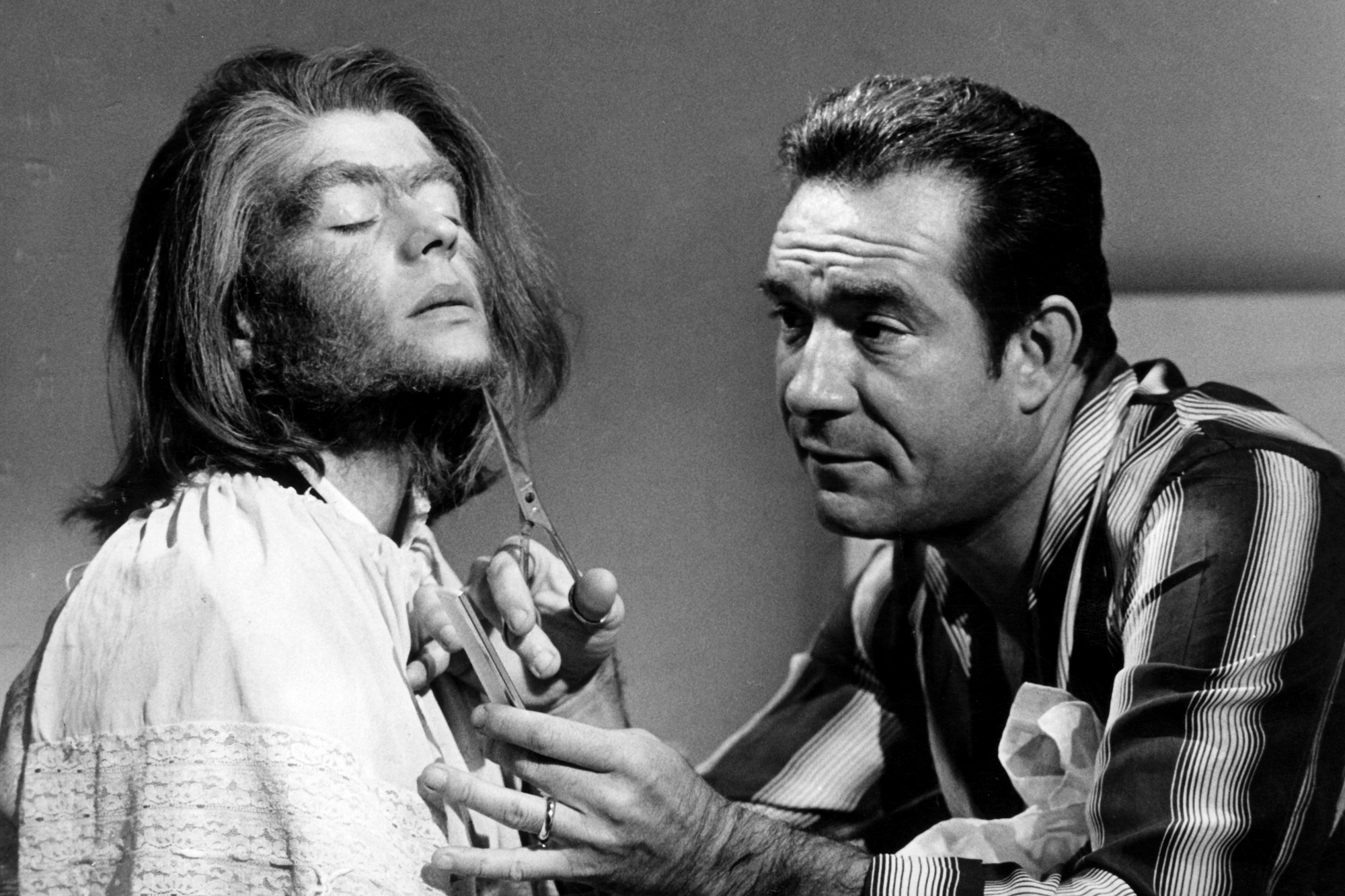
The origin of this film dates back to the mid-1950s and to Ferreri’s made-in-heaven partnership with the writer Rafael Azcona. They were inspired by the story of Julia Pastrana: a bearded woman born in Mexico in 1834, who performed under the management of her husband in freak shows of different countries. At the age of 26 she gave birth to a (hairy) baby, who died soon afterwards as did Pastrana from postpartum complications; her husband had their bodies mummified and exhibited them in his shows. But this is not the film’s only source. According to Azcona, “at that time in Spain there was a lot of talk about a miracle: a girl in the woods was attacked by some wrongdoers who were going to rape her. Terrified, she called upon the Virgin Mary, and her body was suddenly covered with hair…”. Aside from the fortuitous coincidence (to each his own heaven over the marshes), the episode re-enacts a Christian mythos and brings new life to a hagiographic exemplum. A similar narrative surrounds the 17th-century martyrdom of Saint Wilgefortis: in order to escape her marriage to a pagan prince, the Christian virgin begged God to make her un- desirable; her prayer was answered, and she grew a beard and moustache; her father was enraged and had her crucified. (After all, the body of a bearded martyr had already been venerated by the Ape regina). One more important reference: a painting by Jusepe de Ribera, known as Spagnoletto, titled Magdalena Ventura with Her Husband and Son (1631). A kind of Holy Family, but the woman who breastfeeds the newborn is hirsute (very hirsute). The painting is disconcerting. It must have been a striking experience for Ferreri and Azcona when they saw it in Toledo. A surrealist image. If Pastrana’s story was the foundation of the cruel fable, if the news story captured a popular and religious iconography, the paradoxical painting was an inspirational image. And so the film was born and proliferated through ‘gemmation’, as Ferreri would say. Ribera’s portrait was painted in Naples. For this reason, with no sea and no Vesuvius, the film was shot in Naples.
La donna scimmia received its censorship visa on 8 January 1964. It was first screened at the Metropolitan in Bologna on 29 January. How does the film end? Maria dies in childbirth, shortly after the baby; her husband Antonio sells the two corpses to the Science Museum where they are embalmed; then he changes his mind, reclaims their bodies and exhibits them in a freak show. This is the terrible, logical explicit chosen by Ferreri. However, in some cities, a reworked version was shown: the film ends with Maria’s (sacrificial) death. It is not yet clear who was responsible for the tampering (the producer Carlo Ponti? The distributor?), which only attests to an unsolicited censorial zeal. A seemingly benevolent version of the epilogue was developed (with Ferreri’s agreement) for the foreign market: the ape woman loses her hair during pregnancy and gives birth to a normal hairless child, forcing her husband to get honest work.
Michele Canosa

Restoration credits
Restored in 2017 by Cineteca di Bologna and TF1 Studio in collaboration with Surf Film at L’Immagine Ritrovata laboratory (Bologna, Paris). Both Italian final sections are preserved by Cineteca di Bologna. The third one of the French version was kindly provided by Cinémathèque Royale de Belgique
The painting La Mujer barbuda is located at the Tavera hospital (Toledo). It was painted in 1631 by José Ribera (Jàtiva 1591 – Naples 1652), known as Lo Spagnoletto because he was small in stature. In 1610, Ribera left Spain for Italy, never to return. In Rome he led a poor, bohemian life, and in 1616 he moved to Naples. There he married the daughter of painter G.B. Azzolino and soon became the most prominent figure in the Neapolitan painting scene (at the time it was one of the most brilliant in Italy). His fame would then extend throughout Europe. The story tells the legend of a girl who, while crossing a wooded area, was attacked by bandits. In fear of being raped, the girl implored the Blessed Virgin Mary who made an enormous beard sprout suddenly on the girl’s face. The bandits were frightened and let her continue on her way. That painting and legend are at the origins of the story for La donna scimmia. Marco and I wanted to make the film in Spain, but the censorship prevented us. In Rome we went back to the idea.
Rafael Azcona
Restoration credits
Both Italian final sections are preserved by Cineteca di Bologna. The third one of the French version was kindly provided by Cinémathèque Royale de Belgique