[MOVIE]
Edition History
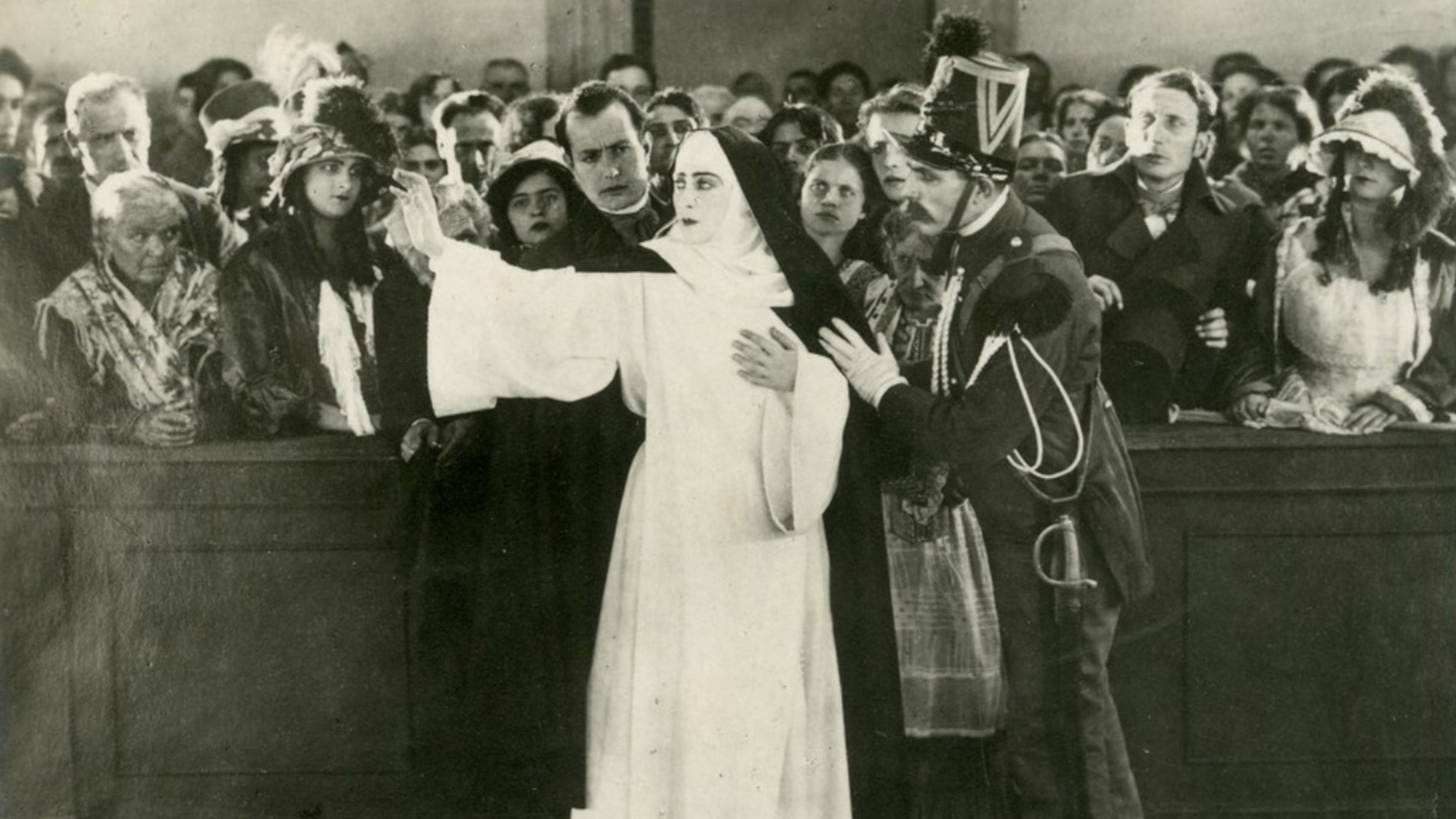
It was not purely by chance that between 1923 and 1927 at least ten films about the Risorgimento were made in Italy, and that three of them – La cavalcata ardente by Gallone, Anita (1927) by De Benedetti and Garibaldi e i suoi tempi (1926) by Laurenti Rosa – emphatically depicted the feats of the Thousand and the iconic figure of their commander. In fact, it is well known that the Fascist regime’s plan to claim the Risorgimento as its precursor found the perfect vehicle in cinema.
In the film written and directed by Gallone, when Neapolitan patriots march holding a sign that says “Long Live the Duce, the liberator”, it seems obvious that the reference is not only to Garibaldi. And the appearance of the Hero of Two Worlds waving to cheering crowds from a balcony in Piazza del Plebiscito deftly alludes to other mass gatherings at the feet of another leader, or would-be leader.
To confine the film to its undeniable ideological framework and refuse to look beyond that, however, would be doing it a disservice. Despite some stiffness (“commendatore” Gallone was never known for his light touch), La cavalcata ardente has a solid, engaging narrative rhythm and a strong sense of the spectacular (for example, the striking garden fountains of the Royal Palace of Caserta) and a few visually rich moments with the right dose of energy (such as the frenzied night-time torchlight procession that gives the film its title).
What I especially like are Soava Gallone’s impossible skirts and the band of gentlemen brigands who live in the rugged mountains, venerate the Virgin Mary, set a building on fire for the sole purpose of reuniting two lovers and whose source of livelihood is not altogether clear (when they rob passersby, they reimburse them for the horses they take). Above all else, I like Emilio Ghione in his final flourish, fresh from his disappointing experience in Germany with Za la Mort (1924): the essence of pure cruelty.
As Vittorio Martinelli reminds us, it was a much-loved film, screened for years on patriotic occasions, especially in schools and parishes. In the early 1930s, a sound version was even in circulation.
Andrea Meneghelli

“A key-film to understand what happened between the end of the diva film and the advent of talkies in Italian cinema. Gallone, one of the few figures to pass the years of the great crisis unharmed realises a study in equilibrium between three different pressures: winks to the Regime (the Garibaldini in almost-black shirts, the intertitle Garibaldi duce vincitore, the ‘Risorgimento’ sentiments which are to be at the centre of so much of Italian cinema of the Thirties); the American and German lesson, of a cinema of adventure, full of action and spectacle, which Gallone, the most international of our directors had soon learned and the tie to national cinematographica tradition, the use of some actors (his wife Soava, the impenetrable Ghione, a sure Raimondo van Riel, Ignazio Lupi, a face which crosses tens of Italian films) and the recourse to Italian unity, with its unique landscapes and its folklore (see the great idea of the horse ride with torches which occupies almost a reel of the film).
The mix is not yet a total success, the version a bit love-story, a little far-west of the Resurgency results as indigestible in many parts, but the road towards the Italian adaptation to the styles of modern cinema has begun.
Moreover, the costumes of Poiret are splendid and in certain moments in Gallone a great vein emerges as raconteur of particulars which give some humanity to an overall picture as cold as an Italian primary school book”.
Gian Luca Farinelli