[MOVIE]
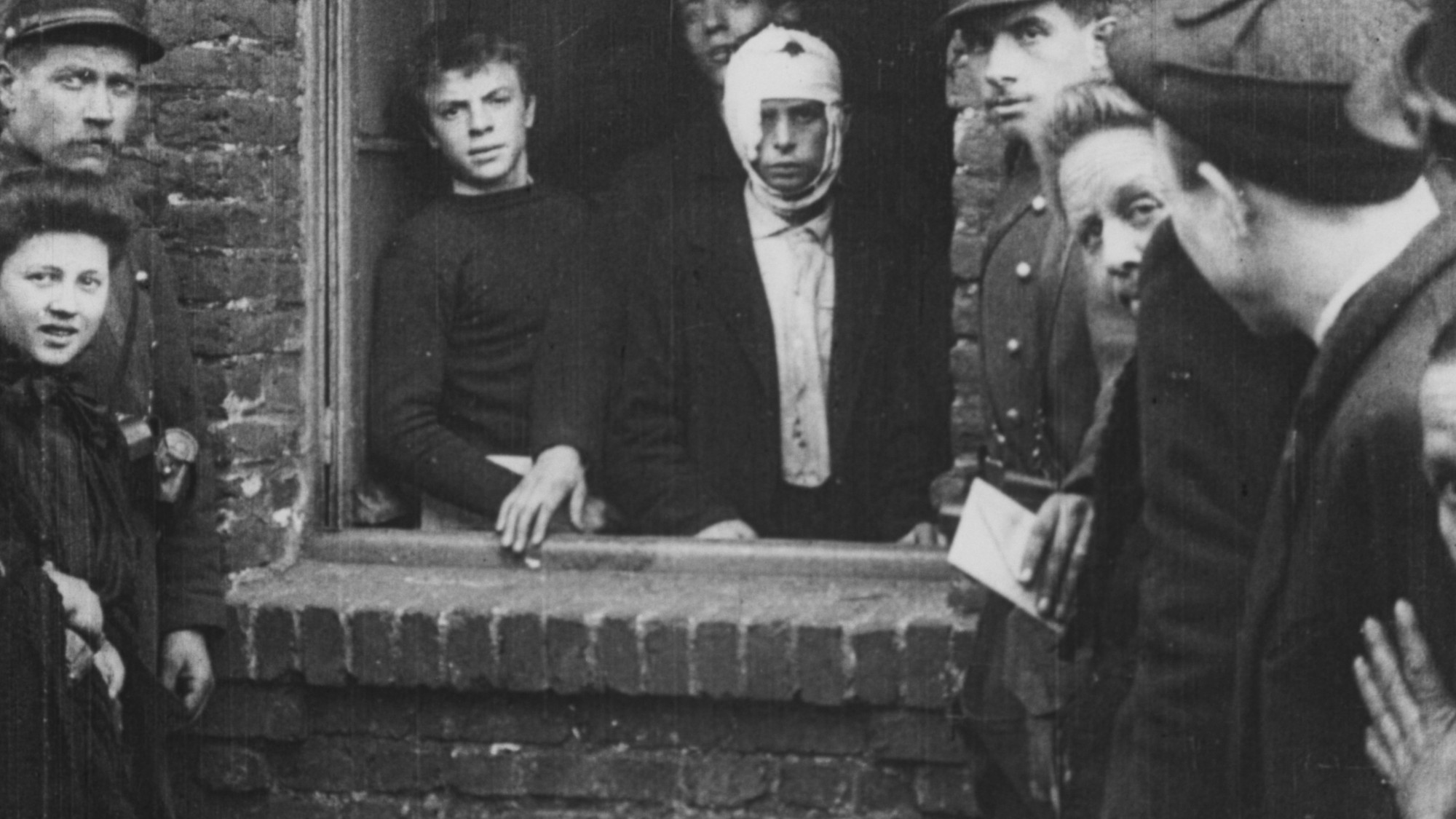
Prod.: Warwick Trading Company. 35mm. L.: 130 m. D.: 7’ a 16 f/s. Bn
Edition History
Filming depicts the real world or a staged excerpt from it. Both can lead to an immediate experience of reality – regardless of how the images presented to the audience on a cinema screen were created. Empathy can therefore be evoked in viewers by both “real” and “fictional” images. This programme reflects this inherent characteristic of cinema. Today’s viewers should consider, however, that one of the characteristics of early cinema is that it had not yet been standardized and therefore often did not censor images when, according to our habits, they are too crude. We feel painfully empathetic when we see Max Linder hanging from a tree with a noose around his neck for far too long in a comedy about an unhappy lover, or when we watch a documentary in which vast amounts of water are poured over a baby’s naked body in India. Many feel empathy when watching the documentary footage of the earthquake in San Francisco and the mining accident in the French town of Courrières in 1906, are emotionally moved when fictional dramas depict the suffering of motherhood, and (hopefully) suffer shock at the overt racism that forms the basis of the last film in the programme – a comedy. What we feel and how strongly we feel it always depends on the viewer – regardless of how well or poorly a film was made and whether the events captured on camera are real or fictional.
Karl Wratschko

A genre: actualities
Today, when we use the term “actualité reconstituée”, we often mean that this genre of representation – relating a contemporary event by restaging it – is inherently false, and that it deceives the spectator. It is true that certain texts, half-serious, half-amused, or humorous drawings, dealt with this theme either from the angle of a commercial ruse, or as a play upon the public’s naïveté. However, maybe what we are dealing with here is a topos, a rhetorical theme all the more easily endorsed as the truth since it fits in so well with the idea of the first primitive reception of the cinematographic image. It looks very much like a variation on the well-known myth that the audience actually got up and shrank back when the train arrived on the screen at La Ciotat station.
We will therefore simply use the term found in the catalogues, vues d’actualité (“actuality scenes”) – an ideal definition for images filmed either en plein air or reconstructed in the studio, provided that they represent events that were reasonably recent, and reasonably sensational, and more or less relayed by other images and accounts. We will be showing both types of film, and some cases where both types of “actuality” share the same film. When we research the filmed events in the contemporary press, it is amazing to see how these vues d’actualité, to use the term of the sales catalogues, were familiar subjects to spectators who read “L’Illustration” or “Le Petit Journal”, to cite some French examples. Our programme will attempt to examine several methods of visual information that were in use before the era of the newsreel. Three or four years later, the founding of this new genre was probably the primary cause of the disappearance of what now seems so typical to us of the years 1900-1905: reconstructed or re-staged news, a form described as en passant, but which the tableaux at the Musée Grévin had been using for some time.
Roland Cosandey
Printed in 2005