[MOVIE]
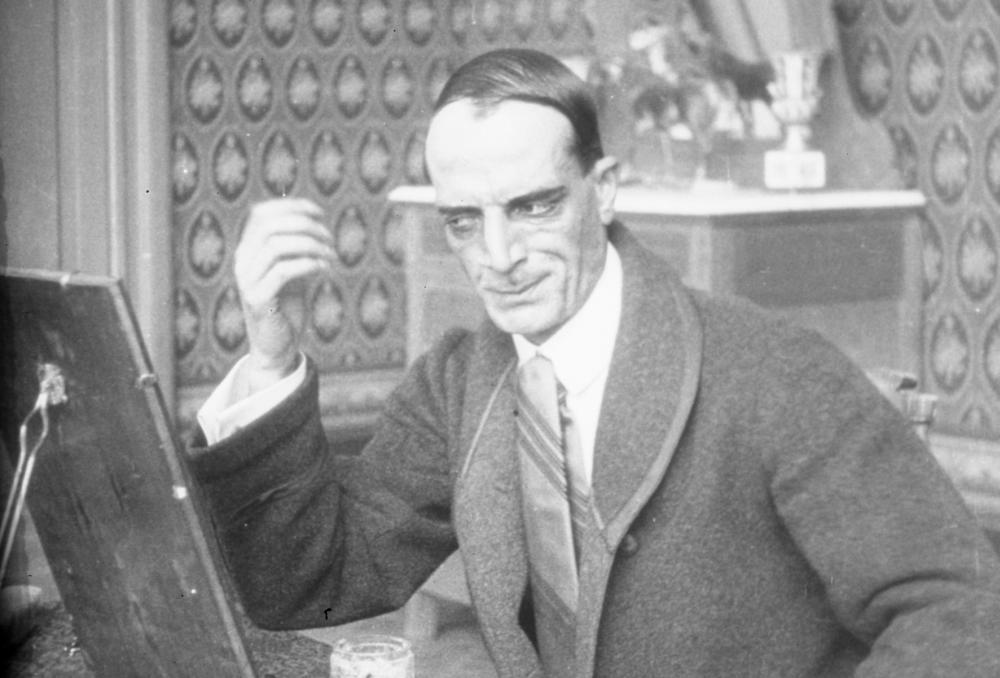
Secondo episodio, La tortura
S.: Pio Vanzi. Sc.: Emilio Ghione. F.: Cesare Cavagna. In.: Emilio Ghione (Za-la-Mort), Kally Sambucini (Za-la-Vie), Alberto Francis-Bertone (il Grigione), Nello Carotenuto (Muso Duro), Ida Carloni-Talli (la duchessa Giovanna), Alfredo Martinelli. P.: Tiber-film, Roma. L.: 671m. D.: 30’. bn, 35mm.
Edition History
As Vittorio Martinelli writes, the serial, “contrary to general belief, did not have much success, was hardly reviewed and quickly vanished from the screens. The fact that it has now come to be regarded as an important film in the oeuvre of Ghione is probably due to the fact that it is the only one of the Za la Mort series which has been saved”. (…) The serial is composed of narrative expediencies of heterogenous origins, and could be defined as a great polyptych. The eight episodes offer the public themes deriving from crime literature, detective stories, Salgarian exotic and farandolesque in which the unlikely and far-fetched are confused with naturalistic elements, above all following the transformation which his marvellous adventures and misadventures effect in Za la Mort. Sometimes different genres co-exist in the same episode, and without preamble we are presented with varied stereotypes from different literary derivations (novelette, adventure stories, children’s books…) which Ghione appears to seize and insert in order to distract from the feeble plot the part of the public eager for scenic effects.
Denis Lotti
Print restored in 1994 at l’Immagine Ritrovata from a 35mm nitrate camera negative, without intetitles, founded by Fondazione Cineteca Italiana at Pittaluga Archive, and from the same negative and held by Cinémathèque Royale de Belgique with shots that were already decomposed in the nitrate print
Rats are invading Bologna
“In every street, on the walls of every house grey rats call for the public’s attention and draw their stare. There is nothing to worry about because Zà la mort has found a way to make them totally harmless. Just go to the Cinema Modernissimo to see for yourselves the magnificent and artistic battle that Emilio Ghione has engaged with them”.
(L’Avvenire d’Italia, 25th June 1919)
PROJECTO LUMIÈRE
Restored by Cineteca del Comune di Bologna, Fondazione Cineteca Italiana, Milano and Cinémathèque Royale Belgique with the con il contribution of Projecto Lumière.
Since always, I topi grigi is a missing piece of the italian silent cinema. Now, thanks of the nitrate original negative found at the Cineteca Italiana di Milano, and of the safety positive print at the Cinémathèque Royale Belge and of the original list of intertitles, this serial has been completely restored.
“During the period towards the end of the first world war Emilio Ghione is able to reach an very good level of intensity and interpretative originality with his character Za-la-Mort, who he promotes as being the only star good enough (even if he is a step lower) to act with the real cinema sovereigns, who had, in those years, just begun to enter into a downward phase of their parable. At the same time, even if his story is channelled into the usual mechanisms of this genre, it is able to spring out with added values of an extra-narrative type, to help us to look beyond the plot, at the originality and power of the definition of the panorama and the Italian and foreign environment of the various incidents. Umberto Barbaro wrote in a famous article in 1943, entitled ‘Neo-realism’, that ‘There is more of Italy in I topi grigi, by Emilio Ghione and Kally Sambucini than there is in other Italian films of the period’. It is true that even if the film is set in France, it is able to introduce and to create real caesuras in the narrative mechanism, opening up the view to the Italian countryside, letting the cine-camera breathe in not only the air of the local ill-famed characters, the tavern and the noble palaces, but also the scents of the countryside and the colours of sunset; but it is also true that it is not just the realistical aspect which strikes us today in I Topi grigi, above all, the film has been directed very well indeed, and shows us some very surprising visual solutions which force us to modify the stereotype criticisms made towards Ghione the director; and the acting comes out over time, it unveils the expressive capacity of the actor and confirms the originality of the technique he uses to reach those dramatic effects by working on the stylisation and the subtraction”. (Gian Piero Brunetta)
Restoration co-funded by Projecto Lumière and by Mystfest in Cattolica