[MOVIE]
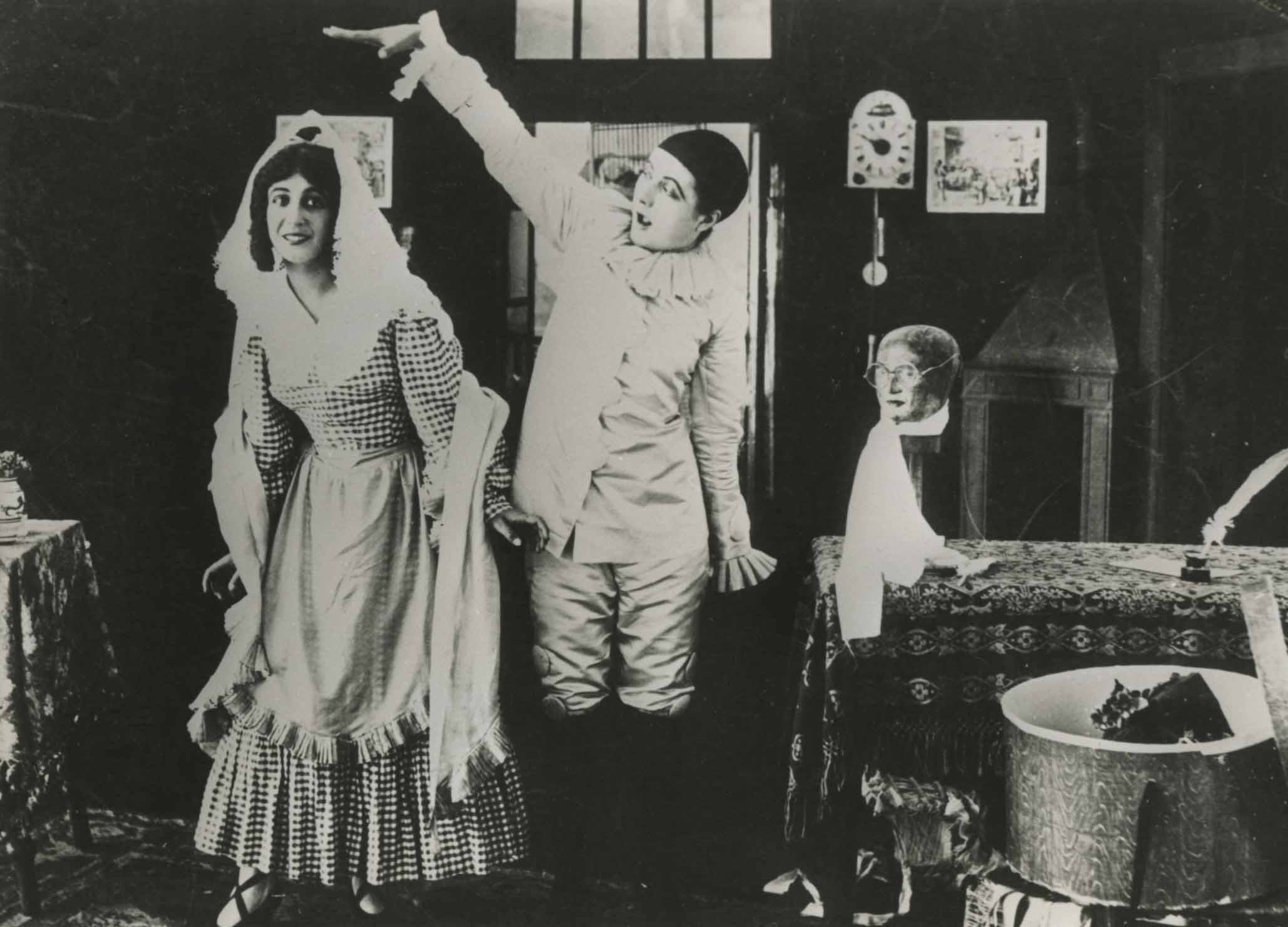
Scen.: Tommaso Silvani, dalla pantomima omonima (1893) di Fernand Beissier, musicata da Mario Costa; F.: Giorgino Ricci; Int.: Francesca Bertini (Pierrot), Leda Gys (Louisette), Emilio Ghione (Pochinet), Elvira Radaelli (Fifina), Amedeo Ciaffi (Julot), Ninì (il piccolo Pierrot); Prod.: Italica-Ars; 16mm. D.: 60’ a 16 f/s.
Edition History
Gian Piero Brunetta cites this film as an example of “lyric cinema”, deriving from pantomime, and points out that “what is striking in this film is the extreme elegance and care in the reconstruction of settings and costumes and the extensive use of mime. The whole system of gestures is greatly elaborated and much more rich and complex in nuance that the emphatic gesture of historical films”. The reproach of the lack of moral content levelled by Umberto Barbaro at the film is worth mentioning. It was stated in a critique written in 1937 in “Bianco e Nero”, which was motivated, documented, argued and cool, and ended in the dry reprimand: “What lacks is not slight: it is a more concrete vision of the world and a more elevated moral content. Without which […] there is no art”. To demand this engagement from an escapist film which is also a vehicle of ‘special effects’ (I refer to the music-image synchronisation), is somewhat excessive and apparently disproportionate to our eyes. Not giving it the cachet of film d’art, Umberto Barbaro reveals in Historie d’un Pierrot an aspiration to quality an unimportant and enigmatic element in “a cinema in strong technological and thus technical expansion.”
Denis Liotti

From a nitrate print from the George Klein Collection
Negroni’s film has gained a special place within Italian cinema from the teens, thanks to an original performance by Francesca Bertini: it is one of the few films from those years in which a famous actress agreed to make herself hard to recognize beneath costumes and makeup. As such, the film introduced the little loved and infrequent practice of disguise into the star system with the provincial flavor that characterized the era. In the opening frames of the film, Bertini appears for a few seconds in front of a curtain in one of her usual elegant poses, facing the audience with her hair down and wearing a long dress, as she takes off her shawl and lays it over a chair. The star is about to remove her street clothes and put on her costume, perhaps in a photo studio or more likely in a theater or film studio dressing room. The next shot, again just for a few seconds, shows her impeccably disguised as Pierrot. A small gesture for an actress anxious to remind audiences that, beneath Pierrot’s ruffed collar, the heart of a diva continues to beat.
Claudio Camerini, in “Immagine. Note di storia del cinema”, n. 7, 1984
Copied in 1959 from a nitrate print in the George Kleine Collection