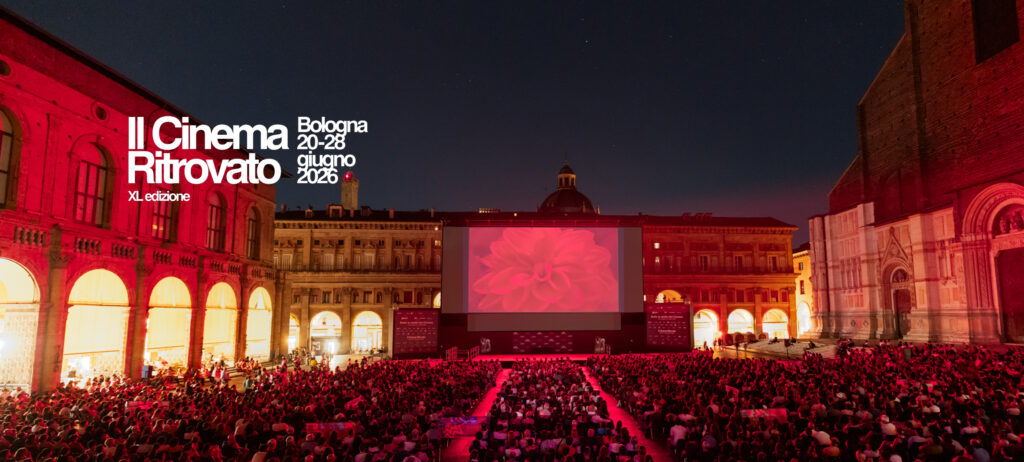
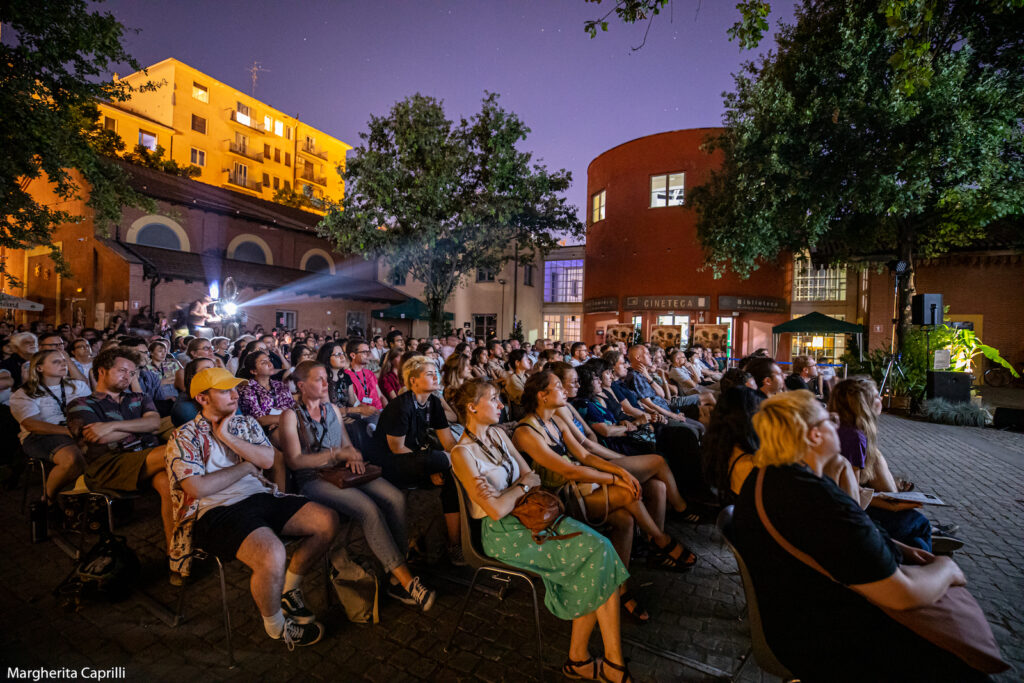
[MOVIE]
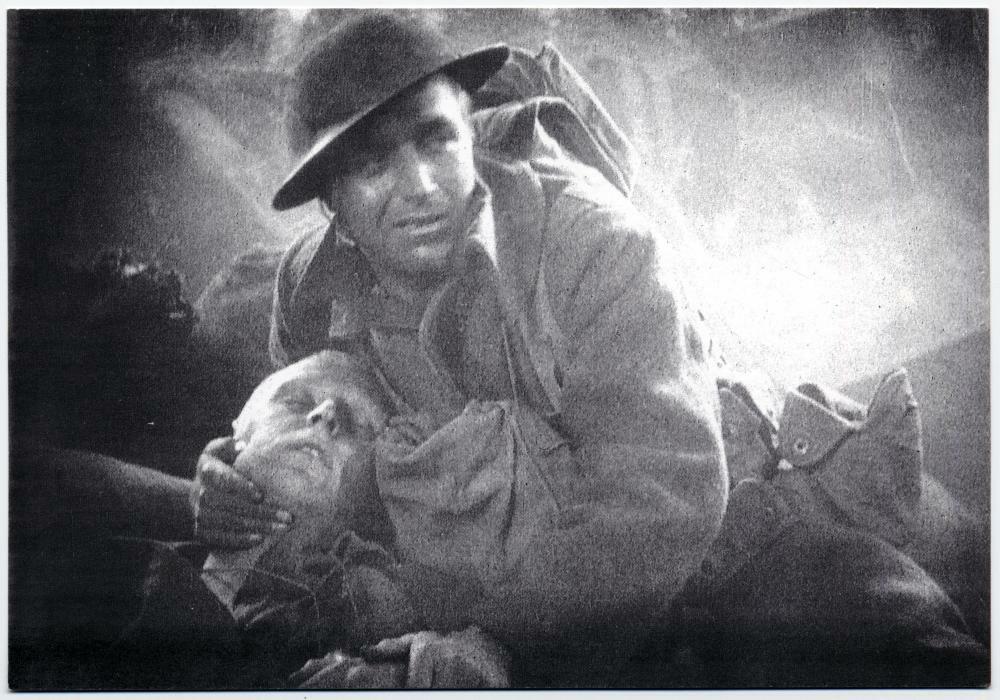
F.: George Schneiderman, Charles G. Clarke. Sc.: Philip Klein dal romanzo omonimo di Wylie. Titoli: Katherine Hilliker, H. H. Caldwell. M: Margaret V. Clancey. Canzone: Little Mother, Erno Rapee, Lew Pollack. Arr. Mus: S. L. Rothafel. In.: James Hall (Joseph Bernle), Margaret Mann (nonna Bernle), Earle Foxe (Von Stomm), Charles Morton (Johann Bernle), Francis X. Bushman, Jr. (Franz Bernle), George Meeker (Andres Bernle), Albert Gran (il portalettere), Frank Reicher (insegnante), Hughie Mack (albergatore), Michael Mark (inserviente di Von Stomm), August Tollaire (borgomastro), June Collyer (Ann), Wendell Phillips Franklin (James Henry), Ruth Mix (la ragazza di Johann), Jack Pennick (l’amico di Joseph), Leopoldo Arciduca d’Austria (il capitano tedesco), Robert Parrish (il bambino), L. J. O’Connor (la locandiera). P.: Fox Film Corp. 35 mm. D.: 99’ a 24 f/s.
Edition History
F. W. Murnau’s 1927 masterpiece Sunrise: A Song of Two Humans made an enormous impression on everyone in Hollywood. En route to visit Murnau in Germany, Ford gave an interview to the “Moving Picture World”, which reported, “After seeing rushes of Sunrise, Ford declared that he believed it to be the greatest picture that has been produced. Ford said he doubts whether a greater picture will be made in the next ten years.” Ford’s overt, even slavish, Murnau imitation, filmed in 1927 and released early the following year with a musical score and synchronized sound effects, was titled Four Sons. Sumptuously photographed by George Schneiderman and Charles G. Clarke, with frequent use of the moving camera, Four Sons made its stylistic homage to Murnau even more explicit by dealing with the travails of a German family decimated by the horrors of the Great War. Ford considered Four Sons the “first really good story” he ever filmed (the source was a “Saturday Evening Post” short story by I. A. R. [Ida Alexa Ross] Wylie, who also provided the source material for his 1933 Pilgrimage). Four Sons deals with a Bavarian mother (Margaret Mann) who comes to America after three of her sons are killed in combat. Ford goes from a broadly comedic, operetta-like rendition of village life before the war to a nightmarish, extravagantly stylized scene of death on a fog-shrouded battlefield. The director effectively conveys the poignancy of an ordinary woman being buffeted about by world events beyond her control, but the film’s visual extravagance sometimes overwhelms the emotional simplicity of the story, its chracteristically Fordian situation of an Old World family being torn apart and reconstituted in a new land. (from Searching for John Ford)

He read Wylie’s novel in a magazine and convinced the producers to buy it. Oddly enough, it was one of the biggest money-making films of all. It still holds the record for attendance at the Roxy, which was one of the largest cinemas in the world. Obviously its proceeds have been exceeded by other films because at that time ticket prices were much lower – a quarter instead of two dollars. I really like this film.
John Ford, in P. Bogdanovich,Il cinema secondo John Ford, Parma, Pratiche, 1990
Besides the sentimentalism, there are genuine emotions: the strength of family love and the tragedy of separation are deeply felt, as is Ford’s veneration for the indestructible motherly love of a simple woman. (…) We’re not surprised that it was one of the films he was particularly attached to. His Irish heart was moved by the thought of home, of family, of motherly love: topics that hold true even though they are often handled in a banal manner. It’s the necessary opposite to the world of action, adventure and manly friendship in films like Iron Horse and Donovan’s Reef. And moreover, Ford – to whom it seemed extremely difficult to build a happy family capable of replacing the one he had lost, or that he imagined having lost – was always sensitive to issues of separation, loss and farewell. Such issues surface in Straight Shooting, they are at the base of Four sonsand they give depth and resonance to many other masterpieces. In 1927, Ford went to Bavaria to film the outdoor shots for Four sons. He met Murnau there, who had just signed a contract with Fox, and in Berlin he met many other directors whose films he had seen. Some of the consequences of these encounters can be seen in Four sons: it is said that the war scenes were in fact shot on the sets built by Fox for Sunrise which Murnau directed in Hollywood the following year. The awareness of the role played by the camera, the sensitivity for framing the shots and the lighting were part of Ford’s natural gifts. It was however without a doubt Murnau and his colleagues who revealed a more refined style to Ford.
Lindsay Anderson, John Ford, Milano, Ubulibri, 1985)
Many films tell stories about men, some speak of men and women, Four Sons tells the story of a woman, a mother, the succession of an absolute, profound, visceral, uncorrupt, unconditional and radiant love, or rather the apotheosis of the virtue that many boil down to “rhetoric”, though it is the casing for the entire works of John Ford: purity. Hence I opened my heart to purity and poetry by resolutely writing down every way that these images screamed and whispered to me, consoled and caressed me, smiled at and cried to me, only making sure to leave my notes rough-hewn – no frills – like John Ford left his characters. It was very tiresome, definitely the most tiresome score I’ve ever written, which is further proof that, in fiction like in reality, being pure is a desperate venture where the satisfaction and profound joy felt at the end are equal to the enormous effort made. For the part that is up to the music, I hope to transmit that satisfaction and joy to the public in Piazza Maggiore.
Antonio Coppola

Score written and conducted by Antonio Coppola
Performed by Crunch Orchestra con Olivia Amici (Pianoforte solista), Valentino Corvino (Violino solista) e Fabio Battistelli (Clarinetto solista). Coordinatore dell’orchestra: Paolo Zampini.