[MOVIE]
R.: Clarence Brown. S.: dal romanzo Es war di Hermann Sudermann. Sc.: Benjamin F. Glazer, Hans Kraly. F.: William Daniels. M.: Lloyd Nosler. In.: Greta Garbo (Felicitas), John Gilbert (Leo von Harden), Lars Hanson (Ulrich von Eltz), Barbara Kent (Hertha), William Orlamond (lo zio Kutowski), George Fawcett (il pastore Voss), Eugenie Besserer (la madre di Leo), Marc McDermott (Conte von Rhaden), Marcelle Corday (Minna). P.: Metro-Goldwyn-Mayer. L.: 2666 m. D.: 111’
Edition History
Flesh and the Devil marks the beginning of the long collaboration between Clarence Brown and Greta Garbo (seven films, including the far from traumatic transition to sound with Anna Christie). Stiller discovered Garbo, Cukor and Lubitsch directed her best films, but more than anyone else it is Brown (together with cinematographer Bill Daniels) who codified
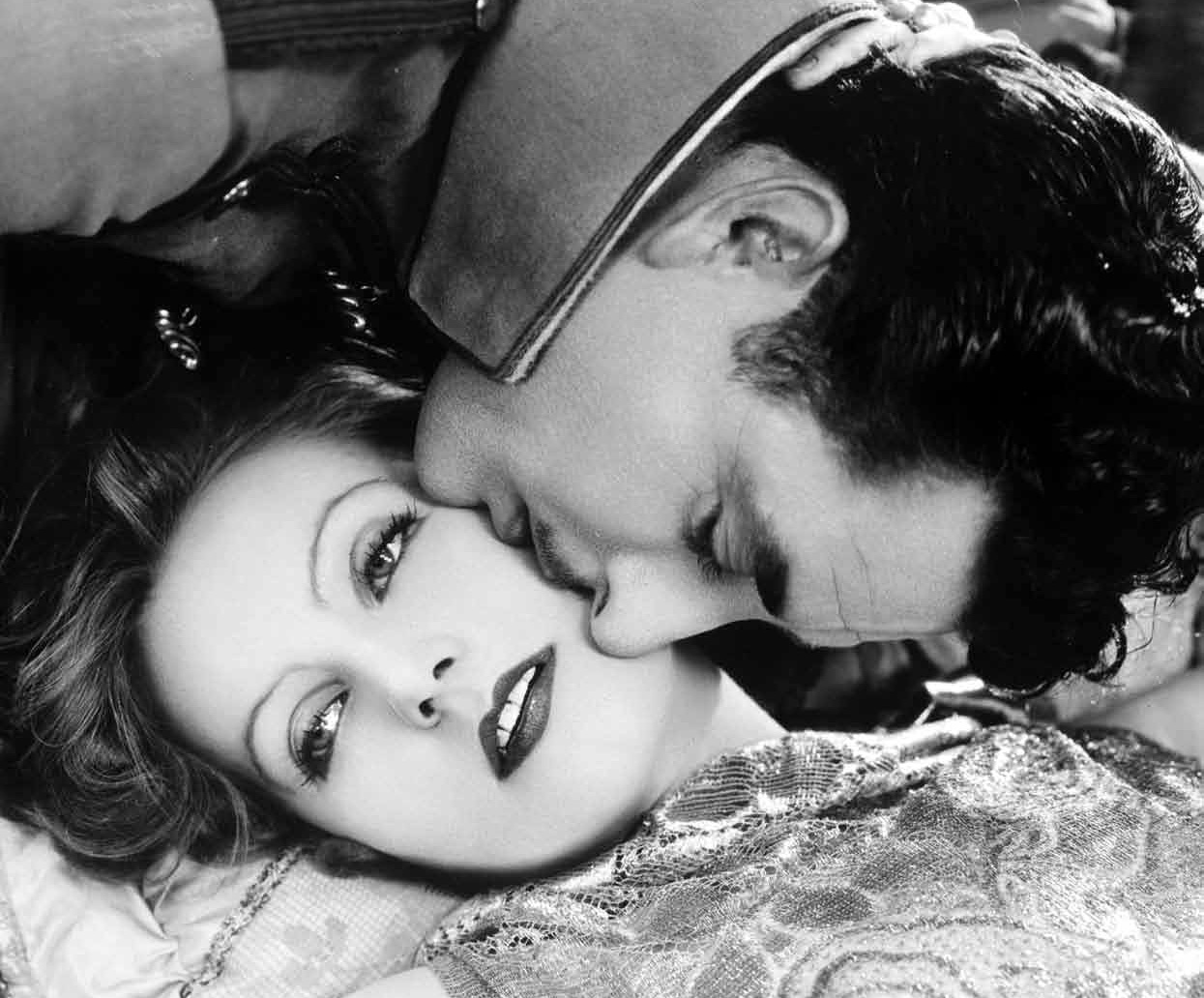
her character and her looks – glowing, weary, passive but capable of any audacity, she is the very image of erotic dissipation or of a ‘reluctant nymphomaniac’ (Alexander Walker). Flesh and the Devil, from a novel by Hermann Suderman, marks the triumph of the photogenic over bad literature. Garbo descends from a train, an entrance that Brown will reprise in Anna Karenina; for Captain John Gilbert it is an epiphany; for her, the beginning of a destiny of amorous defeat. She slides into the quite ambiguous friendship between two men, made of blood pacts, embraces and joyful, virile skirmishes. She literally slides, in the most liquid of all seduction scenes: she meets Gilbert once more within the sinuous framing of a dance scene; they recognise one another across a curtain of dancing backs; their dance is already almost a kiss. In a single sequence we find ourselves in the darkness of a nocturnal garden, in the intimacy of a close up illuminated solely by the light of a lit match.
The predictable chain of catastrophes, duels and disastrous passions follows. But everything becomes background (narrative) noise. It is the ‘face of Garbo’ that counts, and certain throw-away gestures which map her desire and degradation. All leading to the humiliating ceremony, which she must suffer through because it is part of the only love game that she is interested in playing: so we find her in the snow, following and begging her lover, who is going away but could maybe be moved by the sight of her soaking shoes. In the end, if we will remember Flesh and the Devil, it is for that one surreal and blasphemous gesture of a Eucharist chalice rotated in her hands and then brought to her lips in the exact point at which he, who denied her all contact, placed his. In the end, if we love Clarence Brown it is because he traversed the history of Hollywood, honestly and successfully, bringing along a vision of cinema matured in the silent era and never really submitted to the reasons of an alternate aesthetic.
Paola Cristalli

Restored by Warner Bros. at YCM Labs, from the original camera negative
“The alternative ‘happy’ ending to Flesh and the devil was shot againt the wishes of Clarence Brown to placate those exhibitors who wanted to reassure their patrons that everyone always lives happily ever after. When originally released, I understand the two options were offered as a choice. We have excluded it from our version because it was not the director’s chosen ending”.
David Gill, Photoplay
Adapted from the bookThe Undying Past by Hermann Sudermann,Flesh and the Devil consolidated Greta Garbo’s success. While her close friend and mentor, Mauriz Stiller, was quarrelling with studio chiefs, the shy, 21-years old Garbo preferred to incur the studio’s wrath rather than play another vamp. When offered the part, she was still working on The Temptress, which was weeks behind schedule. Several scenes for Flesh and the Devil were shot before Garbo had even accepted the part of Felicitas. “I did not like the part” she said. “I did not want to be a silly wamp. I could see no sense in dressing up and fooling around, just being seductive”. She finally gave in, but it was to be the only studio battle that she lost. In future, she would be able to sit through such storms or threaten to quit with the famous words, “I think I go home”.
Director Clarence Brown accepted the project with alacrity; it contained a great deal of atmospheric potential -a style he had learned from the French director, Maurice Tourneur. Brown had been Tourneur’s assistant for five years and had established a reputaion for himself at Universal with a series of superbly made dramas. His experience at United Artists with stars like Valentino and Norma Talmadge had made him an ideal director for MGM.
Garbo was teamed up with two male stars, John Gilbert and Lars Hanson. Gilbert was a leading romantic idol and, for the last time, Garbo had to settle for second billing. From the beginning, Gilbert was enchanted by her and she felt relaxed and easy in his company.
In accordance with the Hays code, the character played by Greta Garbo meets a dire end. But whereas this was acceptable in the big cities and in Europe, small town and rural audiences would not put up with tragedies. Special endings had to be shot for them -endings which both maddened and depressed directors cast and crew. Under protest, Brown shot an ending for Flesh and the Devil which showed Leo happly united with Hertha. This ending is still incorporated into the MGM print and, at Clarence Brown’s request, removed.
“The loved/hated Hermann Sudermann does also emerge from the valley of shadow, the German Memnonite who was a contemporary of Blasco Ibañez and Lagerlöff (1858-1928), hailed for his theatre dramas showing a strong naturalistic trait typical of the period (What money cannot buy, 1889;Magda, 1983, in Italy Zucconi’s strong point; turn of the century Morituri, 1896…), and equally disparaged for the heterogeneity of plots and his somewhat confusing ideas. He was also a good novelist, and if today there is something still to be remembered of his, maybe it should be his novels more than his plays. Maybe this is just a personal opinion, springing out of old, uncontrolled recollections”.
Sandro Toni

Alternative happy ending was kindly put at our disposal by George Eastman House – Motion Picture Department