[MOVIE]
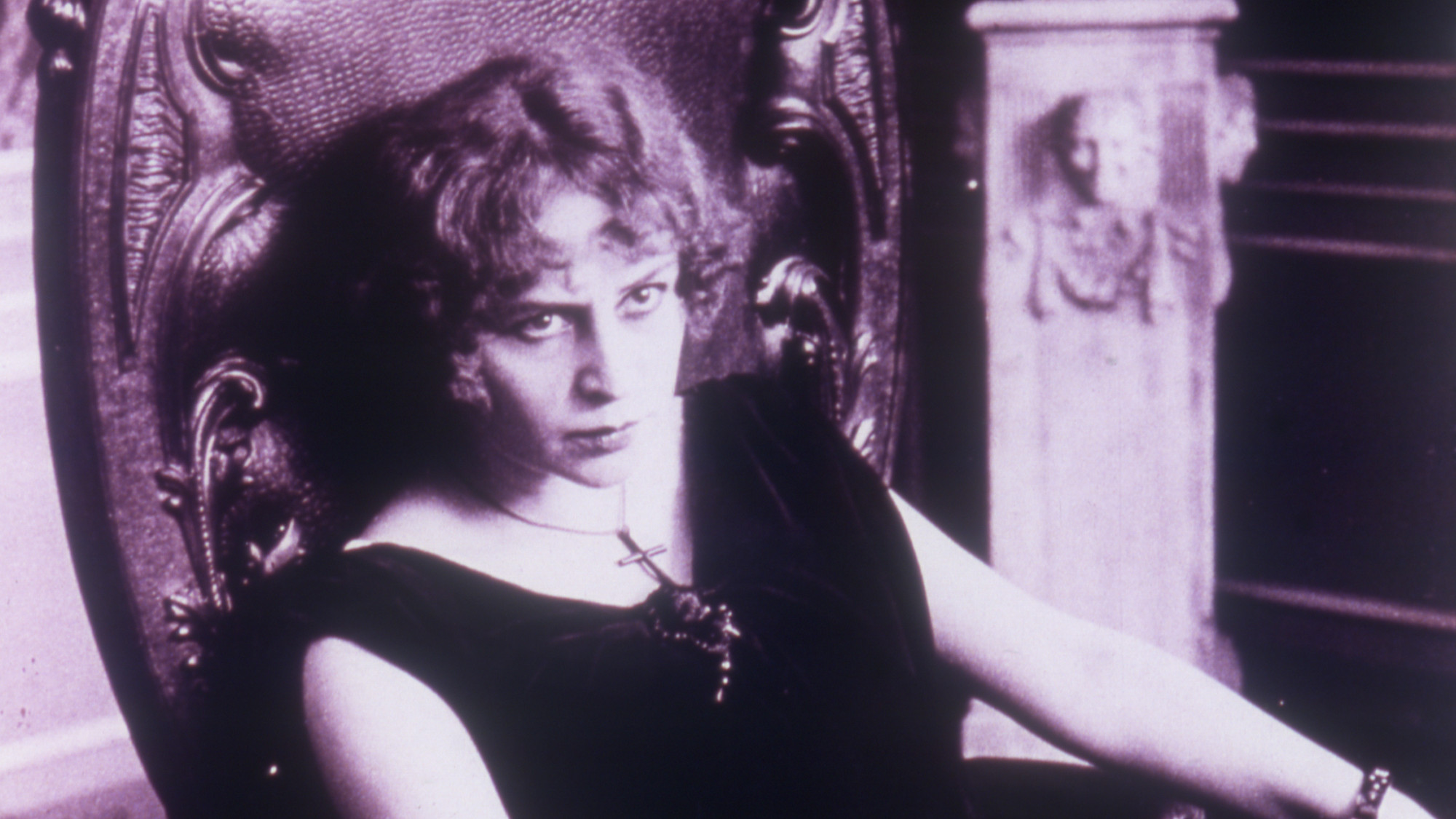
Sog.: Washington Borg. F.: Emilio Guatari. Int.: Berta Nelson, Ugo Gracci, Rina Maggi, Luigi Maggi, Raimondo van Riel. Prod.: Film d’Arte Italiana. 35mm. L.: 1123 m. D.: 58’ a 19 f/s. Col. (from a tinted positive nitrate).
Edition History
Originally named Berta Isaakovna Katsenelson (Katzenelson), soprano, actress and producer Berta Nelson (1890-?) was born into a Jewish family in Odessa. Although there is no record of her activity in Russia, in 1912 she debuted at the Teatro Mercadante in Naples as an opera artist; as of 1922 she had appeared in 18 films, five of which were produced in 1921-1922 by her own film company, Nelson Film.
Nelson belonged to that very small elite of film actresses whose success on the screen was a mere reflection of their triumph on stage. […] Luckily six or seven of her films still exist, two of which were Itala pictures, Come una sorella (1912) and Vittoria o morte! (1913). In Vittoria o morte! Nelson played a daring girl who drives cars recklessly, flies and jumps from a plane into the sea to get to a ship and recover documents stolen by a spy: an entirely unusual female character for 1913 Italian film, masterfully performed by Nelson. […] In 1917 she starred in Fiamma simbolica by Eugenio Perego, a psychological detective movie in which she tackled the role of a wife who seeks her beloved husband’s murderer only to put out the flames of her love for him, discovering he was not the victim but the executioner, guilty of assaulting a young girl.
It was Berta Nelson who welcomed a group of her compatriots exiled after the revolution and introduced them to Ambrosio, giving the director Alexander Uralsky and the actors Tatiana Pavlova and Osip Runitsch the opportunity to create a Russian series for the Turin production company, which included three or four films, unfortunately all lost today, that critics at the time – somewhat malevolently – advised directors and actors to watch and take notes in order to learn something.
Vittorio Martinelli, in Cabiria e il suo tempo, Paolo Bertetto and Gianni Rondolino (eds.), Museo Nazionale del Cinema/Il Castoro, Turin-Milan 199

In Vittoria o morte! (Segundo de Chomon, 1913), presented last year as part of “Adventurous Women of the Silent Screen”, Berta Nelson is a fearless heroine who throws herself from a plane onto a boat in flames; in 1921, she became a producer. In Fiamma simbolica, a psychological crime story, she plays the part of a wife looking for the murderer of her beloved husband but who will blow out the flames of her own passion – her husband was not a victim but the perpetrator, guilty of abusing a young woman. (Mariann Lewinsky)
The film was made in 1917 but obtained the censor certificate only two years later. It was released in a few cities and almost immediately disappeared from circulation. Fiamma simbolica, a work with a melancholic grace, also demonstrates the talent of Eugenio Perego (1876-1944), barely remembered as a collaborator in a few D’Ambra films (Papà mio, mi piaccion tutti!, La chiamavano Cosetta).
In reality, the filmography of Perego, who at the beginning of his career worked as an actor, cameraman and screenwriter before becoming a director, contains films that are not minor such as I due sergenti (1913) and the series of films he made in Milan with the spirited Lina Millefleurs. In 1917 he directed Musidora in her only Italian film, La vagabonda, based on a story by Colette; he then became the favorite director of Pina Menichelli, from Padrone delle ferriere to Giardino delle voluttà, La disfatta dell’Erinni and La storia di una donna, (…). After two happy films with Galaor (Galaor contro Galaor) and Saetta (Caporal Saetta), he moved to Naples where his adaptation of the farce Mam’zelle Nitouche (Santarellina), with Leda Gys, was enormously successful with audiences and critics alike. Gustavo Lombardo did not let Perego escape from him, and the Neapolitan company handed him another eight films featuring Gys, a series of diabolical comedies set in Naples that were highly successful during the worst years of the crisis; with the last title of this series, La signorina Chicchiricchi, Perego and Gys retired from film. A good storyteller with subdued instinct and an extraordinary sense of theater, the films by Perego that remain demonstrate thoughtful, planned directing and a perfectly assimilated cinematographic “culture”.
Vittorio Martinelli, Catalogo Il Cinema Ritrovato 1991, Cineteca di Bologna, Bologna 1991