[MOVIE]
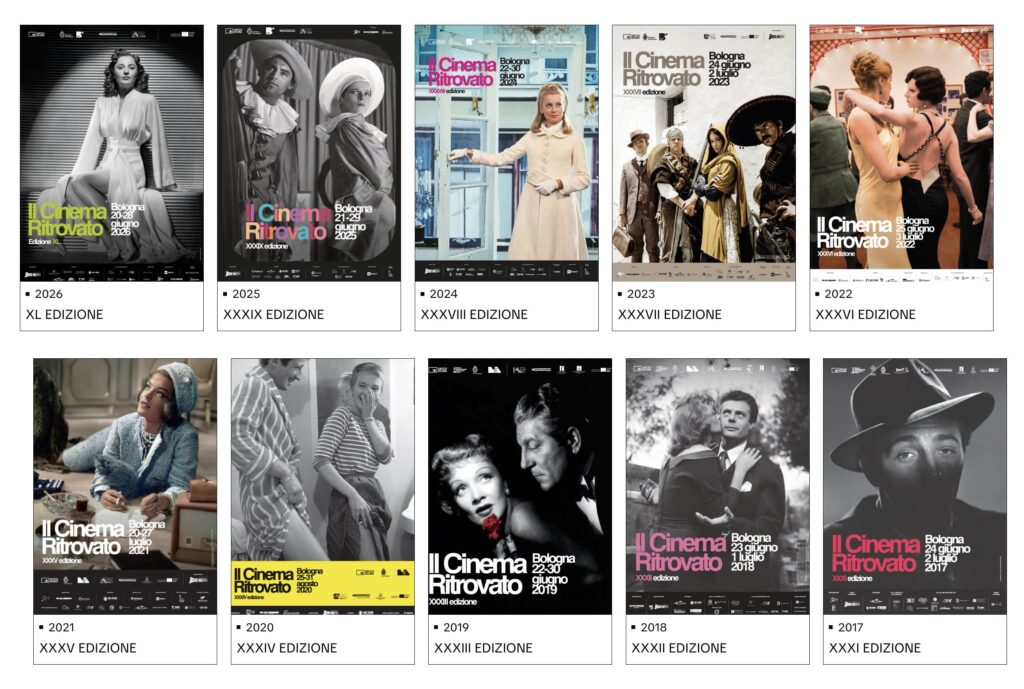
Edition History
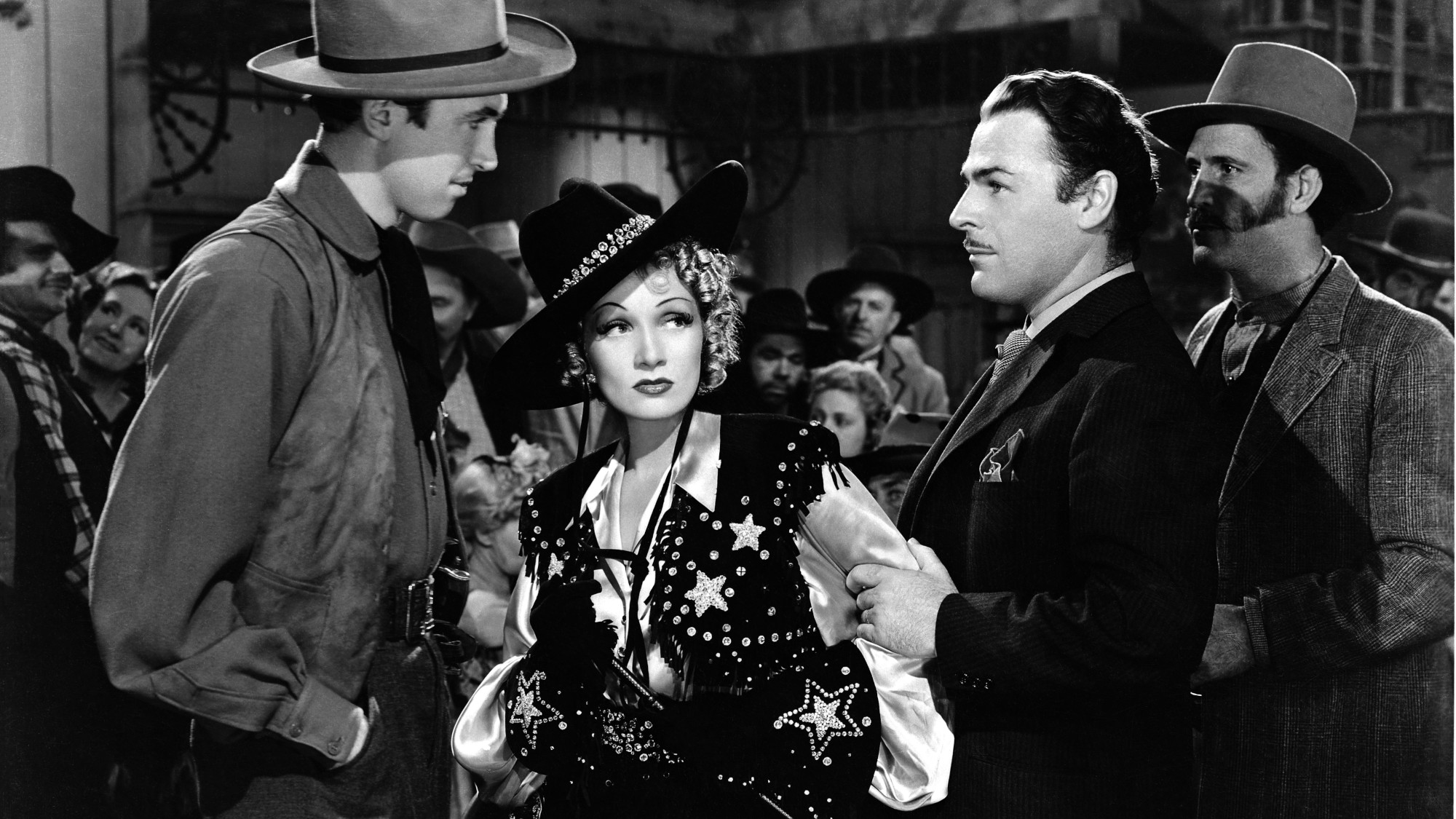
This western comedy from 1939 directed by George Marshall and produced by Joe Pasternak marked Marlene Dietrich’s first comeback. She had been considered “box-office poison” in the US after her separation from Josef von Sternberg. The setting of the film is a saloon in the Wild West town of Bottleneck, where corruption and deceit reign. Singer Frenchy (Dietrich) is complicit in this system. Only when Thomas Jefferson Destry (James Stewart), the son of a legendary western hero, moves into the town, does the tide turn and peace and order return. The songs by Frank Loesser and Friedrich Hollaender structure this lively comedy full of linguistic wit and solid brawls. The song The Boys in the Backroom later became part of Marlene Dietrich’s regular repertoire during her singing career.
“The New Yorker” wrote on 9 December 1939: “Marlene the feisty is in sparkling form in Destry Rides Again, and one can only assume that she spent her recent forced vacation not in the rosy glow of a boudoir, but at some training camp. In the few lulls when she’s not tripping a bully, hurling a bottle into the mirror or slapping poor Una [Merkel] (who also knows how to defend her skin), you notice that she looks a little more emaciated, a little less voluptuous in her contours. With those muscles – the wiry type – she has the makings of a welterweight. And she hasn’t lost her voice because of it.”
Peter Mänz

Courtesy of Park Circus.
Restored in 4K by Universal from a 35mm nitrate composite fine grain and from the mono mix.
Long before the hippy slogan “Make Love, Not War”, this wildly funny western carried a pacifist message as German troops entered Poland. But you don’t need a message to fall for the story of Frenchy, a hardboiled dancehall girl in the funky and gun-crazy town of Bottleneck who falls for mild-mannered deputy sheriff Tom Destry, who never wears a gun.
When a film is so satisfyingly entertaining, one often forgets the artistry with which it was crafted. George Marshall blended what he had learned from directing Laurel & Hardy with his experience of directing Tom Mix. The latter’s first talkie from 1932 being the film on which Destry was based, even if in the process everything was drastically altered except for the title.
A healthy dose of improvisation prevailed. The script was nowhere near completion as the production proceeded at the frenetic pace of a B-movie. The result? The greatest comic western ever made. On the evidence of Destry and You Can’t Cheat an Honest Man, 1939 might be the best year of Marshall’s 60-year career. He would try to repeat the success of this satire with Destry (1954), which resorts to shot-for-shot restaging in some scenes. One of the major differences between the timeless original and the stodgy remake is the sense of space and composition, particularly in the saloon scenes. Here the relation between action and place remains highly imaginative, alternating between high-angle shots of the setting and medium shots of the mayhem on the floor, with a depth of field matching another classic 1939 western, Stagecoach.
The film is exalted by the star presences of Marlene Dietrich and James Stewart – the latter a rising star; the former a troubled figure who hadn’t appeared on screen for two years. For Dietrich, it was a risk she needed to take, to shed the image of the ethereal Berliner blonde established by her collaborations with Josef von Sternberg. Long gone were the days of overhead lighting and diffusion filters. Now it was time for barroom fights!
Ehsan Khoshbakht
By courtesy of Park Circus.
Restored in 4K in 2018 by Universal Pictures in collaboration with The Film Foundation at NBCUniversal StudioPost from a 35mm nitrate composite print. Special thanks to Martin Scorsese and Steven Spielberg