[MOVIE]
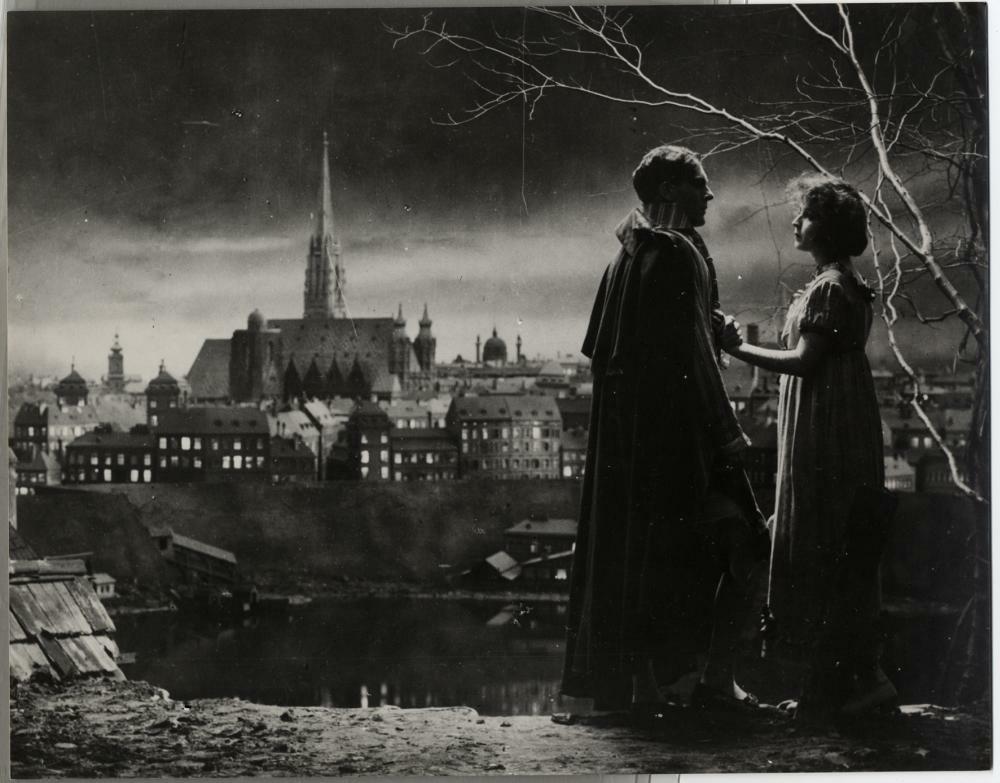
R.: ihály Kertész.S.: dal dramma omonimo di Arthur Schnitzler. Sc.: Arthur Schnitzler e Mihály Kertész. F.: Gustav Ucicky, Edward von Borsody. Scgf.: Julius von Borsody, Arthur Berger. In.: Mihály Varkonyi, Anny Hornik, Maria Hegyesi, Egon von Jordan, Mary Stone, Franz Glawatsch, Julius Szoreghi, Joseph Konig, Ludwig Rethey, Karl Lamac, Agnes d’Ester, Ferdinand Onno, Michael Xantho. P.: Alexander Kolowrat per Sascha-Film. D.: 100’.
“Mihály Varconyi, later to become Victor Varconi, was born in the little village of Kisvard on March 31st, 1891.
A contemporary of Korda and Curtiz, who in the years before the First World War had tried to give life to a national cinema, Mihály Varconi, with the physique du rôle for cinema, appeared often and right from the start as the leading actor in a myriad of films of every genre, from reworked literary works or theatre plays to sparkling comedies, from adventure films to dramas of passion. […]
Unfortunately almost all his Hungarian silent pictures have been lost and today it seems that nothing remains of Varconi’s work from his own country […]. Between 1920 and 1921 he played in four films in Berlin, in two of which – Jenseits von Gute und Böse and Nachtbesuch in der Northernbank – he showed an outstanding propensity for à sensation roles, performing in breath-taking situations in two movies by Alezander Korda. In Sodom und Gomorrah, the Biblical-modern colossal strongly intended by Sascha Kolowrat as a showpiece for Austrian cinema, Varconi was the angel of the Lord. When Sodom und Gomorrah was distributed in the United States it was seen by Cecil B. De Mille, who wanted the young Hungarian to be brought to Hollywood. In 1924 the celebrated director made him the protagonist of Chancing Husbands, directed by Frank Urson under his supervision. The film, as indicated by its title, is a comedy of misunderstanding, where two couples exchange their partners, and fits perfectly in the maliciously libertine genre, typical of De Mille’s early work. Varconi was perfect, according to the critics of Variety and The New York Time, setting off the star, Raymond Griffith. De Mille also called him for Feet of Clay and Triumph.
After his experience in Hollywood, Varconi came back to Europe: Korda had asked him to play in a lively comedy with his wife and Willi Fritsch, Der Tänzer meiner Frau. And together with Maria Corda, Varconi also appeared in an Italian film by Amleto Palermi, shot partly in Italy and partly in Austria, with the title of L’uomo più allegro di Vienna. Immediately afterwards, Palermi started to direct together with Carmine Gallone Gli ultimi giorni di Pompei, an adaptation of the famous novel by Bulwer Lytton brought to the screen many times: the protagonists were once again Victor Varconi and Maria Corda, alongside the ghostly German actor of Lang’s films, Bernhard Goetzke.
This was his magic moment: as soon as the film was completed he returned to the United States, where in the last years of silent cinema, he appeared continuously in pictures of every genre, in gangster movies such as Chicago and The Angel of Broadway, where he again found his favourite partner, Leatrice Joy. Cecil B. De Mille made him a Czarist officer in The Volga Boatman, and even Pontius Pilate in The King of Kings. At the closing of the silent era he played Nelson in a celebrated film by Frank Lloyd, The Divine Lady.
With the onset of talkies, as with many other non-English speaking actors, Varconi saw his career, then at its zenith, plummet downwards. At first he turned to acting in some German versions of American movies, then gradually he was moved to minor parts. But throughout the thirties and forties his face, showing the inevitable ravages of time, continued to appear, although in secondary roles, in three or four movies a year, for example with Irene Dunne in Roberta, as Victor Hugo in Suez, as Hess in The Hitler Gang and as a constant presence in the movies made by his mentor, De Mille.
Victor Varconi died in Santa Barbara, California, on June 16th, 1976.
(Vittorio Martinelli, in Cinegrafie, VI, n.9, 1996)

PROJECTO LUMIÈRE
Restoration co-financed by the Projecto Lumière