[MOVIE]
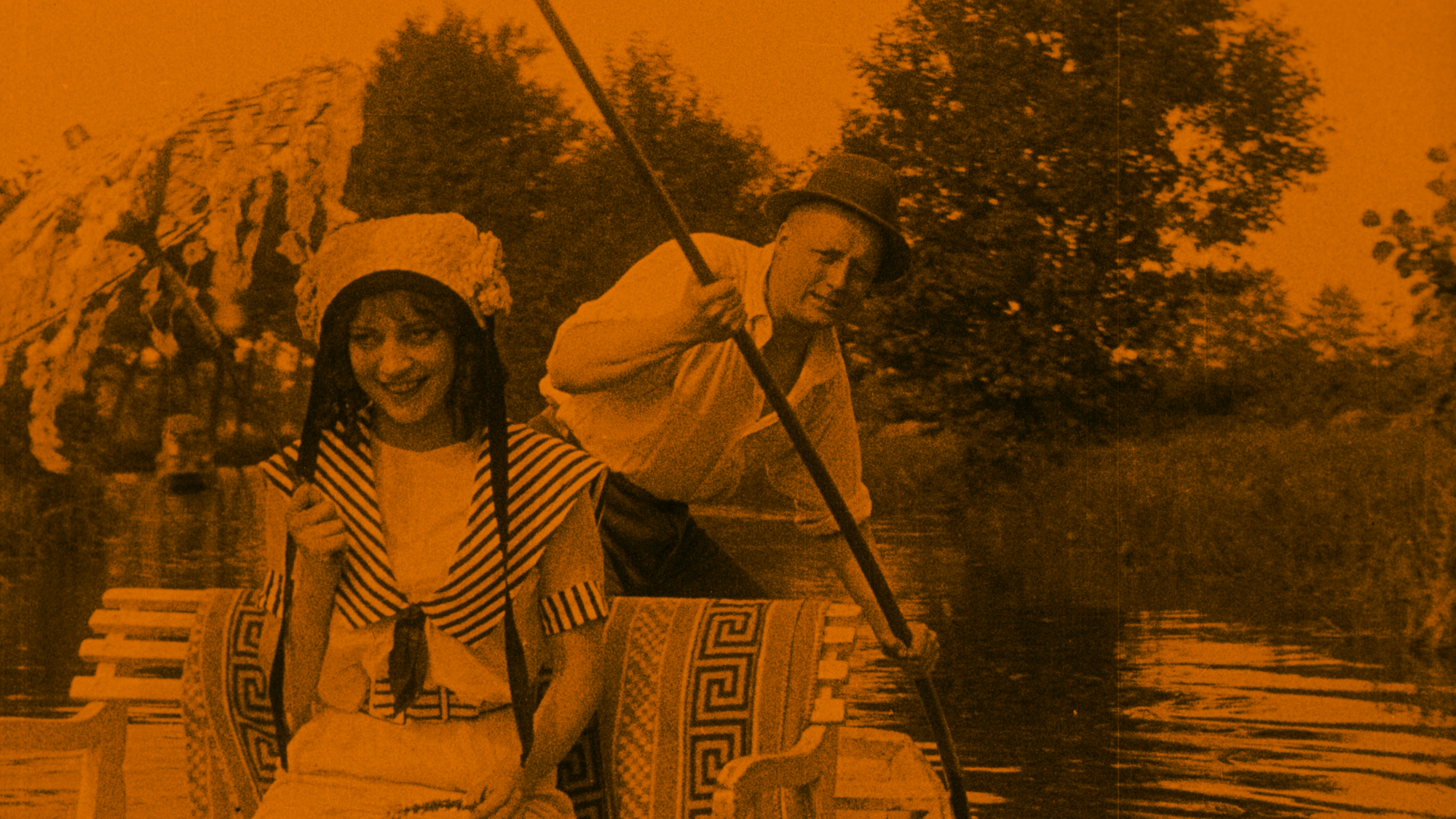
It.: L’uccello Foresto; T. Ing.: The Strange Bird; Scen.: Peter Urban Gad; F.: Guido Seeber; Int.: Asta Nielsen (Sig.Na May, Figlia Di Sir Arthur Wolton), Carl Clewing (Max, Barcaiolo Nella Sprea), Frau Karsten (Grete, Sua Moglie), Hanns Kraly, Hans Mierendorff (Sir Arthur Wolton, Nobile Inglese), Agda Nielson (Mizi), Louis Ralph (Herbert Bruce), Eugenie Werner (Dama Di Compagnia Della Sig.Na May); Prod.: Deutsche Bioscop Gmbh, Projektions-Ag Union (Pagu); Pri. Pro.: 11 Novembre 1911 ■ 35mm. L. Or.: 1000 M. L.: 805 M. D.: 44′ A 18 F/S.
Edition History
Supported by unprecedented promotional efforts, Urban Gad’s Der fremde Vogel premiered across multiple German cities on 11 November 1911. As part of the first Asta Nielsen series, the film marked a radical shift in early cinema, establishing the star system as the foundation for a new feature-length business model in Germany. Produced by Deutsche Bioscop GmbH for Projektions- AG Union (PAGU), the internationally successful series and its pioneering PR campaigns cultivated Nielsen as one of Europe’s first movie stars. The film’s tragic romance unfolds within the Spree Forest – a unique inland delta southeast of Berlin known as the “Green Venice” of Germany. Against a backdrop of intricate water labyrinths, lush forests and marshy landscapes, a local boatman (Carl Clewing) falls for a young Englishwoman (Asta Nielsen) vacationing with her father and suitor. By portraying an independent woman who defies her father’s marriage scheme, Nielsen’s character strives to overcome traditional gender and class constraints. The newly restored version offers fascinating insights into Nielsen’s star-making, full-body performance and Guido Seeber’s groundbreaking cinematography, particularly through shots missing from previous renditions. Filmed entirely on location – often from small, tossing boats – the then-unconventional outdoor shots made the film a sensation, with critics praising it as a triumph of cinema over theatre. For over a century, Der fremde Vogel was available only in black-and-white. Based on the tinting of three surviving nitrate elements, this new colour restoration offers an experience much closer to that of the original 1911 audiences.
Maria Matzke

Restored in 2025 by Deutsche Kinemathek at Cinegrell Postfactory, George Eastman Museum and Det Danske Filminstitut laboratories, from a 35mm nitrate fragment preserved by George Eastman Museum, a 35mm black and white duplicate positive preserved by Bundesarchiv and a 35mm black and white safety print preserved by Det Danske Filminstitut. Funding provided by FFE – Förderprogramm Filmerb
This film is part of the famous Asta Nielsen Series, and surely one the best dramatic films ever made. The plot is quite simple. A young Englishwoman on an excursion to the Spreewald with her father and other travellers falls in love with a farmhand; the two lovers take flight; while being pursued by her relatives, she is left alone by her beloved, who goes for help; she falls into the water and drowns. Psychologically, however, this simple plot is so well developed that you scarcely notice the absence of the spoken word. The advantage which cinema has over theatre is that a film can faithfully reproduce nature: the rustling of the trees in the Spreewald, the wonderful light reflections on the water – particularly beautiful is the magical glow of the moon – the lapping of the waters, the corpse among the water lilies, the idyllic farmhouses. All this can only be shown to perfection in the cinema, not in the theatre.
Anonymous, “Der Kinematograph”, Dusseldorf, 8 novembre 1911