[MOVIE]
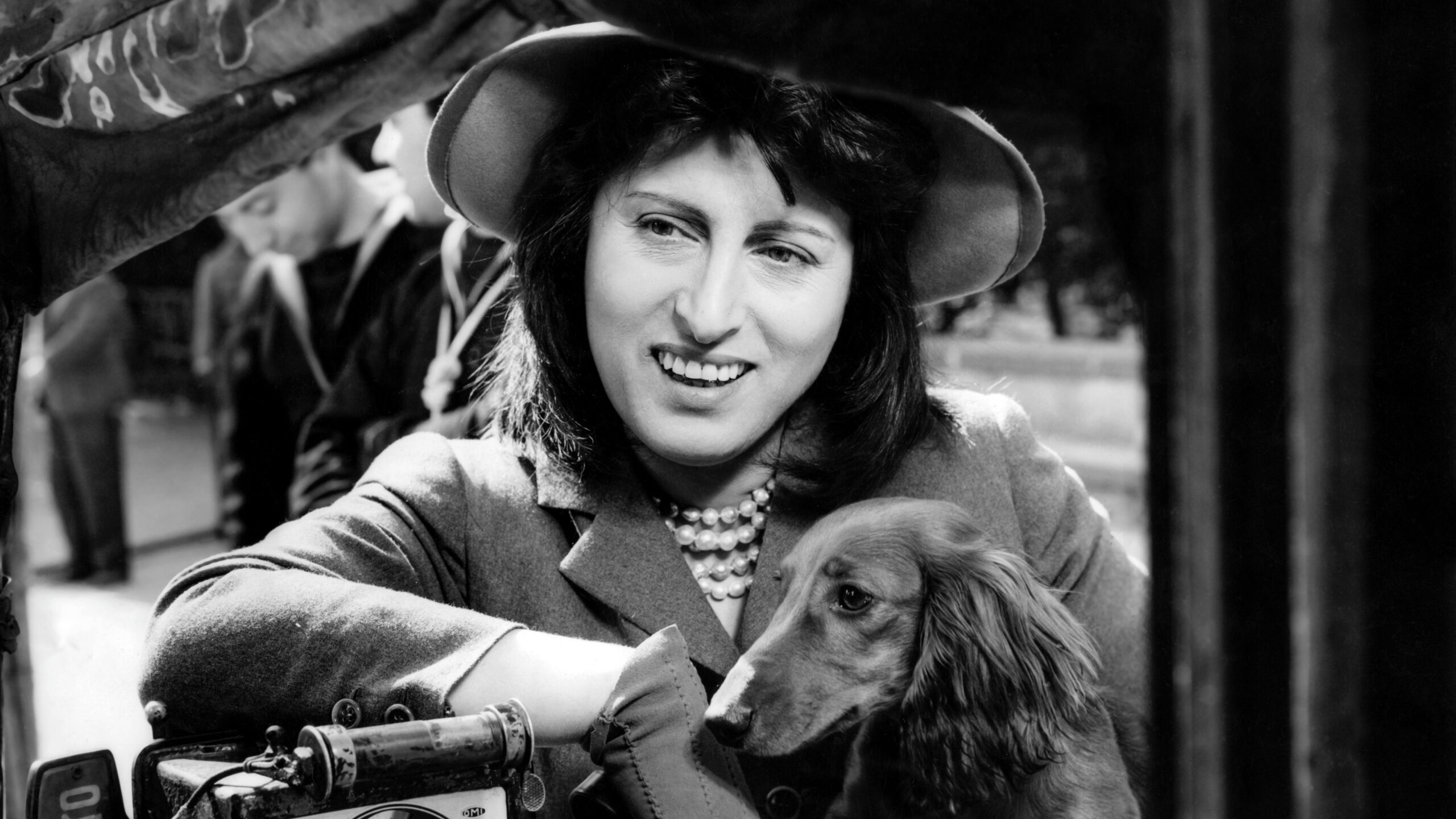
Sog.: Cesare Zavattini. Scen.: Suso Cecchi d’Amico, Cesare Zavattini. F.: Gábor Pogány. M.: Mario Serandrei. Scgf.: Ugo Boettler. Mus.: Alessandro Cicognini. Int.: Anna Magnani (se stessa). Prod.: Alfredo Guarini per Titanus-Film Costellazione DCP. D.: 22’. Bn.
The episode was completely true. We knew Anna, and there was no shortage of choice. So we chose an anecdote out of the thousands that we knew about her.
Suso Cecchi d’Amico in Scrivere il cinema, edited by Orio Caldiron and Matilde Hochkofler, Edizioni Dedalo, Bari 1988
Clearly, Visconti sought to raise the stakes with regard to comedy, exuberance and volubility, giving free rein to an actress who is even more amazing in an everyday “spat” than in the contrived, staged frenzy. That holds especially true for a memorable walk down a flight of stairs, in pure opéra bouffe style, in which the star, using her voice and gestures, calls on all the tenants and onlookers she encounters to witness her good faith: we are on the knife edge between melodrama and neorealism in its purest form. Just as Gian Luigi Rondi brilliantly wrote: “There is in this episode the full flavour of reality, the reminiscence of the event as it actually happened, harmoniously reconstructed through narrative equilibrium, in accordance with poetic requirements.” As we might imagine, the urban décor still plays a vital role here. Visconti uses it like an opera prop. It is not, indeed, such a rundown area of suburban Rome that it can’t be transformed, in his hands, into sumptuous scenery. And Magnani, by the same token, comes across “as her real self ” in the splendour of her legend.
Claude Beylie, Deux chroniques, in Visconti, l’histoire et l’esthétique, “Études cinématographiques”, n. 26- 27, 1963

Restored in 2013 by CSC – Cineteca Nazionale and Ripley’s Film in collaboration with MARZI at RBC and Video Master Digital laboratories, from the 35mm master positive and a 35mm dupe negative. Audio restored at Borgo del Suono laboratory, from the 35mm sound negative