
Film notes
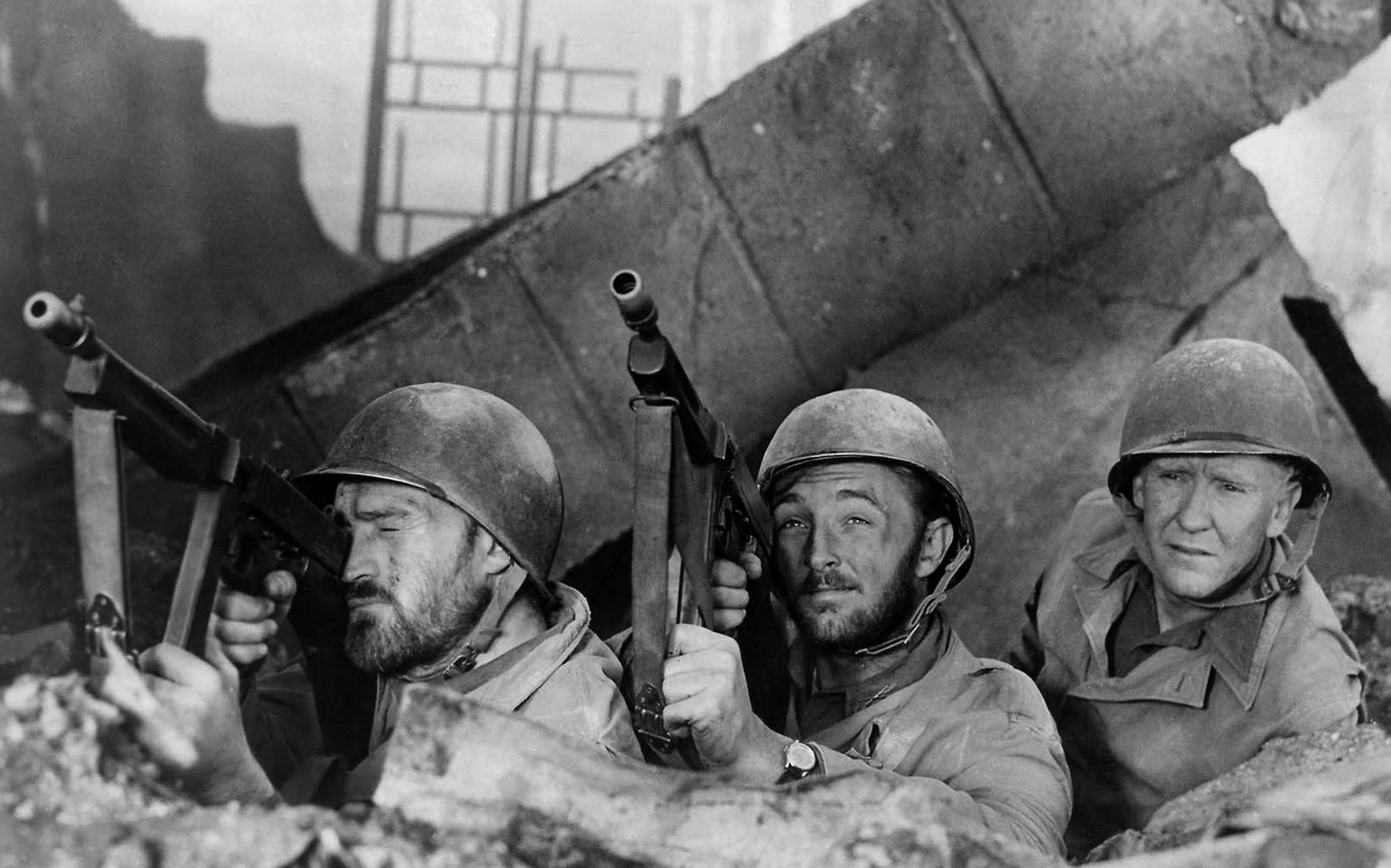
Eisenhower called it “the best war movie ever”, and it is. Based on Ernie Pyle’s famous articles on grunts in the North-African and Italian theatres, G.I. Joe is episodic at best, following the destiny of Charlie Company on various fronts. Men lose their lives one by one, or their minds – ex-fighter Freddie Steele, the ‘Tacoma Assassin’, is unforgettable as Sgt. Warnicki. Eschewing the usual romantic pap or dramatic scenes of Hollywood WW2 pictures, the film had at its center one emotional, wordy scene, to be played by C Company’s Lt. Bill Walker. Neither director William Wellman nor independent producer Lester Cowan wanted stars in the picture. Shrimpy Burgess Meredith got to play Pyle, but Walker was hard to cast. For his audition Mitchum had to play the scene where he is trying to write letters to families about their dead sons. It was the longest dialogue in the script, and Wellman did not think a newcomer could hack it, let alone impress him. Mitchum never was in the army, never had any interest either (he already had two children); but he had his singer-sister tell him about the soldiers who came to the canteens and clubs she performed in. Soldiers back from combat never were the gung-ho noisy bunch you saw in the movies. The were haunted and exhausted and never talked about the war. Mitchum played it that way, quietly, and Wellman was blown away. You will be too.
Philippe Garnier (based on Lee Server’s Robert Mitchum: Baby I Don’t Care, St. Martin’s Press, New York 2001)