Film notes
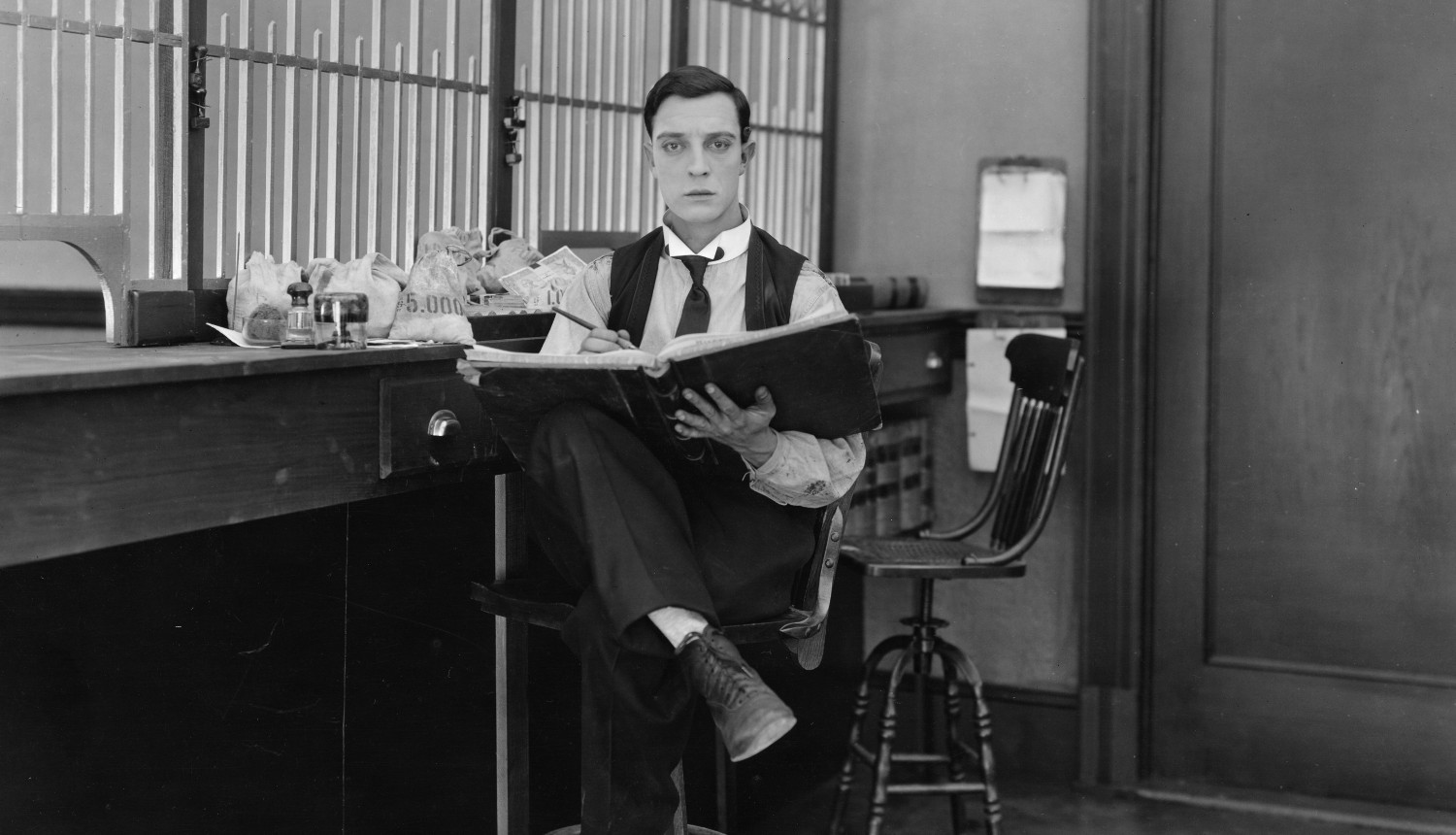
One of Buster Keaton’s most famous works, this movie is designed in two parts, both closed environments. The first is the bank where Keaton’s character works, a place thrown into complete chaos by his antics, until such time as he falls victim to his own mischief. The banking hall ends up looking like a giant fly-trap, actors stuck to the floor or to each other, pathetically and comically gesticulating. When Keaton’s hopeless cack-handedness results in his being fired, he takes refuge in a haunted house inhabited by bandits who manipulate a series of secret clockwork mechanisms. He also finds there an actor dressed as Mephistopheles, whom a hostile audience has hounded out of the theatre. Keaton remains trapped in this place, until such time as he can penetrate its workings and thus make the trap not a trap. […] He passes, in other words, from one room-space to the next, unfailingly assimilating every experience, moving from foolishness to wisdom as gradually it dawns that appearances are not what they seem. From beginning to end, the story operates a profound alteration in Keaton’s character and as always, his point is that people do not remain static. Life is about change. Changing is learning to live.
Jean-André Fieschi, “Cahiers du cinéma”, n. 130, 1962