Film notes
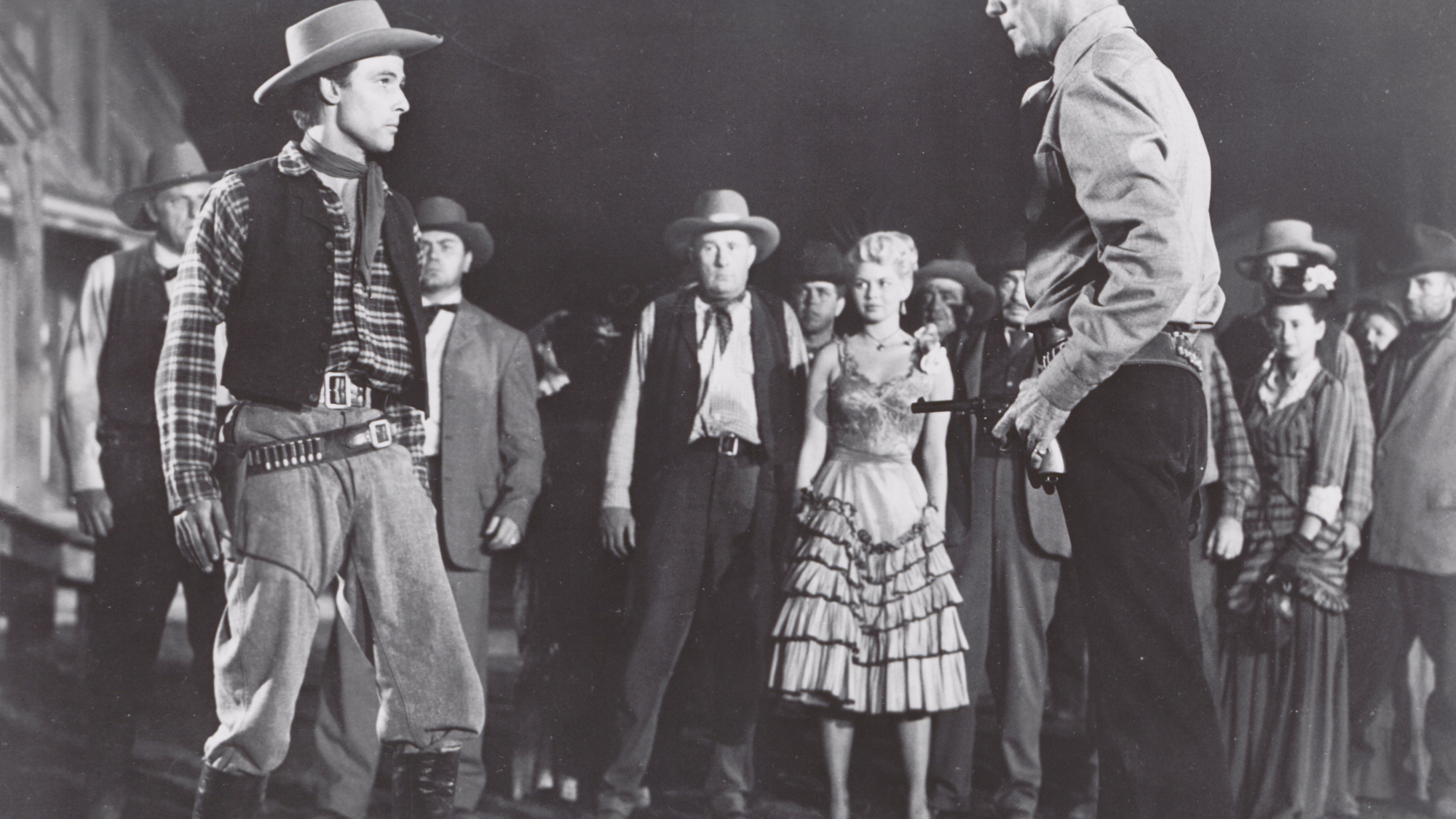
Bounty hunter Jim Kipp (Randolph Scott), pursuing three robbers and murderers, upsets the decorum of a town steeped in gentility where many of its respected citizens harbour dirty secrets. Andre De Toth’s involvement with westerns resulted in eleven titles across various studios, mostly Warner and Columbia. Six of them featured Randolph Scott (The Bounty Hunter being the last), who never quite managed to recapture the austere magic he achieved with director Budd Boetticher, partly because these films were too low-budget and their scripts seldom rose above variations on clichéd plots. The production itself was so poorly regarded that the film’s opening sequence was lifted from another De Toth western for Warner, Carson City (1952), with all the original shots recycled except for the reaction shots of the man at whom Scott points his gun. The film was shot in 3-D but seen mostly – or, according to some accounts, exclusively – in standard format. Of Warner’s 3-D productions, this is also among the least adventurous in exploring the possibilities of the extra dimension, save for a shot of a hat being blasted off a villain’s head and flying directly into the camera. Hardly surprising, perhaps, given that the man directing the film had only one eye. As a bounty hunter, Scott remains too bound to the notion of the gentleman gunfighter, with his asexual, church-going demeanour. The film’s real strength, however, lies in the fact that, almost until the end, Scott does not kill any of his presumed targets: they are eliminated by other fearful individuals attempting to conceal the identity of the true criminals. This process of self-elimination is what makes The Bounty Hunter such a fascinating reflection of Hollywood’s anxieties during the blacklist era, alluding to the McCarthyite vision of a fearful town in which everyone has something on his or her conscience.
Ehsan Khoshbakht