Film notes
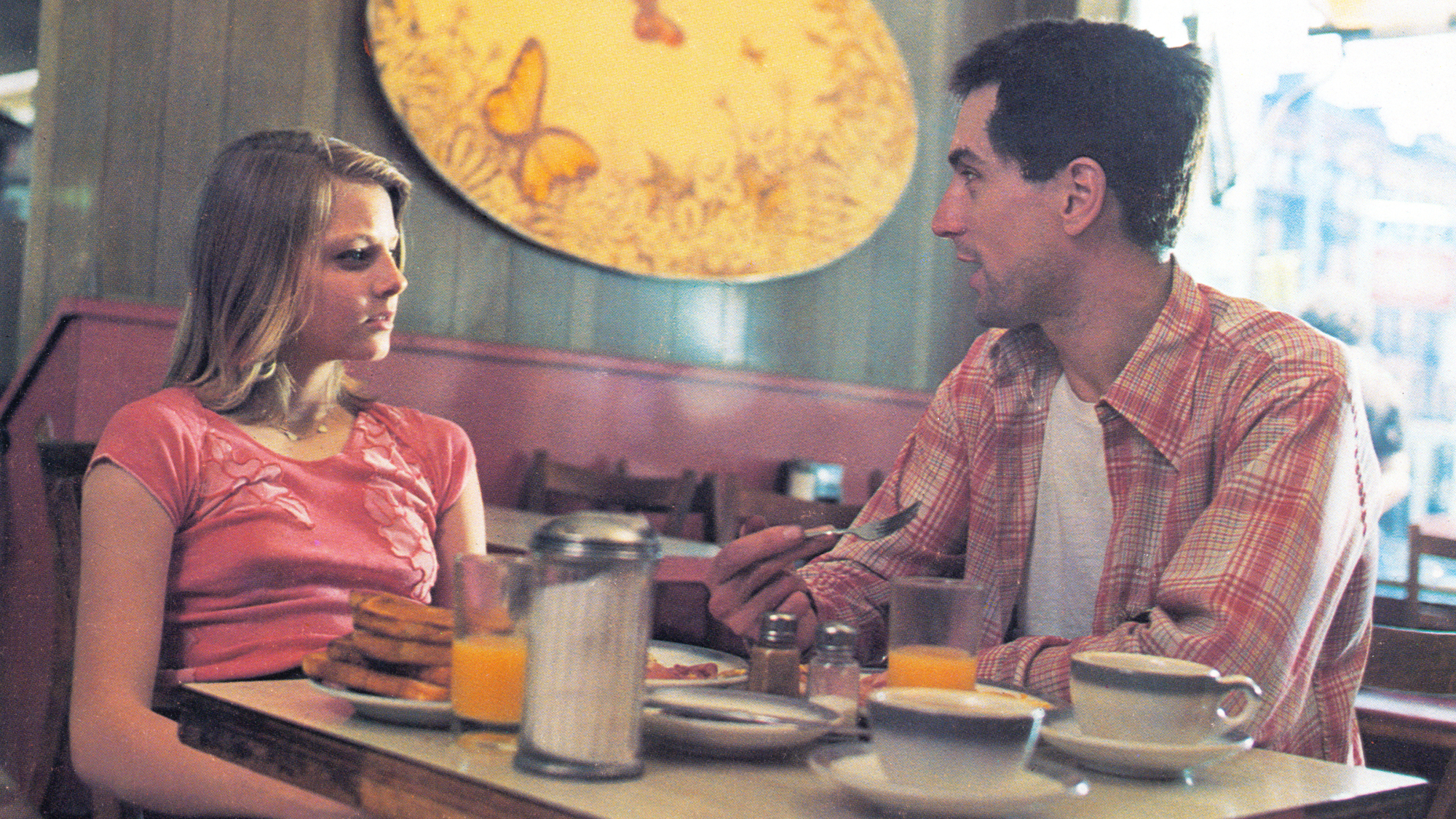
The appearance of the yellow cab, driving around in slow motion through the steam spewing from manholes, has all the solemnity of a ceremony. Robert De Niro’s ordinary taxi emerges in the setting of Manhattan like an apocalyptic cavalcade. With the fascination and terror of someone who relives a familiar nightmare, Scorsese celebrates the rediscovered city in this film. As in Mean Streets, he is not afraid of using hyperbole to conjure up evil. Is this hellish iconography over the top? No doubt about it, but we know not to expect a calm, realistic approach from the clairvoyant. He is in too much of a hurry to stop at the surface of the world he is filming, and he first has to demonstrate its spectacular side. It is not surprising that Bernard Herrmann made his own contribution to the undertaking: the dark emphasis of his orchestration mimics the same disproportion, the same sense of impending disaster, the same certainty that a fatal air wraps the urban setting he makes us enter … The tangible hell of the city and the hell of roasted souls. Travis (De Niro) knows both of them very well, and Taxi Driver shows him in an attempt at martyrdom … His room is in the last circle: at the drift’s edge, De Niro looks crumpled, as in the bottom of a well, flattened by a vertical high-angle shot that seems to be from God’s point of view. The metaphor reigns as far as the director uncovers the hero’s mental landscape. Hell – Travis coasts along it every day, on the sidewalks where the indistinct fauna of prostitutes, pimps and drug addicts swarm, in his taxi where his passengers spray sperm and blood in sordid mating, and even in the loftiest circles of high society … It would be futile to look at Taxi Driver as if it were a sociological study of the phenomenon of vigilantes or even the phenomenological analysis of a “case”. The film’s point of view is that of solipsist who has lost touch with reality … We are warned right from the opening credits, in which De Niro’s eyes, framed in the rectangle of a rear-view mirror, are superimposed with the iridescent lights of the city. The film’s puritanical iconography is summed up in this vision of him as if severed from his body – obsessed with the filth of the spectacle of the city that gathers waste.
Michael Henry, Qui veut faire l’ange…, “Positif ”, nn. 183-184, July-August 1976