


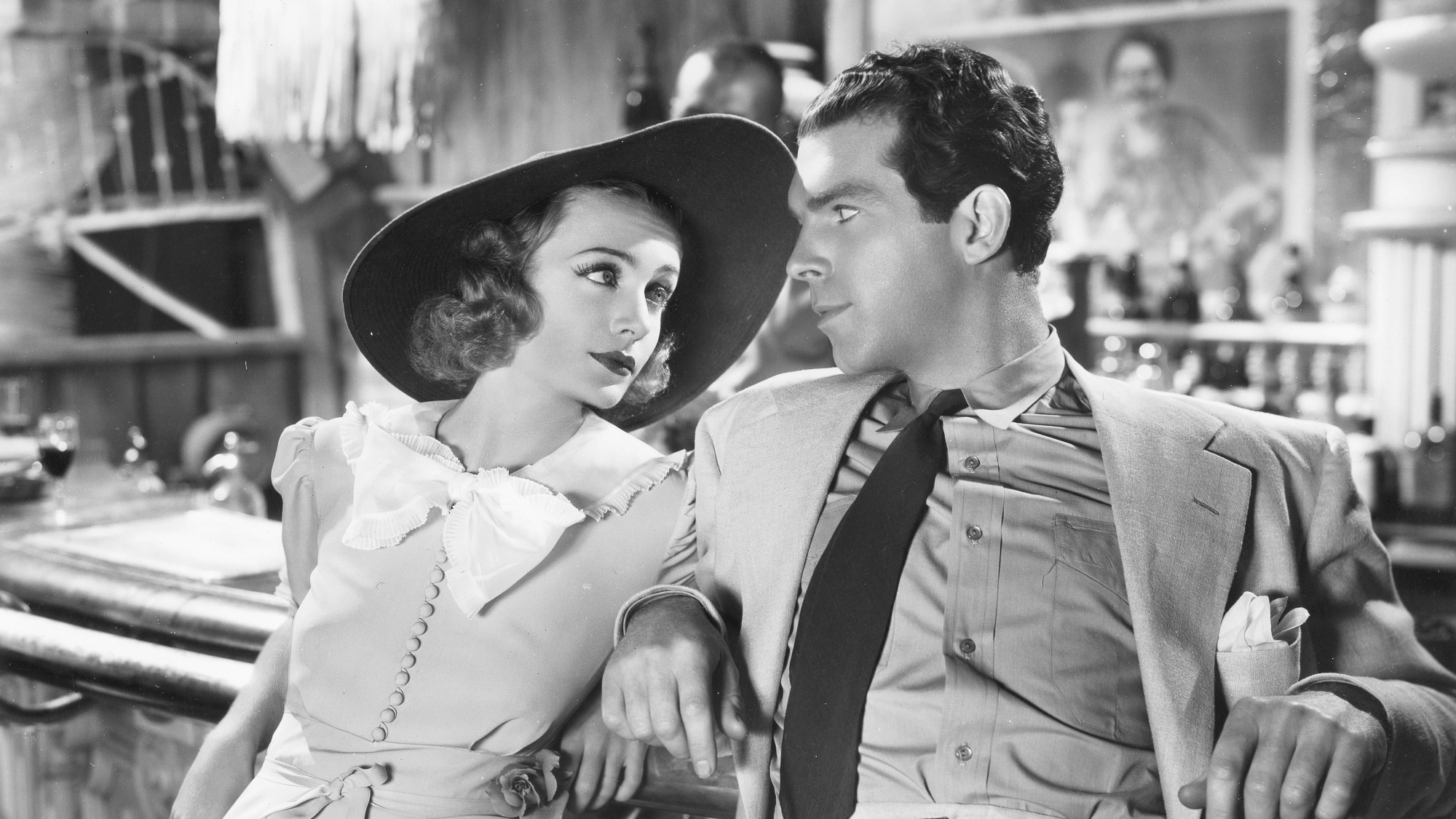
Film notes
Of Mitchell Leisen’s essential films, Swing High, Swing Low – a major commercial hit in its day – has long been the most difficult to assess, partly because it has been the hardest to access. The original camera negative was lost after the rights to the story were sold to another studio, and the copyrights were never renewed, which allowed the film to fall into the public domain. For years, the circulating copies have been atrocious, so this screening may well lead to one of the great rediscoveries in this programme. The story feels like a follow-up to Hands Across the Table, though more dramatic and even sombre in tone. Once again, we find a selfless, big-hearted working-class woman paired with a nogood, lazy, yet charming man. Maggie King (Carole Lombard) and Skid Johnson (Fred MacMurray) meet by chance in Panama, where they quickly fall in together. They both lose their jobs – Maggie as a cruise-ship hairdresser and Skid as a soldier guarding the Panama Canal – but each has untapped talents: Skid is a gifted trumpet player, and Maggie can sing and dance. They form an act and find success; they even marry. Yet something gnaws at Skid, leaving him restless and unfulfilled. Self-destructive and self-loathing, he abandons Maggie in Panama and becomes a trumpet sensation in New York, where a former lover keeps him firmly under her control. He drinks himself to ruin, but there is still time for one final encore with Maggie – perhaps the most touching scene in Leisen’s cinema. The film is based on the play Burlesque, in which Barbara Stanwyck appeared in 1927. Paramount purchased the play and adapted it first in 1929 (directed by John Cromwell) and again in 1937 with Leisen, before selling the rights to Fox, which produced a third adaptation, When My Baby Smiles at Me (1948). At the film’s core – beautifully brought out by Virginia Van Upp’s sensitive writing – is the tragedy of two people inextricably drawn to each other. When love, tinged with sadomasochistic impulses, intersects with the volatile rhythms of show business, the film suggests that the egocentricity inherent in creative expression can both enthral and destroy. Throughout, Leisen handles this material with delicacy and authenticity.
Ehsan Khoshbakht