Film notes
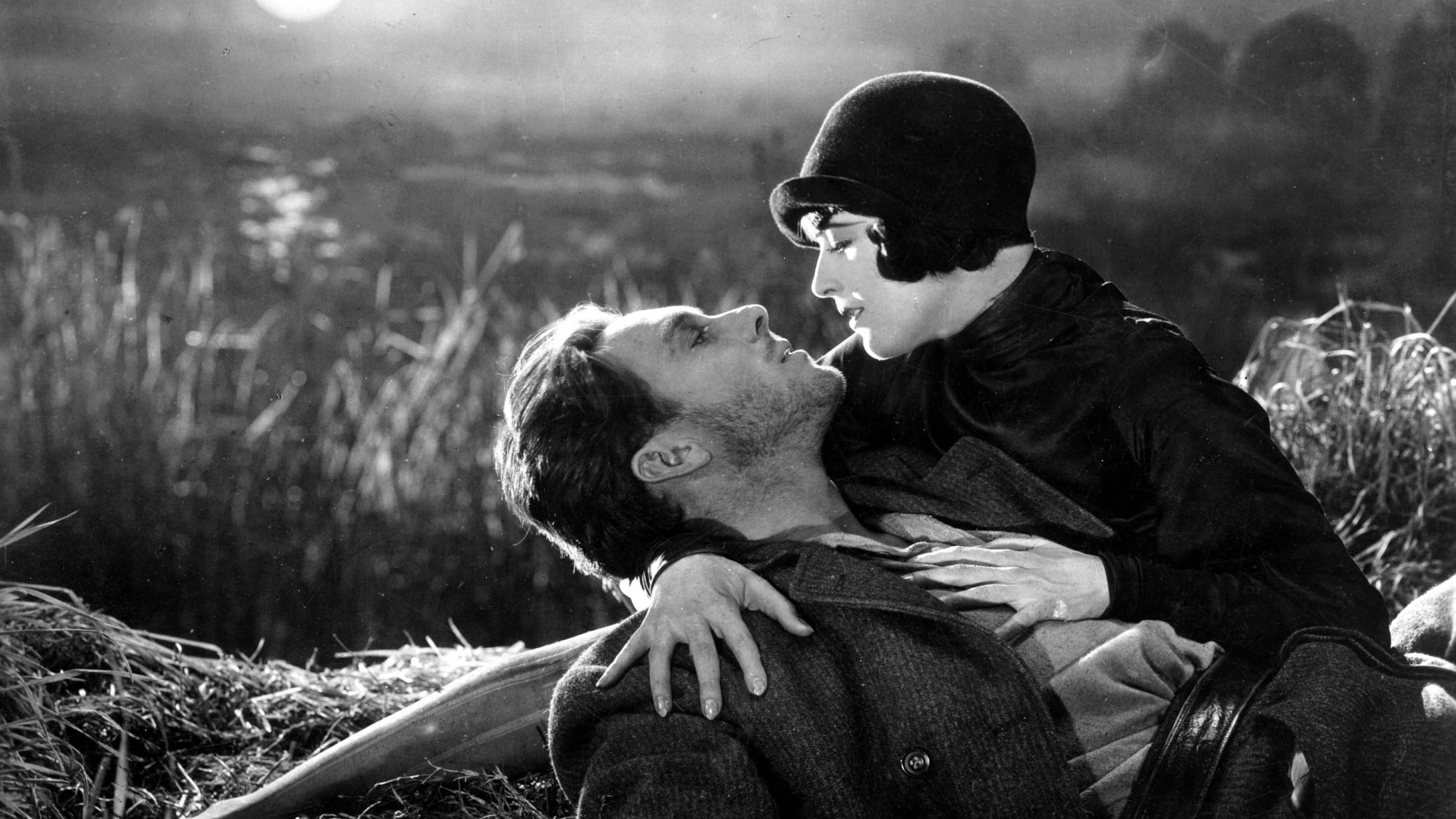
Once upon a time F.W. Murnau’s first American film was celebrated as “the most beautiful film in the world”. Hard to tell how many movies had already held that title, but Sunrise is still among the contenders. “Sunrise: A Song of Two Humans”. This song of the Man and his Wife is of no place and every place; you might hear it anywhere, at any time. For wherever the sun rises and sets, in the city’s turmoil or under the open sky on the farm, life is much the same; sometimes bitter, sometimes sweet.” Thus begins Murnau’s most poetic work, which in its drive towards universality conveys in every inch the same visionary unrest as its German predecessors, which were more clearly tied to social circumstances. The starting basis is a simple triangle drama: a city vamp seduces a farmer who tries to drown his wife on their way to the city but retreats at the last moment. The rest is a story of a painstaking reconciliation and a rebirth of the marital relationship. All this Murnau illuminates with a technique which is a brilliant synthesis of studio genius (the culmination of Babelsberg perfection now having reached Hollywood!) and the potential in nature representation. It has been said that the structure of Sunrise is cyclical and corresponds to the three-part sonata form of Viennese Classicism. The parts relate to day, evening and night, of also been called a triptych about the cycle of the sun, human emotions and the symbolism that connects them. The internal tensions of the themes, and the rhythms, durations and dominant moods of the different parts testify to the implicit musicality of Murnau’s aesthetics. Hovering over everything are the twin magisterial backdrops: the illusory world of the city, its appearances holding sway over man, and on the other hand – in an equally “unrealistic” creation – the countryside, purely cinematic and “artificial”. The film has been called a visual tone poem, taking place according to its own definition, “nowhere and everywhere”.
Peter von Bagh, Elokuvan historia [History of the Cinema], 1975 (second edition), Otava, Helsinki 1998. Translated into English by Antti Alanen
A new score for Sunrise Sunrise:
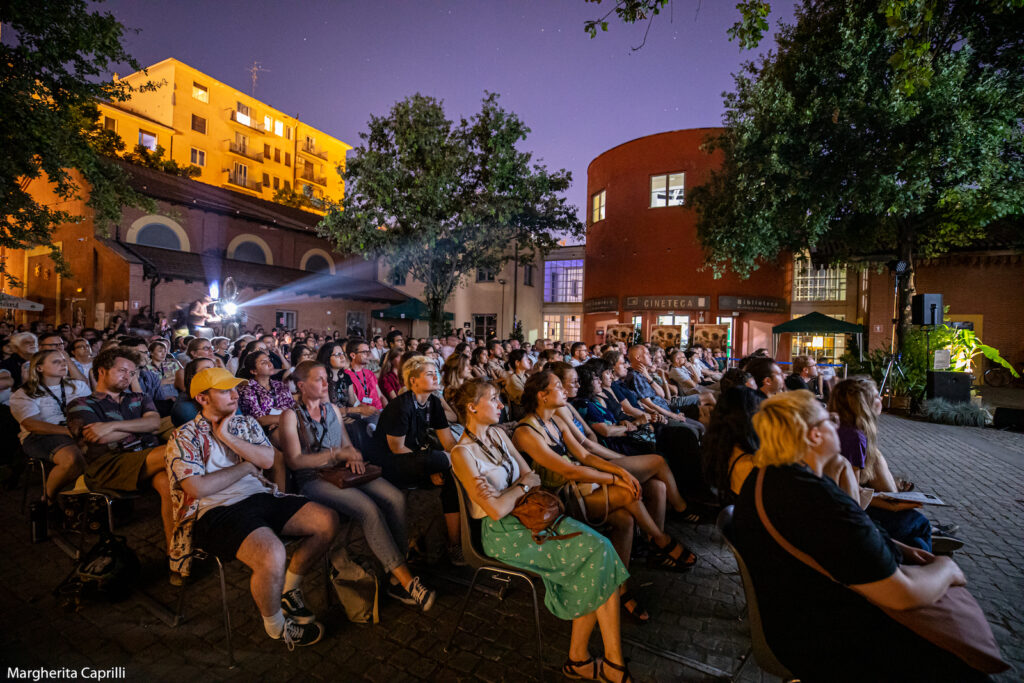
A Song of Two Humans is a miraculous film, and probably the one with which I have had the longest relationship. I was twenty-five when the Olympia Film Society commissioned my second silent-film score, and although I already had considerable experience as a composer and conductor, I was still learning everything about this art. At the time, I did not yet know that Sunrise was such a crucial transitional work between silent and sound cinema, or that, unlike many silent films, Murnau’s had its own synchronised score, recorded directly onto the film using Fox’s Movietone sound-on-film process – nor that at its New York premiere in September 1927, it was preceded by the first talking newsreels ever shown, one featuring Benito Mussolini. And of course I had never heard Hugo Riesenfeld’s compilation score, for decades an integral component of the film and the object of numerous reconstructions. Thirty-eight years later, I had the unmissable opportunity to immerse myself once again in Murnau’s emotional universe, which I now understand more deeply. Musically, the darkness of the film’s first half stands in stark contrast to the brightness of the second, until the two collide again – visually and musically – at the end. The subtitle itself – A Song of Two Humans – suggested a main theme in duple meter, with melody and harmony in constant response to one another. While the beginning and end called for dramatic symphonic writing, the band visible throughout the central section required a different approach – almost as if there were two bands within the orchestra. Although I decided not to use any of the classical music included in the compilation score, I was intrigued by the cornet sheet music that appears on screen as Midsummer Peasant Dance and transcribed it, only to discover that it did not match what we hear! So I transcribed it again, this time by ear. It is an honour for me to present this new score on the occasion of the world premiere of the restoration of Sunrise and of the film’s first-ever screening in the history of Il Cinema Ritrovato.
Timothy Brock