Film notes
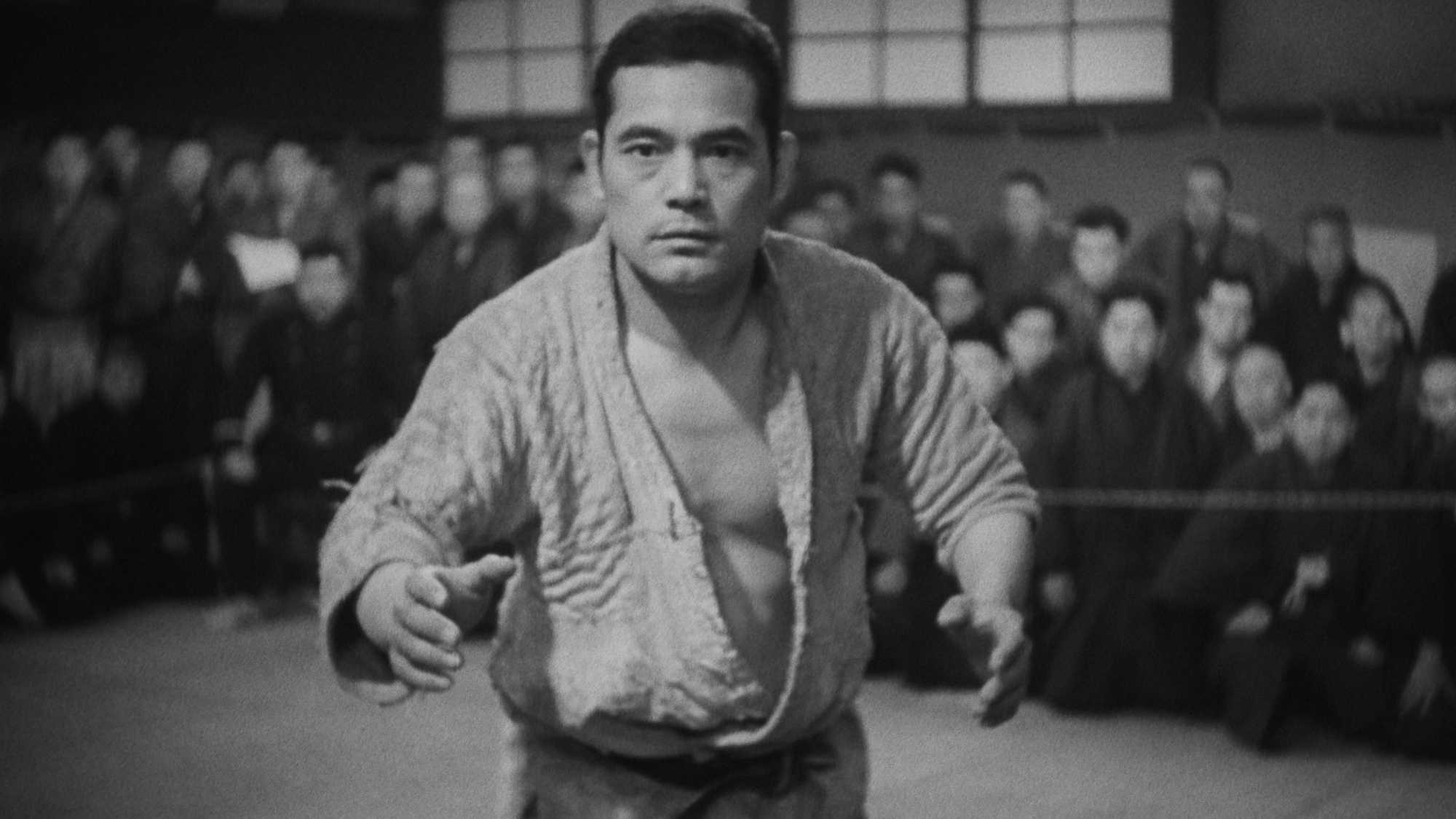
In 1943, a biography was published about the first legendary champion of judo, a refined and aristocratic martial art that had emerged at the end of the nineteenth century. Kurosawa recognised the subject’s appeal both to the censors (judo was regarded as a source of national pride) and to the public (which needed, more than ever, a boost to its morale). He immediately started to look for a producer. The wife of producer Morita had heard many positive things about the young Kurosawa and persuaded her husband to acquire the rights to the story. “At crucial moments in my life,” the director later recalled, “to my great surprise, some guardian angel has always appeared out of nowhere.” Convinced that a film about Sanshiro Sugata would help exalt the nation’s fighting spirit, the censors raised no objections; only after seeing the finished work did they realise they had been mistaken … A story of personal growth, Sanshiro Sugata unfolds like a fable … What is truly extraordinary about the film is its use of editing (the five duels, each distinct from the other, are masterclasses in precision and rhythm) and Kurosawa’s ability to bring nature to life (the final duel on the hillside amid an almost cosmic tremor of wind-swept grass and clouds; Sugata’s night spent out of doors, submerged in a lotus pond). Perhaps because he was the first, and because of the open, candid face of Susumu Fujita (who became a star after this role), Sugata remains the most endearing of Kurosawa’s “beginners”. Why is the disciple of a samurai father, of a literary brother, of a pedagogical director so drawn to the theme of initiation? Kurosawa offers us the key to unlocking the mystery in a revealing passage from his autobiography: “I like unformed characters. This may be because, no matter how old I get, I am still unformed myself; in any case, it is in watching someone unformed enter the path to perfection that my fascination knows no bounds. For this reason, beginners often appear as main characters in my films.”
Aldo Tassone, Akira Kurosawa, Editrice Il Castoro, Milan 1995