
Film notes
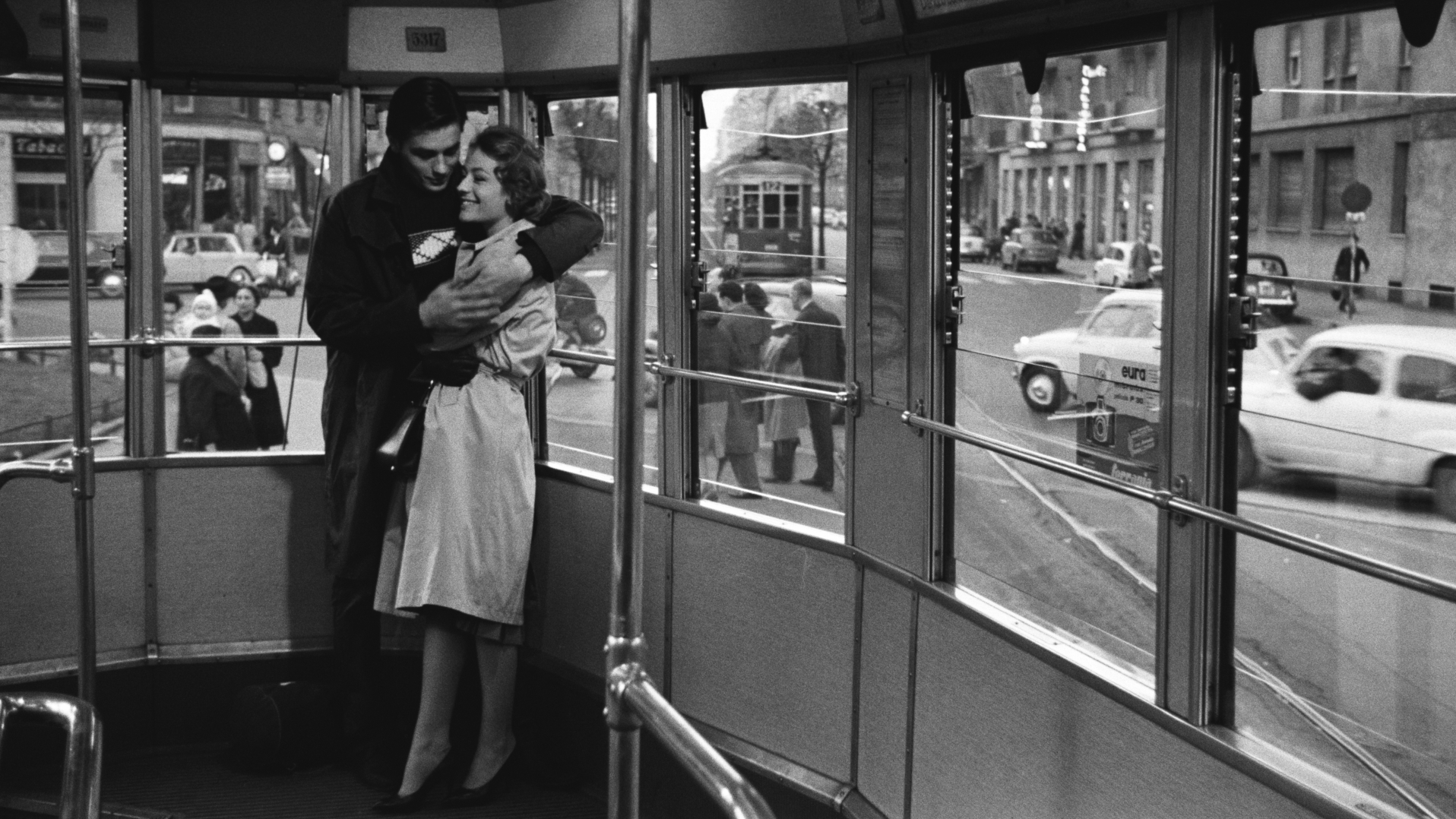
Dear Visconti, I have just seen Rocco e i suoi fratelli in a cinema on Second Avenue. The emotion was overwhelming. As Luca walked into the distance against the clear backdrop of Milan, there were, in the cinema, several people crying. When the lights came up, we – several friends and I – sat in silence, without looking at one another, unable to utter a single word, while all around us you could hear the same comment: “Wonderful”. Then we left, still unable to speak, and when we looked each other in the eye, we all felt a strong urge to embrace, a piercing desire to survive somehow – in the best way possible – the three hours we had just sat through.
Romano Giachetti, Luchino Visconti. Epistolario 1920-1961, edited by Caterina d’Amico de Carvalho and Alessandra Favino, Edizioni Cineteca di Bologna, Bologna 2024
Today, Rocco e i suoi fratelli is considered one of the masterpieces of Italian cinema. Yet during its making and after its release, it was opposed in every way possible by the forces of the then-government, becoming a matter on which Italian public opinion clashed. In a climate of heated political fervour and profound change, Visconti feels the need to take up once again, as he had in his earlier films, the question of society, beginning from “La terra trema – my interpretation of I Malavoglia – of which Rocco is almost the second episode”. Although hailed upon its release as Visconti’s return to neorealism, it is notthat at all: Rocco e i suoi fratelli is a tragedy in five acts, each of which takes the name of one of the sons (Vincenzo, Simone, Rocco, Ciro, Luca). It is the exploration of the individual fates of the five Parondi brothers, where each one will choose his own destiny. Favoured protagonists are, once again, the vanquished, but here the defeated are not just individuals: a civilisation is about to be annihilated. Italy, Visconti observes, is a divided country, the Southerners coming North are not brothers, but foreigners. The Milan given to us by the Milanese Visconti, observing it through migrant eyes, is an expressionist, inhospitable, hazy city where the public housing, the gyms and the parks are theatrical backdrops, devoid of humanity. Milan, the city of the North, the most advanced city in the country, is the home to irreconcilable social conflicts and is above all a cursed city, one that changes people for the worse. The final extreme long-shot of Luca walking away from the gates of the Alfa Romeo factory and from the progressive speeches of his employed brother Ciro, seems to leave no doubt as to what Visconti really thinks. Encapsulated in progress devoid of history, like the great Renaissance paintings we see entrapped inside the television screen, Italy and what remains of the Parondi family are moving towards a future without roots or beauty.
Gian Luca Farinelli