

Film notes
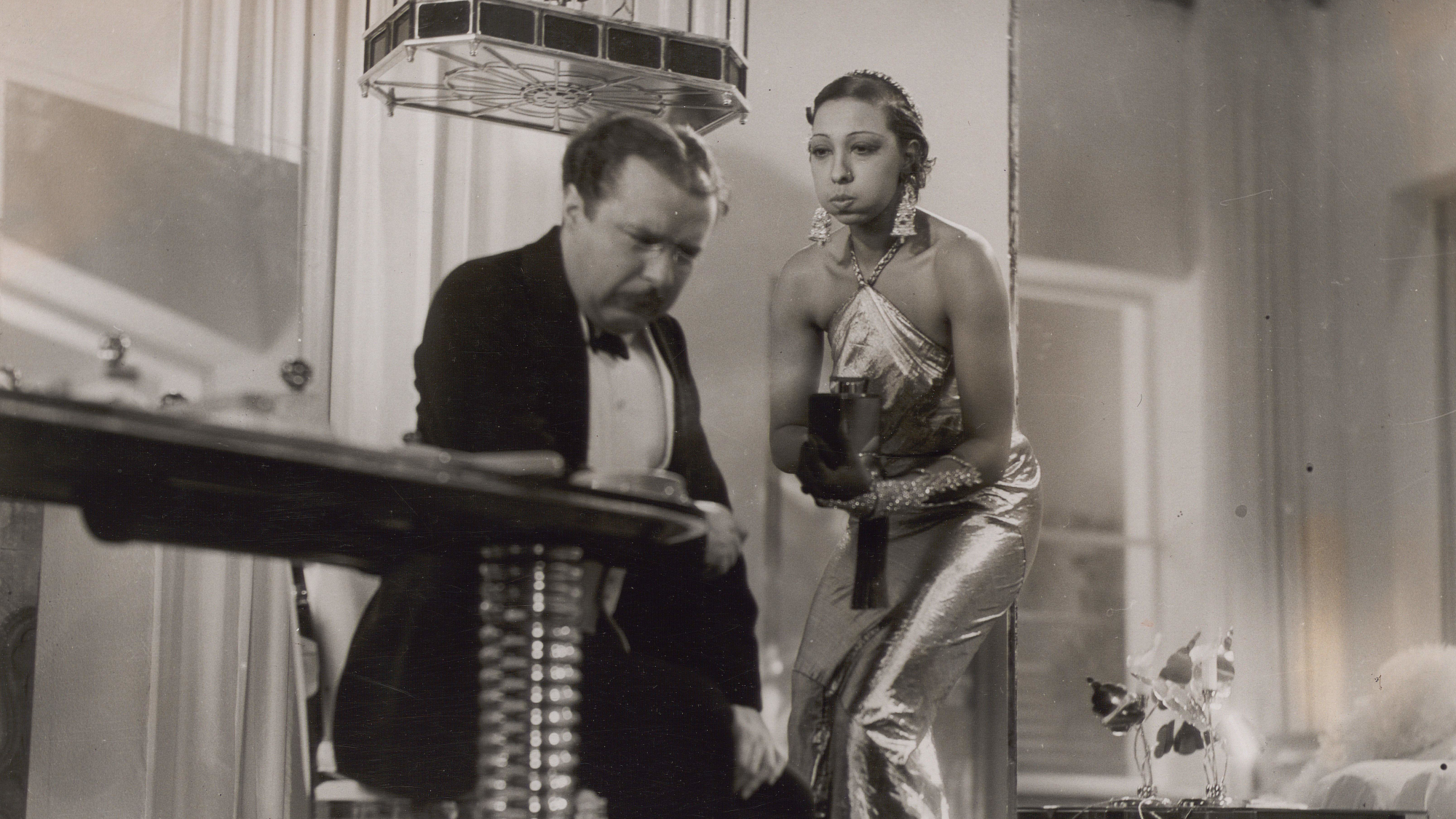
A blank page, a fake princess, and the true queen. Joséphine Baker always bursts her way into a scene: we’ve seen her snatching up a lamb, then she pilfers some oranges. Her tiny hand, slight and animal-like, moves like a periscope, provoking a chortle from Max de Mirecourt (Albert Préjean), the novelist with writer’s block who strikes up a friendship with her. Friendship? Aouïna (Baker) amuses him, at most he finds her touching before using her as a pawn in his own remarriage drama. Headed for Tunisia to escape his wife’s shenanigans, the novelist invariably travels in the company of his ghostwriter, he too haunted by that same blank page, the one that symbolises Europe’s pallor: worldly, sterile, and vain. Then the arrival of Aouïna in the guise of a cunning wild child gives him the idea for a novel. The work in progress takes place on screen; it becomes the film. It concerns Princess Tam Tam, a version of Pygmalion, dreamt up by Pepito Abbatino the troubled partner (and manager) of Joséphine Baker, who at the time was still a Folies Bergère star. In this musical, the director, Edmond T. Gréville, promotes the romantic comedy talent of Albert Préjean (one of the first familiar voices in French talking pictures) together with Baker’s soft timbre; her eloquent and shifting facial expressions attain totemic status. The all-out exoticism allows the diva’s American accent to transmute into a charming otherness, but above all else it is the excuse for the fascination with choreography that keeps the hits of the Revue nègre on the screen, against the backdrop of Lazare Meerson’s monumental sets. The film becomes the long prelude to the jazz revue, filmed in the style of Busby Berkeley’s famous musical numbers and led by Joséphine Baker, as joyous as she is majestic: a spectacle of the liberation of the body that reaches its paroxysm in the ultra-famous and furious conga number associated with the Cuban composer Eliseo Grenet. Gréville lambasts the snobbishness of city dwellers who lack feeling and artistes devoid of talent, whom Baker does well to renounce in order to follow her own path.
Gabriela Trujillo