

Film notes
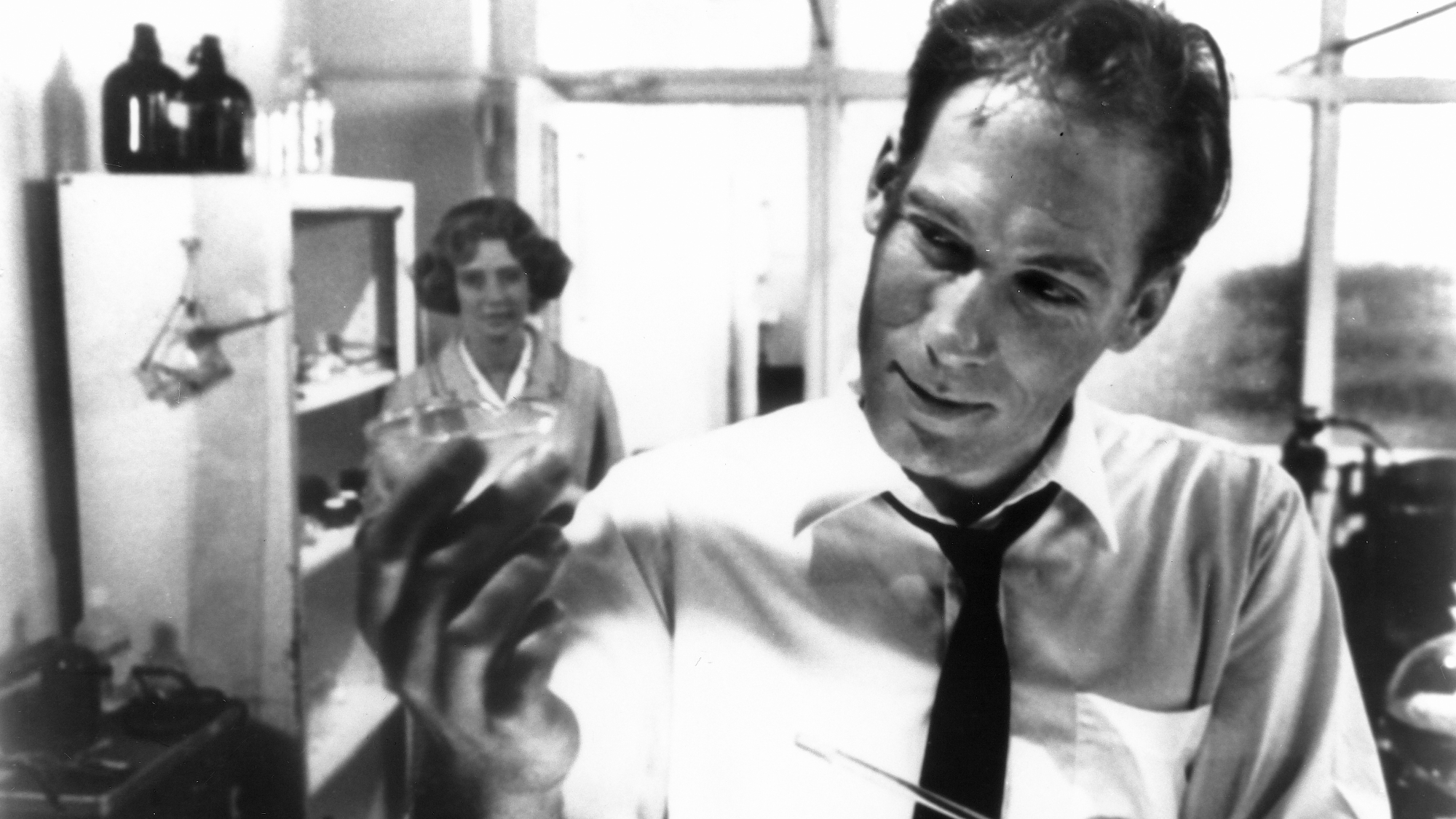
Todd Haynes’ first feature-length film is remarkable in both form and content. The attention to form is a constant of the filmmaker’s oeuvre, of course … What is particularly striking about Poison is the way its form is linked to its content; the way its content – the life and work of the French writer, criminal and homosexual Jean Genet – is revealed through the fissures in the text, the discontinuities, the deformations of cinematic form … Poison consists of three narratives … Each of these narratives is relayed in a different generic or stylistic guise: shot in high-contrast black and white with an abundance of oblique angles, and with performances scaled to match the décor, Horror evokes 1950s B-movie thrillers (and like many of them it carries a certain allegorical charge, in this case as a veiled narrative about the AIDS epidemic); Hero, with its flat lighting, talking heads and fictional recreations, has the look of such investigative television shows as Unsolved Mysteries; Homo, shot partly on sound stages, has the lushness, the ripeness gone to seed, of lurid Hollywood melodrama (Un chant d’amour remade by Universal Pictures and Douglas Sirk). Rather than tell these stories in anthology style – one after the other – Haynes has them spiral in and out of each other: one by way of the other, one in the other. As the film proceeds, each narrative, without giving away any of its specific generic traits, begins to lose its self-sufficiency, begins to infringe upon the accompanying text; the borders between one story and another, one genre and another, become permeable … In interviews, Haynes has related the structure of Poison both to his earlier formal experiments and to Genet’s novels, “the way he’s constantly paralleling different stories” … The attraction of montage for a writer like Jean Genet is precisely its ability to create alternative ‘movements’ to those imposed by a conventional narrative structure based on a rational ordering of events.” Montage challenges the reader to conceive new forms of identity, new modes of establishing or thinking relation.
Sam Ishii-Gonzales, To Appear, to Disappear: Jean Genet and Poison, in The Cinema of Todd Haynes. All That Heaven Allows, edited by James Morrison, Wallflower, London 2007