Film notes
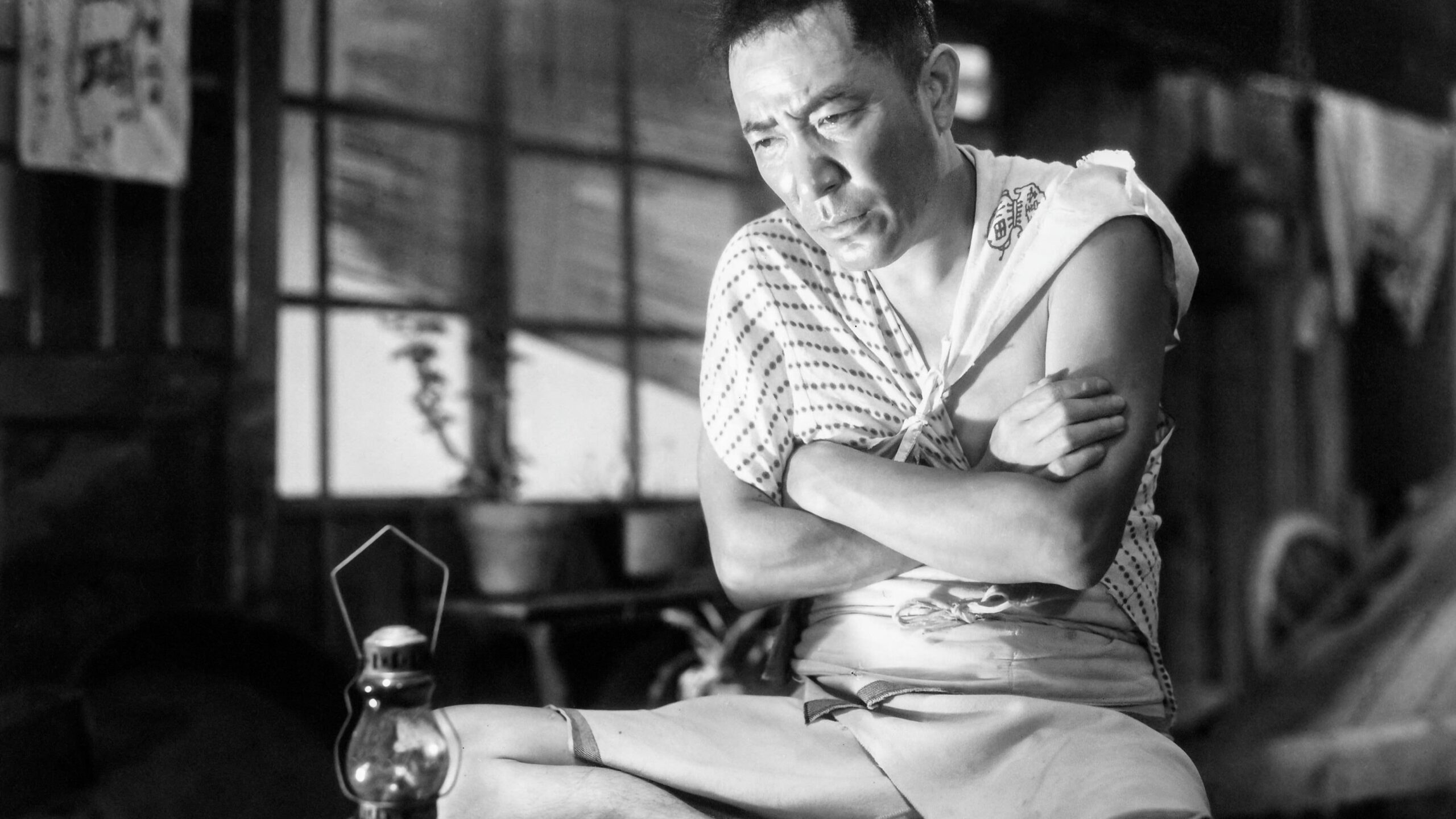
Arguably the most famous film of Ito’s postwar career, Osho is a biopic of a master of shogi (the canonical Japanese variant of chess). From a humble background, illiterate and initially selftaught, Sakata Sankichi (1870-1946) rose to rank among the great players of his generation. Ito focuses on his rivalry with Kinjiro Sekine, the leading professional player of his era. Ito ironically disliked competitive games, but seized the chance to depict what Kaoru Mizoguchi called “a noble soul inhabiting a humble body – precisely the type of human being Ito had always loved to depict”. The film was adapted from a successful play by Hideji Hojo (1902-1996), staged in 1947 by Shinkokugeki troupe. Nevertheless, Ito ran into opposition from studio chief Kan Kikuchi, who thought the topic of shogi uncinematic. Determined to focus on the man rather than his matches, Ito rewrote the screenplay nine times before Kan came round. Osho took eighth position in the “Kinema Junpo” critics’ poll of its year, and was later described by Noël Burch as “a masterpiece of its kind, splendidly acted by the great star of silent films Tsumasaburo Bando, whose eccentric, dynamic style prefigures that of Toshiro Mifune in the later films of Kurosawa”. He notes that “The film was shot entirely in studio, and boasts elaborate, atmospheric street-settings in the spirit of the ‘poetic realism’ of the French 1930s and 1940s.” “Kinema Junpo” critic Fuyuhiko Kitagawa hailed it as marking Ito’s emergence from a slump, and praised Ito for overcoming the “sentimental heroism” of the screenplay through his “commanding direction”. Tsumasaburo Bando had been a jidai- geki star since the 1920s. After founding an independent production company in 1925, he had helped to transform the period film, introducing psychologically plausible characters and a consciousness of social inequality. In his last years, he acted several times for Ito.
The success of Osho led Ito to plan a sequel, which went into production soon afterwards, but was delayed when Bando’s health broke and left unfinished at his death. Ito, however, remade the film in 1962 as a vehicle for Rentaro Mikuni.
Alexander Jacoby e Johan Nordström