Film notes
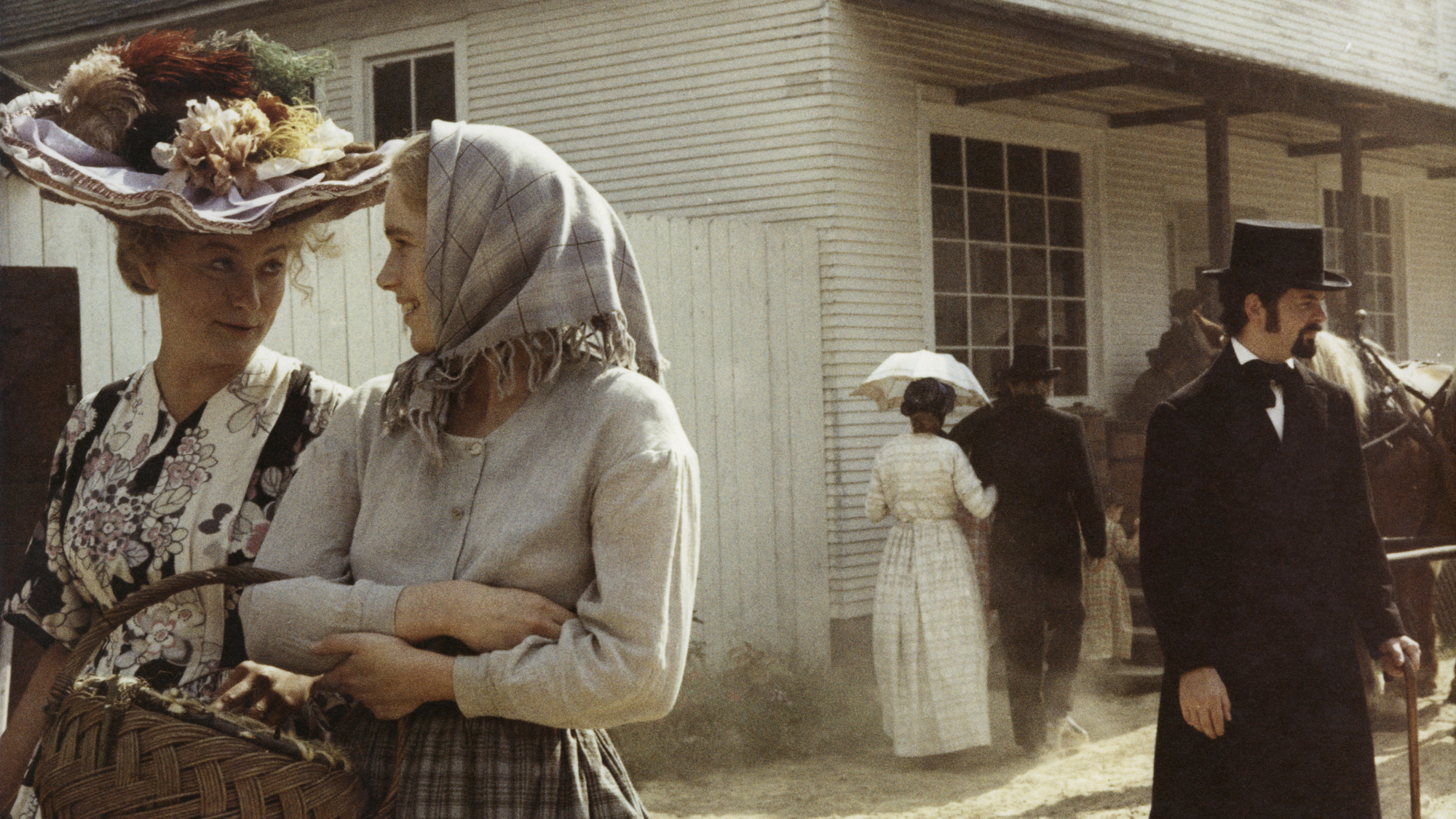
Nybyggarna was shot in parallel with Utvandrarna, with a total of 183 shooting days taking place between February 1969 and January 1970 on location in Sweden and in the American states of Minnesota, Wisconsin and Colorado. In this second instalment, the realities of the new country clash with the romanticised fantasies of the newly arrived. Yes, men and women were free, and the soil was fertile enough; but it was also a country where everyone fended for themselves and where money ruled. Nybyggarna inscribes itself within an emerging wave of revisionist westerns, offering a more truthful rendering of the conquest of the continent. Even more visually stunning than Utvandrarna, the film sees Jan Troell almost entirely refrain from using non-diegetic sound, except during the feverish sequences in which Robert and Arvid set out in search of gold through the desert landscapes, where the only sound on the soundtrack is the drum-based music performed by Troell’s photographer friend and assistant editor, Georg Oddner. Nybyggarna was enthusiastically received by American critics. “The New York Times” called it “an authentic American tragedy”, arguing that it enabled contemporary Americans to reconnect with their past and to understand the courage and conviction that led their forebears to cross the Atlantic. The film nevertheless makes it unmistakably clear that the European settlers were not the first inhabitants of the continent, showing how Native Americans had been displaced and deceived long before the emigrants arrived. Utvandrarna and Nybyggarna received a combined total of six Academy Award nominations between 1972 and 1974. Troell subsequently directed Zandy’s Bride (1974) for Warner Bros. and later The Hurricane (1979) for Dino De Laurentiis, before permanently returning to Sweden for another remarkable achievement: The Flight of the Eagle (1982).
Jon Wengström