Film notes
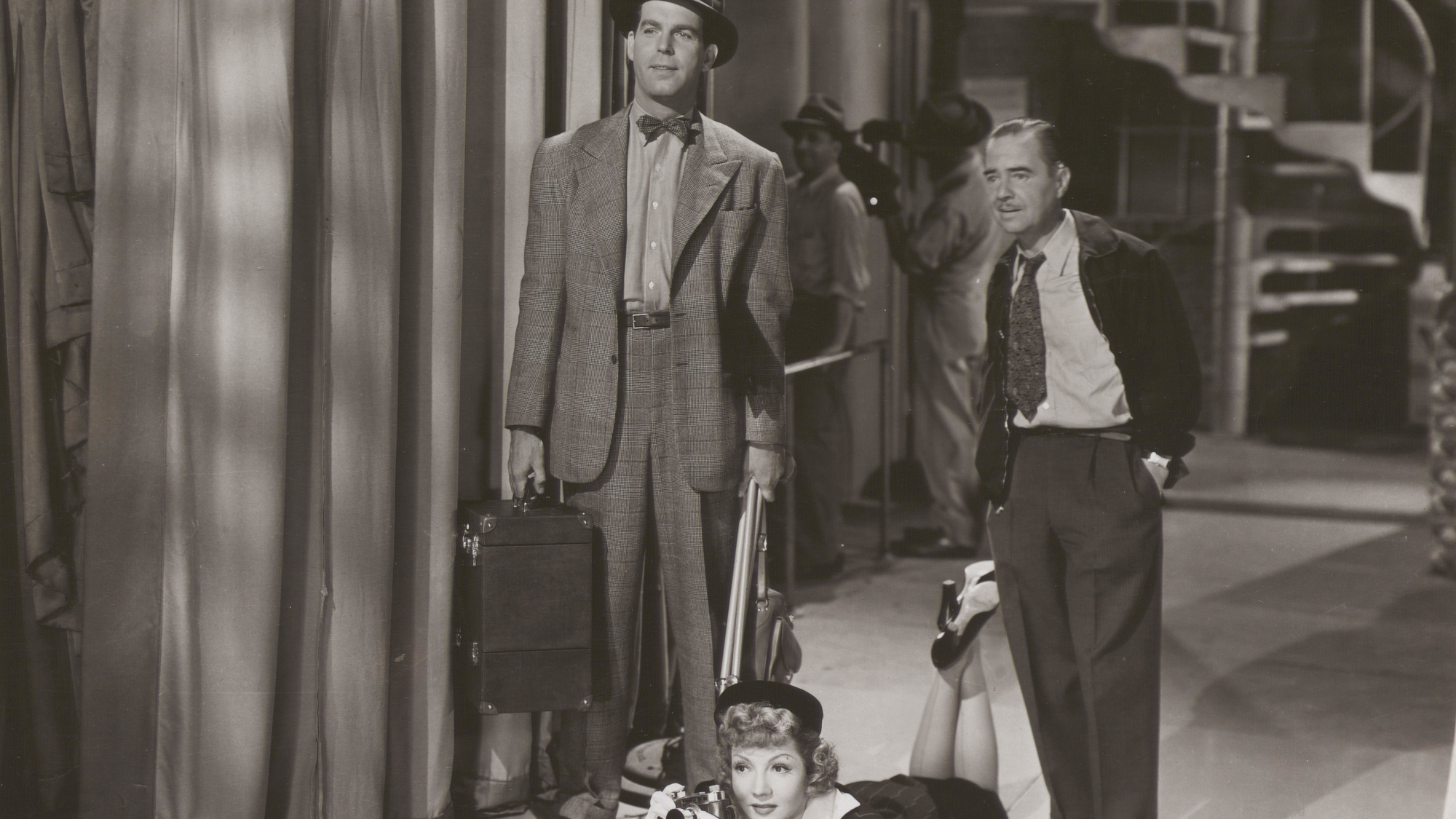
Katherine Grant (Claudette Colbert) is a self-absorbed and assertive photographer whose employers have difficulty understanding her abstract pictures. A star in her own right, she is nevertheless too good to be fired. Sent on an assignment to cover the work of men digging a tunnel under the Hudson, she snaps a shot of the “ape” – her unflattering nickname for the bare-chested Fred MacMurray – during a brawl, which unwittingly makes the cover of the magazine. As a result, he loses his job. Colbert, feeling guilty, hires him as her assistant. This is screwball minus the ball, with excellent dialogue by Claude Binyon who makes people look as though they have sex in mind even when they talk about chairs, syrup, and pancakes. The original story was by Frederic Rinaldo and Robert Lees, two future blacklistees whose presence gives a different ring to the opening lines of the film about “free speech, free press and free camera”. One can sense how Leisen excised the class consciousness that Colbert acquires by interacting with the workers. Still, the snobbery of her class is largely preserved in the film, without Leisen aiming for a sharper critique. Instead, he highlights what he had previously shown in films such as Swing High, Swing Low, and Arise, My Love – the comical self-loathing that arises in males who have problems with being “saved” by women. The process of refinement, of feminine impact is fantastically demonstrated here when Colbert asks her gay pianist friend to play a song to pacify the scuffling workers. This is also Leisen’s first use of a dream sequence (as a parody of superhero films) to psychologically explain the leading character, a device that would reach its climax the following year with Lady in the Dark. Despite its glossy look (featuring a memorable title sequence), this was a film made amid wartime shortages by recycling whatever was available, including the sets from The Palm Beach Story, which makes the spectacular tunnel disaster scene – with tons of mud flooding in – even more impressive.
Ehsan Khoshbakht