

Film notes
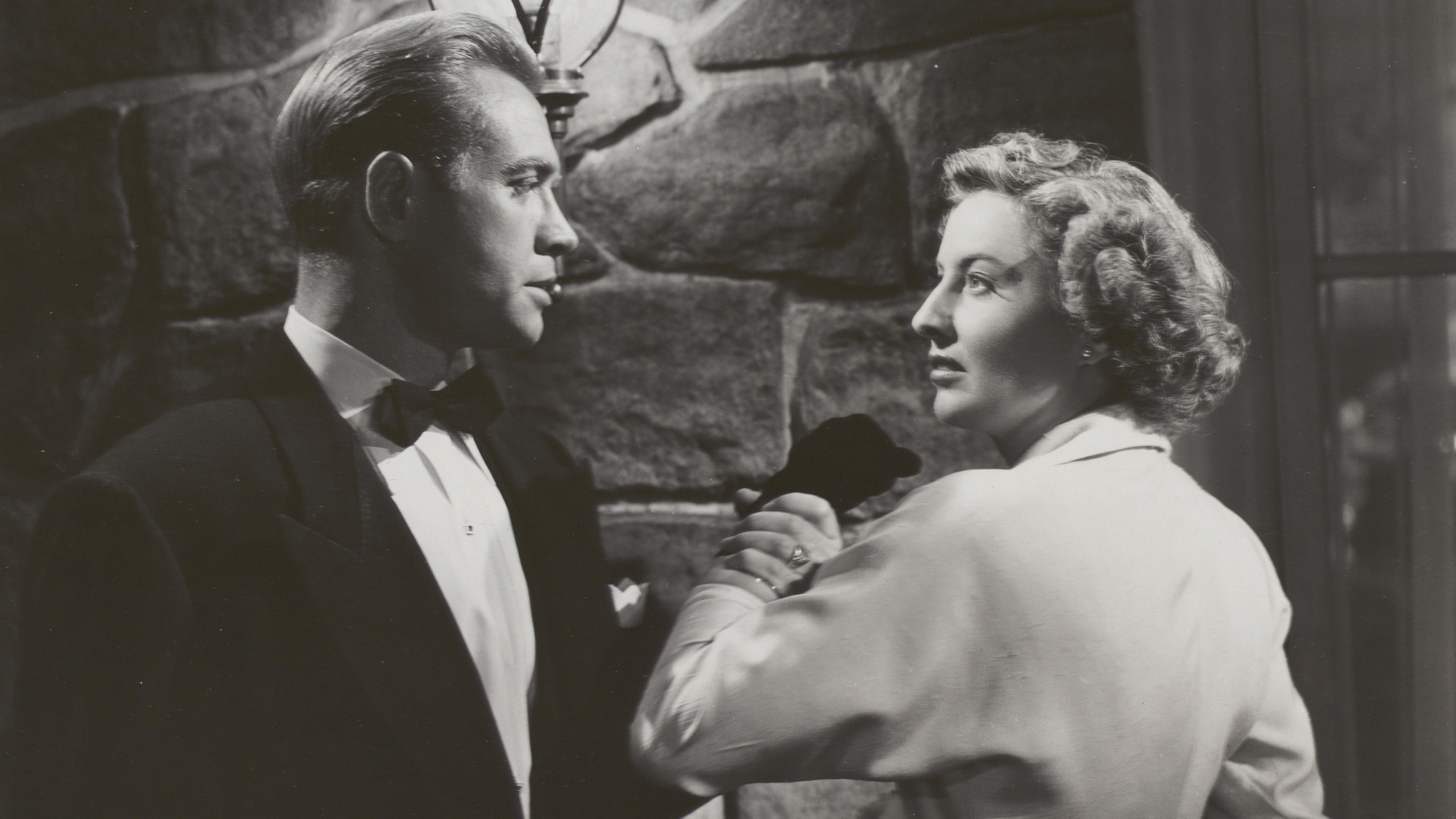
Based on I Married a Dead Man by Cornell Woolrich – a writer who shared Mitchell Leisen’s recourse to chance encounters and impossible re-encounters – this was unusual material for Leisen. Although his cinema had long contained some of the ingredients of film noir – flashbacks, role reversals, and characters hunted by the past – he disliked noir’s oppressiveness and turned to it only when after the war he had very little hope that his kind of cinema would prevail. No Man of Her Own is about Helen Ferguson, an unmarried pregnant woman (Barbara Stanwyck) who assumes the identity of another married pregnant woman who dies along with her husband in a train crash. Helen is accepted by the husband’s family, who have never seen a picture of their daughter-in-law. Her slips are never questioned, as the family attributes everything to memory loss, until the former boyfriend who impregnated and abandoned her returns with blackmail in mind. Leisen was invested in the dramatic potential of improbability for the sake of exploring conceptual arguments. His version of improbability, however, often remains psychologically sound, philosophically relevant, and dramatically meaningful. What is at stake here is one of the key themes of his cinema: being accepted and taken into a family unit – a process of re-familiarisation, regrouping, and acceptance that involves forging or assuming kinship, especially between the outsider and the prevailing norms, whatever they may be. This is already tied in with the notion of ideal womanhood that these films relentlessly question. Indeed, what the film quietly reveals is how men end up as imperious bystanders, while it is up to women to help one another. When there is a corpse lying there in a shabby room, three women take the blame, all of them for quite noble reasons.
Ehsan Khoshbakht