
Film notes
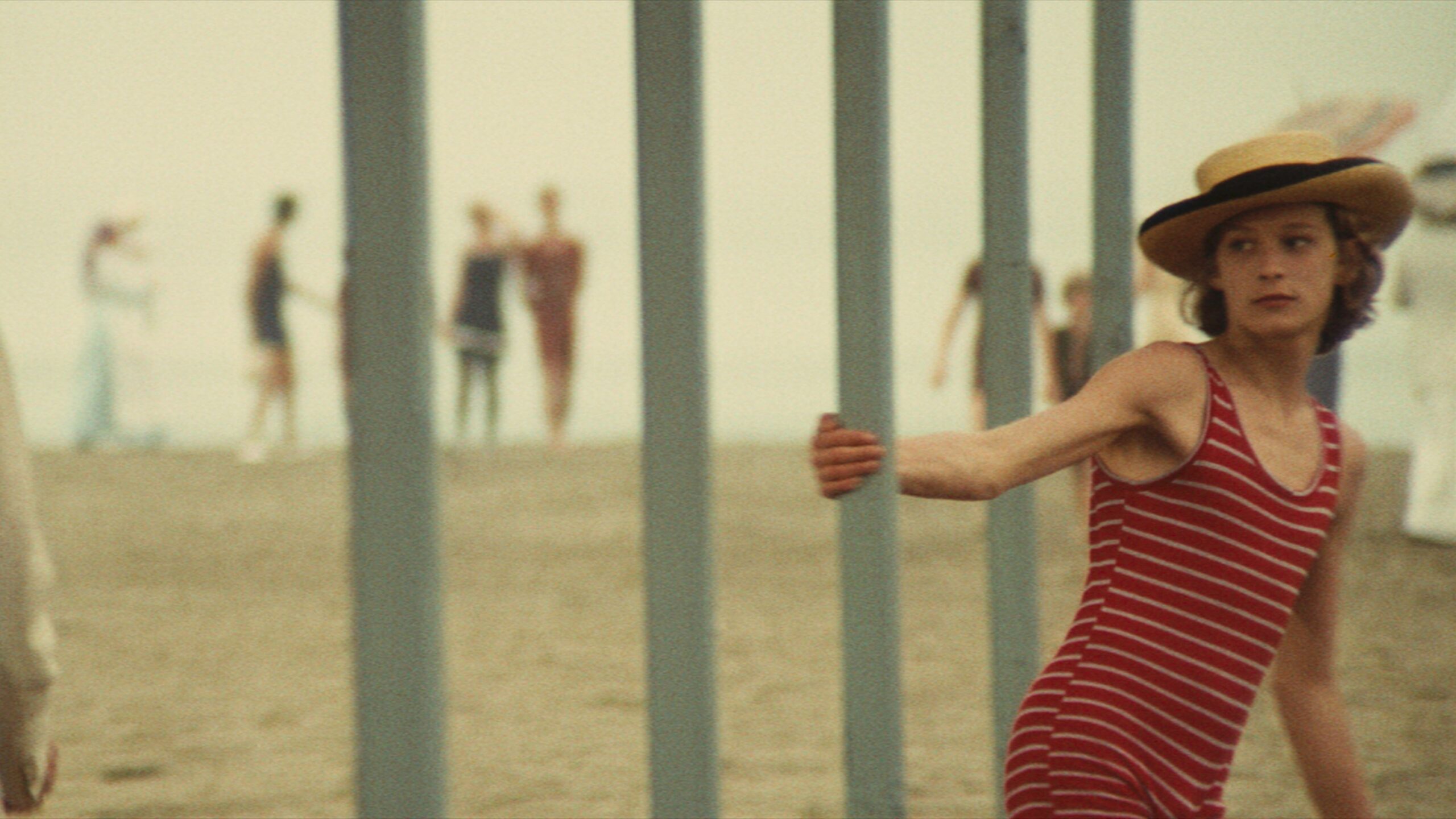
Gustav Aschenbach is an ageing musician to whom Dirk Bogarde admirably lends his timid, bourgeois side, stuffy, surly, at times scornful, bad-tempered – that which Lukács calls “his deportment” – also clumsy, inane even, when the demon of passion takes him abruptly by surprise in Venice. He is an idealistic creature, given to mysticism, like so many at the end of the 19th century, (its symbolism, its European decadence). Utterly besotted, with thoughts that were pure and transcendental, a man of values with a capital V, for whom art had nothing to do with feelings, the vulgarity of body, everyday life, but everything to do with the sublime, the exquisite nature of the soul… After meeting Tadzio (who tries his best to provoke him “innocently”), sex imposes itself on him in all its crudeness, throwing his whole personality completely off-balance … The image that the film gives of Venice is strange to say the least … It doubtless does not offer a reflection back to Aschenbach, his own image undone, ravaged, tortured (as the hairdresser’s mirror confirms). The cultural reality, Venice, “the great courtesan”, with its putrefying canals, its Byzantine past, is east-facing, dirty, tatty, smelly, sly and slimy. In this place, Aschenbach recognises his own sickness, his nausea, his powerless rebellion, his fascination with death. … Visconti never pursued art that was idealistic or philosophical. Quite the opposite; as a Marxist, he was the founding father of neorealism. Nevertheless, in the final analysis he is faced with a conclusion not dissimilar to Aschenbach’s: beauty is unfulfillable, unpossessable. Behind it, Aschenbach catches a glimpse of God or gods; Visconti cannot but acknowledge the harrowing limitation of man whose greatest good is destined to remain an idea – and not a platonic one – a heart-rending mirage, a utopia … So, what is the point of realism, which watches, touches and imitates the real world? It is precisely to get close to that which, in the real world, is untouchable.
Barthélemy Amengual, Déchirante beauté Mort à Venise, Positif, n. 295, September 1985