Film notes
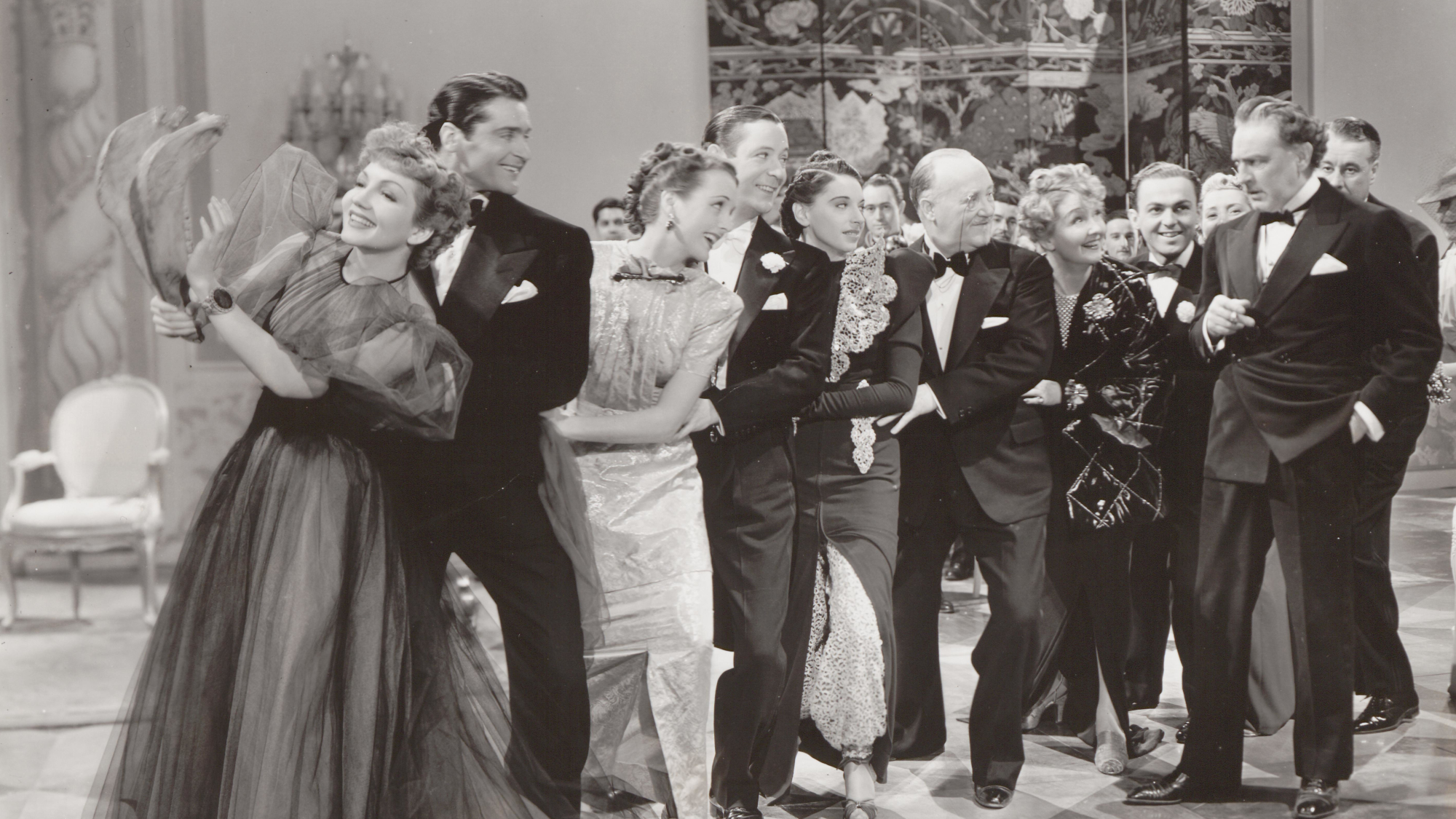
Eve, a down-and-out American in Paris, seeks a ticket back home but instead ends up with fortune and fame – only to find the city’s cab drivers on her tail and an eccentric group of rich people to continuously deceive. This was the first time Mitchell Leisen worked with the emerging writing team of Billy Wilder and Charles Brackett. Leisen’s relationship with Wilder was never easy, and he perhaps rightly chose to soften Wilder’s meanness toward his characters. Because of that, Midnight turned out to be a far better film than Bluebeard’s Eighth Wife, which the duo had penned a year earlier for Ernst Lubitsch. Claudette Colbert, who had worked with Leisen in the early 1930s in Tonight Is Ours (1933) – with Leisen as uncredited co-director – and even earlier in Cecil B. DeMille’s The Sign of the Cross (1932), when Leisen, then a designer, slit Colbert’s skirt and put her in a milk bathtub, now had the director all to herself. None of that campy vulgarity made it into Midnight. Colbert orchestrates such a brilliant one-woman charade that one never wants it to end. It is balanced by John Barrymore’s performance as a rich man who realises Colbert’s game early on but keeps quiet, using her sparkling presence to arouse jealousy in his unfaithful wife. The arresting elegance of the film owes much to cinematographer Charles Lang who makes the studio-built Paris wink with fizzy luminosity. Every surface in the film – including cars, tables, dresses, and purses – shines. The design is both memorable and outrageous, especially in the scene where Colbert visits a fashion maison inspired by Giorgio de Chirico, its austere geometry and primitive surfaces etched in marble white. Midnight has many winning cards – the script, the performances, and the cinematography – but it is Leisen’s effortless balancing of intentions and careful pacing of emotion that makes the film shine as one of his finest. He understands the rationale of sophisticated itch and shows that while every Cinderella has her midnight, every midnight is also the beginning of a new day.
Ehsan Khoshbakht