Film notes
“Finally, it is accomplished! Since yesterday, the 15th August, we’re there. The day before yesterday we gave our first show. On that evening, dedicated to the press, we had over 1500 guests – so many that we didn’t know where to put them. The applause and cheers make us hope for a great success. Everyone was shouting: Muy bonito! How wonderful!” (letter from Gabriel Veyre to his mother, Mexico City, 16th August 1896).
Since 1896, the Lumière brothers had hired cameramen to promote their new invention around the world. The 25-year-old Gabriel Veyre had just obtained a diploma in pharmacy in Lyon and needed to earn money as soon as possible to support his siblings and widowed mother. His knowledge of chemistry, interest in electricity and passion for photography made him an ideal candidate.
With the typical energy of the pioneers, he spent four years travelling the world with his Cinématographe, shooting views and organising screenings in all the capitals to extraordinary success. The trip took him above all to Latin America: Mexico, Cuba, Colombia, Panama and Venezuela. But he fell sick in Caracas and had to return to France.
The break in Lyon was short-lived. The Lumière brothers entrusted the young operator with a new mission that took him to the Orient. In July 1898 he set sail for Canada in order to reach Japan, then China and Indochina. In Hanoi the general governor Paul Soumer commissioned an important film reportage on the country to show at the Universal Fair, which was inaugurated in Paris in 1900. He shot over 500 views!
Back in France, Gabriel Veyre considered opening a pharmacy, but destiny had other plans for him. The sultan of Morocco was looking for someone to teach him photography and film. “Why not me? It was a great opportunity to discover a new country, more mysterious and closed than any of those I had been to”. Gabriel Veyre arrived at the palace in Marrakech in March 1901 for a mission that was to have taken six months. But he was to remain in Morocco for the rest of his life.
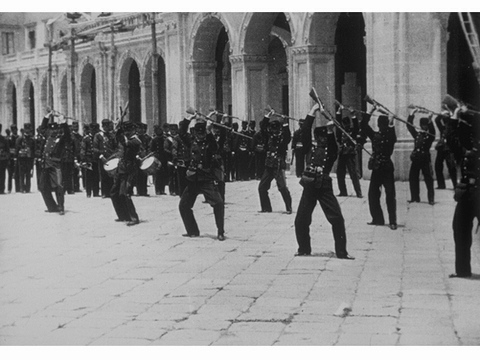
The Lumière catalogue includes over 70 films by Gabriel Veyre, including several masterpieces like Le Village de Namo (n. 1296), shot in Vietnam, or Duel au pistolet (n. 35), shot in Mexico.