
Film notes
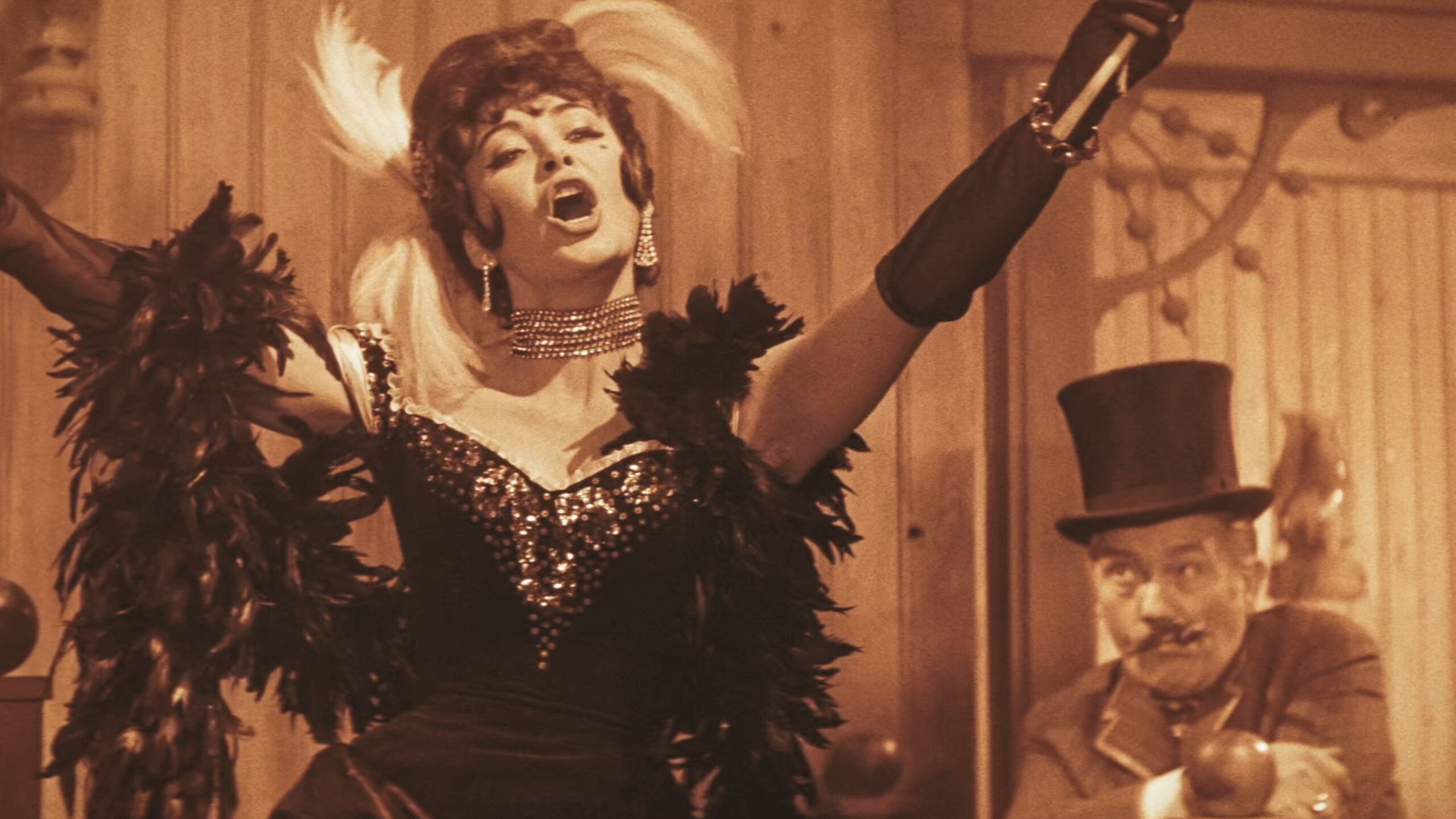
A comedy? A western? A musical? Or even an homage to silent cinema? If Limonádový Joe is the best possible feature film adaptation of Jiří Brdečka’s 1930s short story cycle – early adapted for the stage but also into an animated film in 1949 by Jiří Trnka – it is because it skilfully blends genres and styles in a way that translates the parodic spirit of the original text into cinematic form. All the western archetypes are present, though in exaggerated form: endless saloon brawls involving every character to the tune of a player piano; a handsome lone cowboy wandering through a preferably deserted town at sunset; brainless, hard-drinking thugs always ready for a fight organised by a true villain; a saloon girl; a sweet and perhaps not-so-naive young woman; and a gang war. Yet the real issue at the heart of the conflict is whether the town’s inhabitants will end up drinking the non-alcoholic Kolaloka promoted by the “good” guy or the whiskey defended by the villain – and, ultimately, who will win the business war and, of course, the heart of the sweet girl. But Limonádový Joe cannot merely be reduced to a conventional parody based on the exaggeration of western tropes. Beyond the delightfully absurd humour in the dialogue, in the song lyrics parodying English language with Czech accent, in the tricks or in the many details scattered throughout the sets, the playful evocation of silent-film aesthetics – with accelerated motion, slapstick gags, and monochrome colour effects simulating a Desmetcolor film restoration, but three decades before – contributes to making the film an abundantly creative parody. Nowadays it has become a cult favourite. One of the most popular comedies in Czechoslovak cinema, Limonádový Joe would not have been the same, or so inventive, had it not been made in the mid-1960s. At this time, the local New Wave benefited from the liberalisation of the socialist regime and the partial relaxation of censorship, but so did also popular films experimenting with genre conventions and a wide range of visual forms. Oldřich Lipský is one of the most famous directors of innovative Czech comedies. In Happy End (1967) and Adéla ještě nevečeřela (Dinner for Adele, 1978) he continued playing with genres, animation, tricks, narrative and decorative inventions.
Jeanne Pommeau