
Film notes
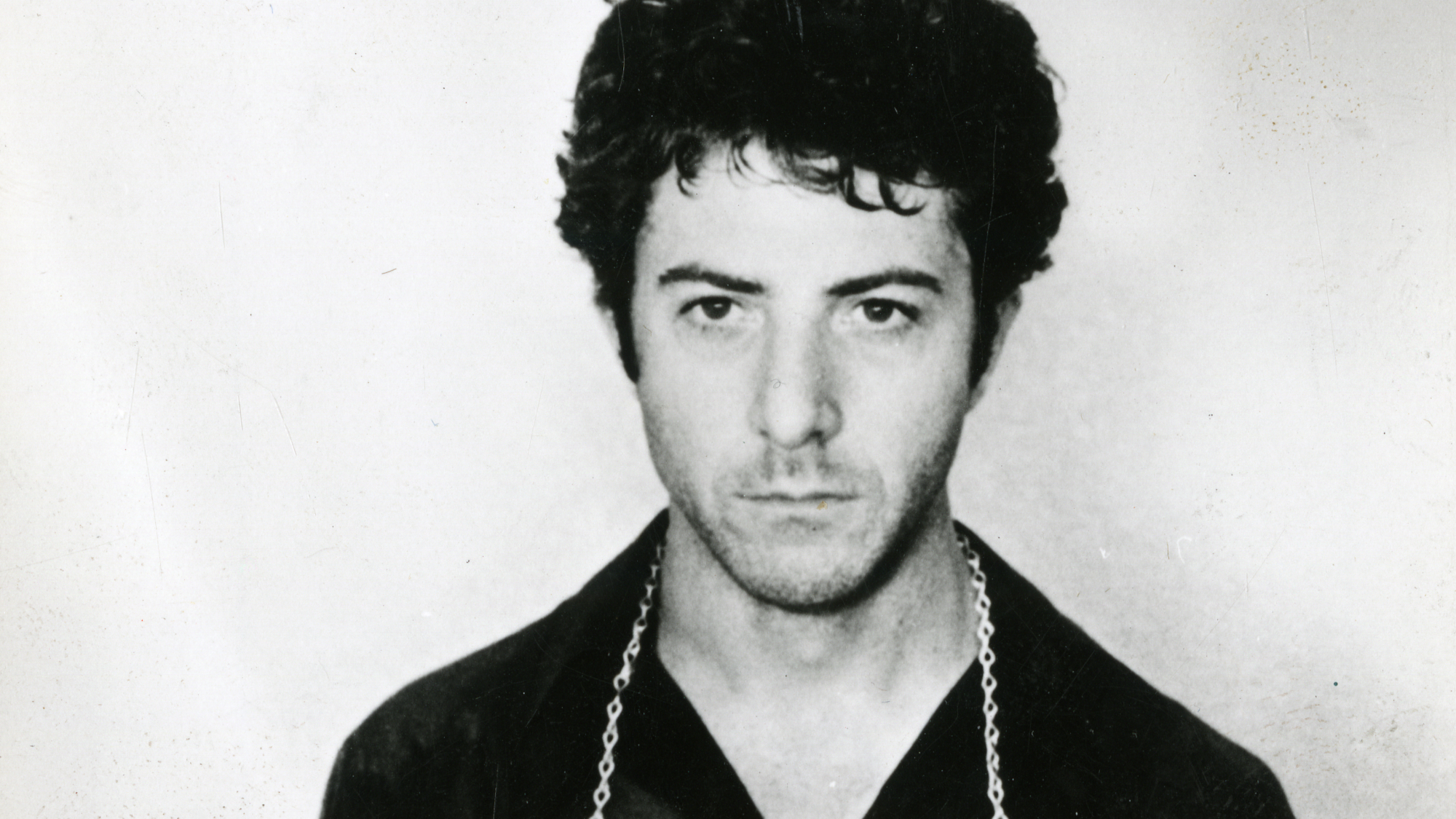
Lenny marks a departure from the musical genre, but not from Fosse’s fascination with lowdown showbiz milieux. Dustin Hoffman plays the beatnik comedian Lenny Bruce (1925-1966), known for his iconoclastic satires of racial, sexual, and religious hypocrisies. As tightly assembled a film as Cabaret, Lenny is nonetheless denser, less a chronicle of Bruce’s life than a film essay about the comic and his effect on the culture and those who knew him … The film pivots around an unseen interviewer who is heard questioning three subjects: Bruce’s mother, Sally Marr (Jan Miner), his manager, a fictional character played by Stanley Beck, and his ex-wife, Honey (Valerie Perrine). Fosse himself is heard as the interviewer, as well as seen out of focus in corners of the frame, thus insinuating himself into the infrastructure of his film. One of the few post-1966 films made in black and white, Lenny marks the only time Fosse ever worked in the format, not counting a few early TV segments. The film cuts among three distinct black-and-white modes as rendered by cinematographer Bruce (son of Robert) Surtees: brilliant high-contrast for scenes showing Lenny’s nightclub act; low-contrast documentarian photography of the sort that Wheeler Winston Dixon characterizes as “drab” for the interviews, and for the flashbacks to Lenny’s day-to-day life, the melodramatic noir look familiar from films such as Sweet Smell of Success (1957) and I Want to Live! (1958). Brilliantly edited though Cabaret is, it was on Lenny that Fosse learned that the cutting room is where a movie really learns to dance. With Alan Heim, whom he met on Liza with a Z (1972) and who remained his film editor for the remainder of his career, Fosse creates a biopic in the form of the dialectical montage mosaic. Lenny wants to be, like Citizen Kane, a critical investigation and atomization of its subject.
Dennis Bingham, Escape from Escapism. Bob Fosse and the Hollywood Renaissance, in The Other Hollywood Renaissance, edited by Dominic Lennard, R. Barton Palmer and Murray Pomerance, Edinburgh University Press, Edinburgh 2020