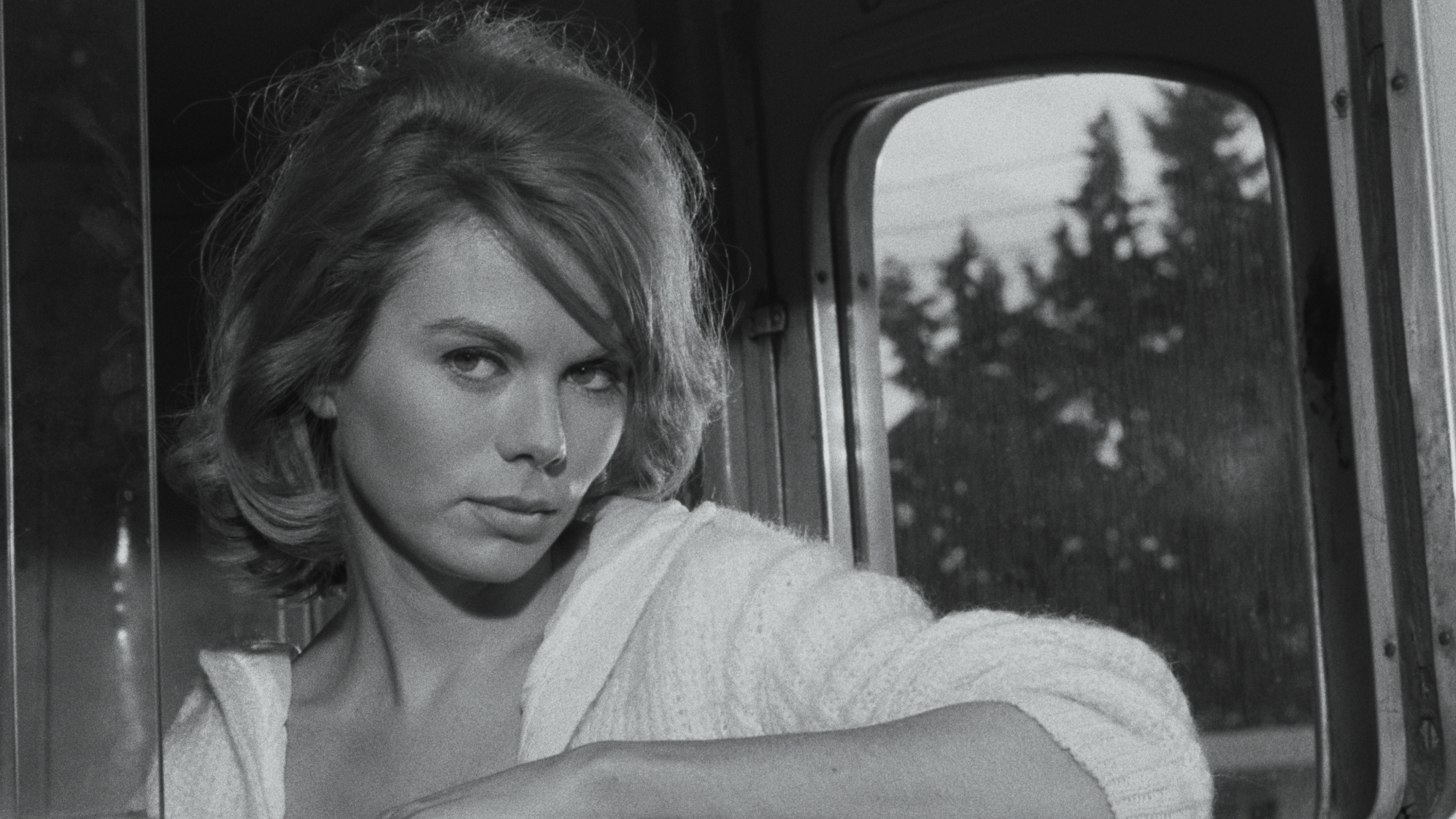
Film notes
Despite its powerful dialogue and the realistic beauty of its imagery, the film figures among the forgotten cinematic works that are essential to rediscover. Its innovative style brings to mind the young filmmakers of the New Wave, particularly Jean-Luc Godard and François Truffaut. Rediscovering Paula Delsol and the rare 35mm prints of her works, one marvels at their surprising modernity but, at the same time, wonders why they have been lost. The film further sets itself apart due to its feminist theme, ahead of its time. In La Dérive, Jacquie, a young woman experiencing family breakdown, is sexually liberated but emotionally dependant on the men she encounters. Through this protagonist, Paula Delsol describes a generation of women who question their place in a relationship, in a family and in society. The work blends a quest for freedom, doubt and danger with the hostile gazes of a still-archaic 1960s France. At the time, very few women are directing films in France. Along with Agnès Varda, Paula Delsol is one of the rare figures to write, produce and direct a feature film far from Paris. She takes on every role: screenwriter, casting director, producer, manager, accountant and filmmaker, all while raising her two children. We cannot but admire her energy and commitment. The film nevertheless receives an enthusiastic reception. Supported by Truffaut, esteemed by Godard and Jean Rouch, Paula Delsol is acknowledged by critics as a member of the New Wave. La Dérive wins the 1964 Grand Prize of film societies and premieres at the Cannes Film Festival. Yet despite such recognition, the film progressively falls into oblivion, and the filmmaker struggles to continue her career. Right up until the very end, Paula Delsol would refuse to be labelled as a “female filmmaker”; she simply wished to be regarded as a filmmaker.
Hervé Pichard