
Film notes
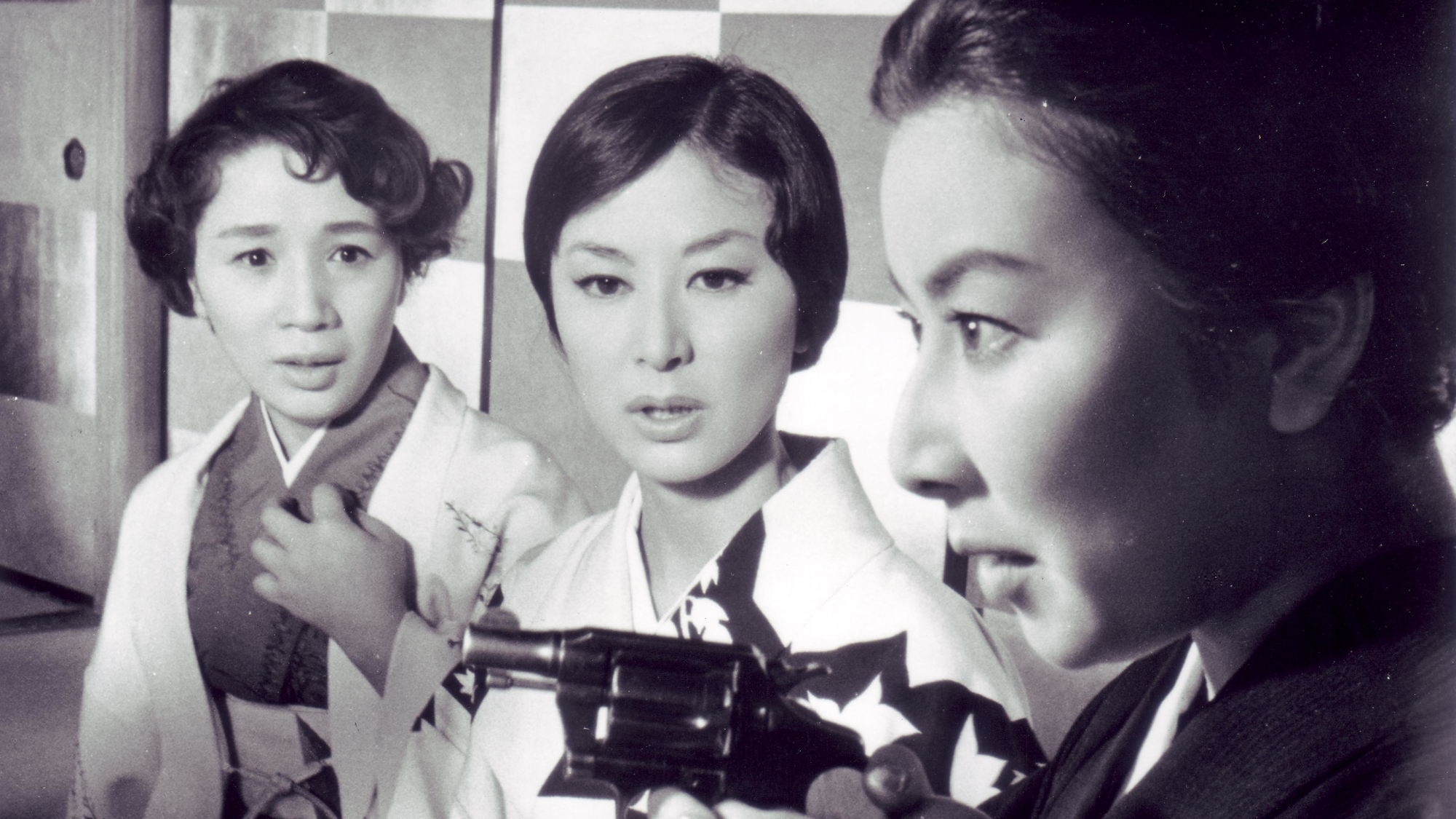
A vile and pathetic television executive has nine mistresses. One day, having joined forces with one another, the women unite with his wife to kill him. The wife, taking pity on him, reveals the plan, and the two stage a fake murder in front of the unknowing mistresses. But the situation quickly becomes more complicated. “Kon Ichikawa made Kuroi junin no onna just after the caustic Bonchi (1960) and before the reproving The Outcast (1962), a period during which the director and his scenarist, Natto Wada, who was also his wife, were turning from the sardonic humour of their earlier pictures to the more serious social censure of the later ones. Kuroi junin no onna is thus balanced between categories: it is both a black comedy about sex and a serious criticism of relationships between the sexes” (Donald Richie). Following a noir-parody opening, the film develops through a series of plot twists toward an unexpected ending, with an ironic and paradoxical style that inverts male and female roles through virtuosic direction (the director produced a meticulous manga-style storyboard) and assembles a gallery of female characters and stereotypes, with touches of satire aimed at the television world. Misunderstood at the time and rediscovered only in subsequent decades, the film further confirms the importance of Wada’s role throughout Ichikawa’s body of work. In the role of a hapless young man, anxious about his career and afflicted by dermatitis, Juzo Itami, the future director of Tampopo, who died in mysterious circumstances in 1997, makes an appearance.
Emiliano Morreale