

Film notes
Many years from now – perhaps thirty 30 later – people will understand this film
Ritwik Ghatak
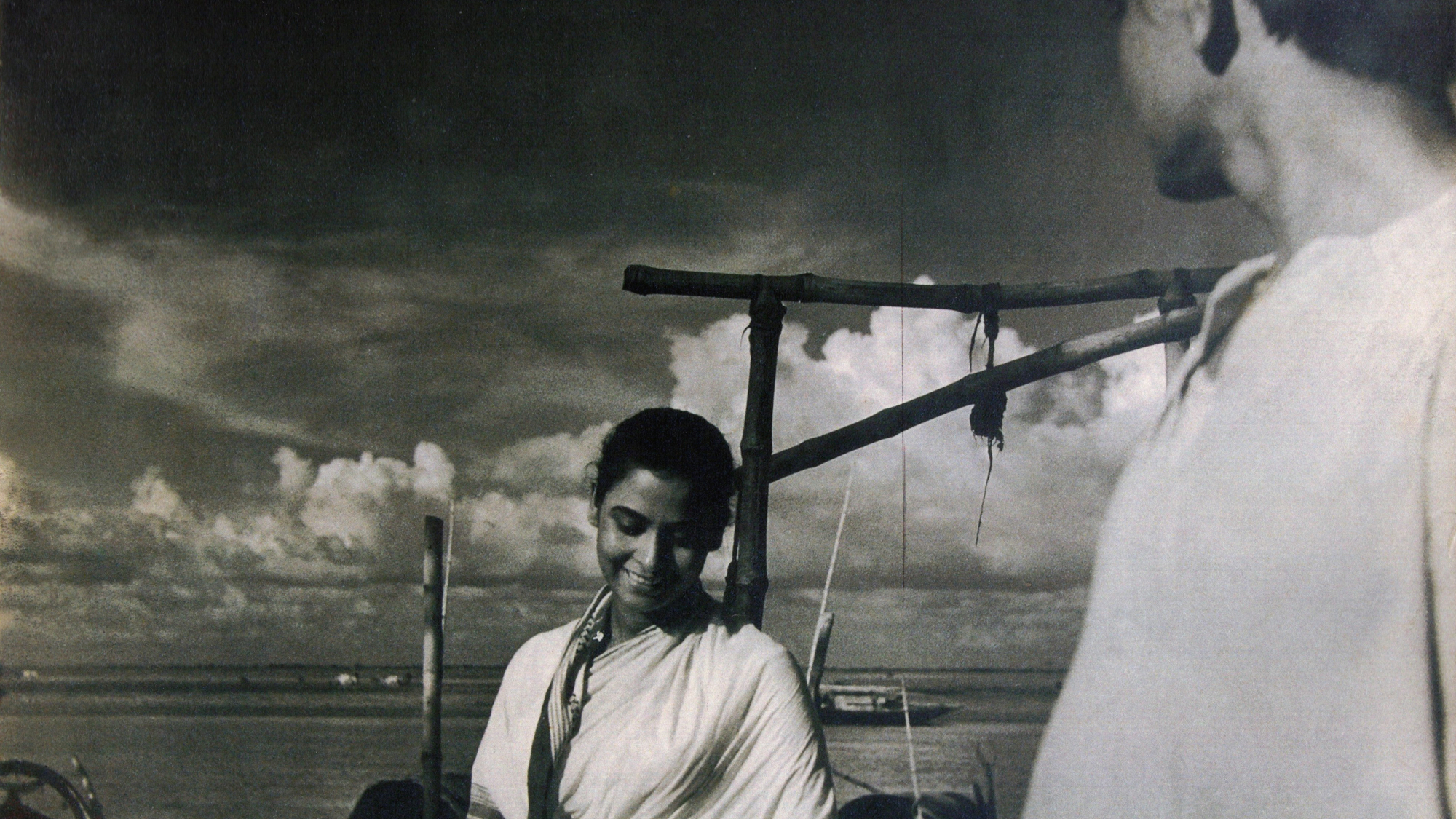
Kumar Shahani and Mani Kaul, noted Indian filmmakers and Ghatak’s students, deemed Komal Gandhar a wonder of cinematic art. Ghatak chose the cultural unity of two Bengals as the subject of this film when the capital accumulated from Meghe Dhaka Tara’s success offered him an opportunity to experiment with film language. The extraordinary narrative is woven from many strands: episodes from contemporary South Asian history, his life and philosophy as an artist, and a critique of the Indian leftist theatre movement. Autobiographical references and self-criticality are common in most of Ghatak’s films, but in Komal Gandhar and his last completed feature, Jukti Takko Aar Gappo – films that are most directly political – Ghatak placed himself at the centre of the story. Inspired by Rabindranath Tagore’s poem, Ghatak named his film Komal Gandhar after a musical note that refers to the flattened third note in the scale, used widely in Ragas/Indian melodic frameworks to create and evoke pathos, longing, or introspection. Trained in Indian classical music, Ghatak was acutely aware that Komal Gandhar carries a distinct emotional flavour which he wanted to integrate in the language of his cinema. Ghatak used the remarkably rich and diverse musical reserve of Bengal to demonstrate the cultural unity of a politically separated people. Komal Gandhar is a cinematic Raga, embodying the musical structure and emotional resonance of loss. This is what makes it relevant 65 years after its release.
Sanghita Sen