
Film notes
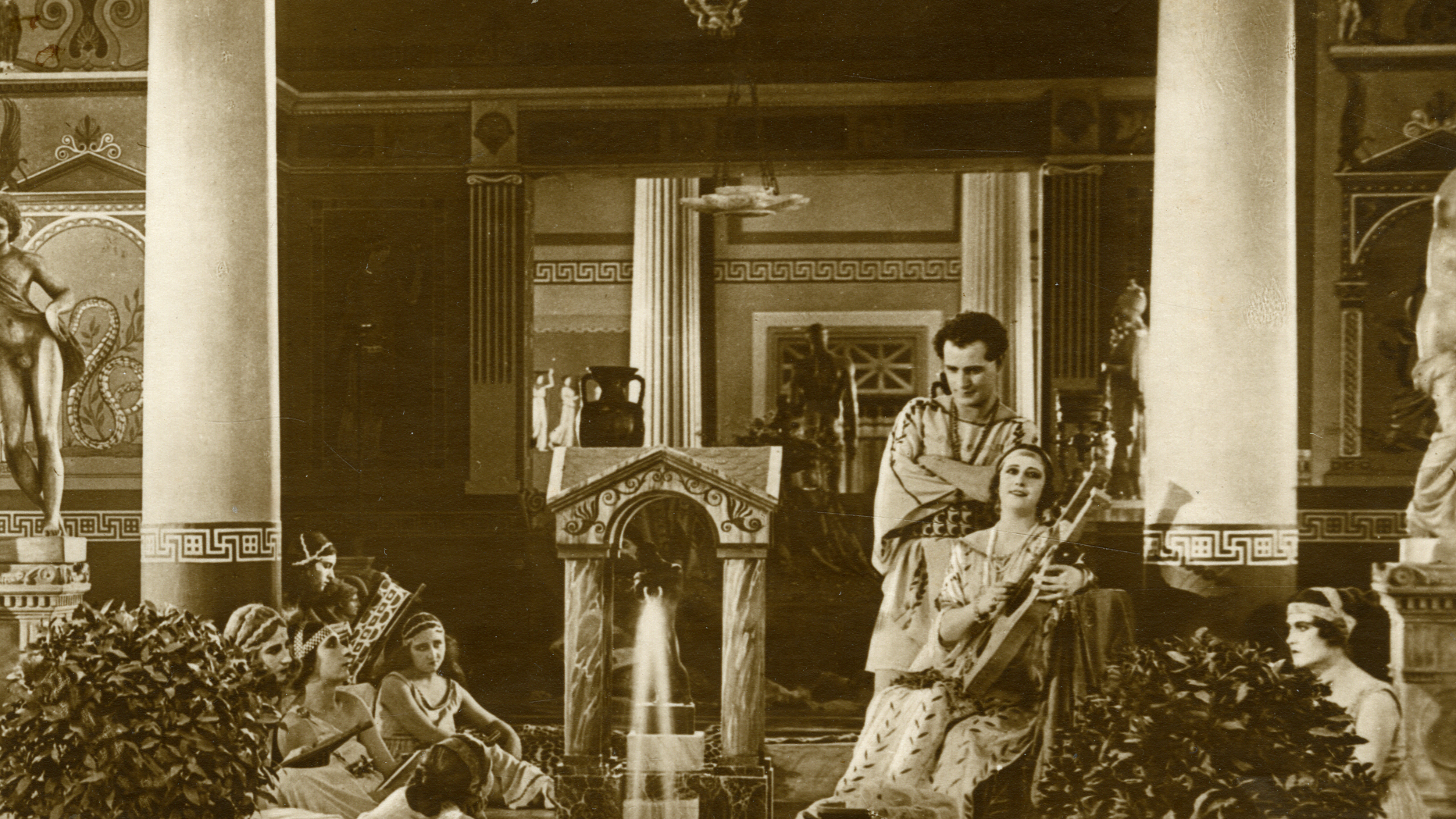
Gli ultimi giorni di Pompei begins with a bravura display of how cinema can reconstruct the ruins of Pompeii, fill it with people and bring it to mobile, dramatic life. High-angled panoramic shots of the excavated site are followed by a rapid montage, in a repeated pattern, showing first a current ruin, then the recreation of its condition in 79 AD, and thirdly its hectic use by citizens of that distant past. The extra-temporal sequence proclaims the medium of film as an improvement on the fragmentariness of archaeology. As the melodramatic narrative of passion, volcanic destruction and death unfolds (adapted from the English novel by Lord Bulwer-Lytton), the camera explores in fine antiquarian detail the monumental architecture of Pompeii’s temples, forum, baths and amphitheatre. The luxurious design of the homes of the hero Glaucus and his beloved Ione draws on the conventions of the Dutch painter Alma-Tadema with their pictorial framing, deep staging, and quotation of famous Pompeian artefacts. At a time of crisis for the Italian film industry, this return to the historical epic in the 1920s was intended to replicate the global success of that genre in the 1910s. Yet this spectacular film also moves beyond earlier versions to explore new (though not entirely successful) directions for presenting Pompeii’s last days. The film shifts modes from the antiquarian to the erotic to the fantastical – the latter in its characterisation of the Egyptian priest Arbaces and his disruptive lust. In his shining palace, the camera unusually tracks back to reveal its huge proportions and its futuristic Art Deco styling. Like a demonic film director, Arbaces uses his magical powers to show Ione the future he desires for her. Her fear at the moving images she sees projected before her neatly captures the way this film tries to reject the detached, tourist gaze on the city of 19th-century imaginings for an impassioned, participatory vision of ancestral suffering.
Maria Wyke