


Film notes
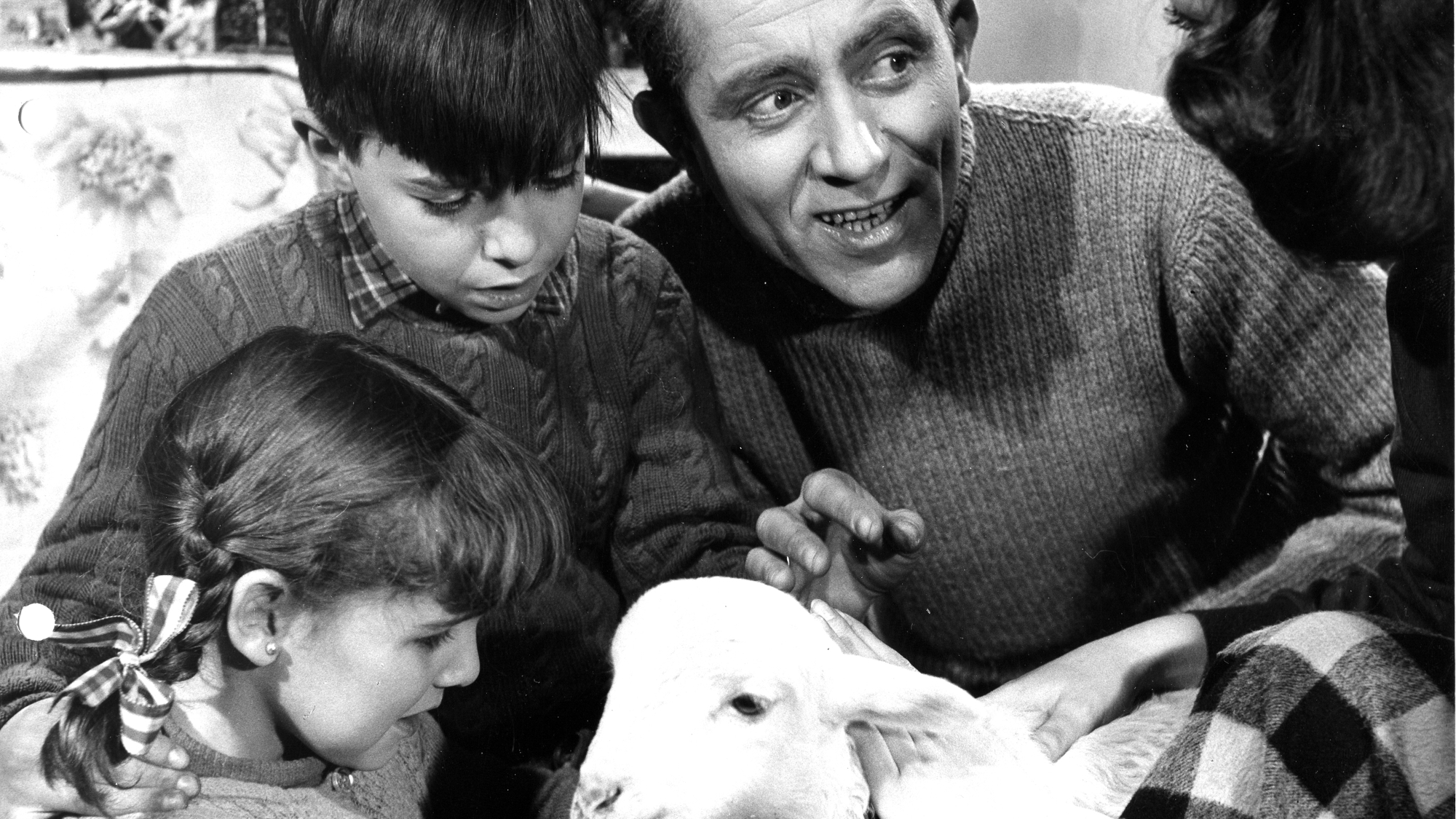
Felices Pascuas arrived in Spanish cinemas seven years before the release of Plácido (Luis García Berlanga), the pre-eminent Christmas film of Iberian cinema. The comparison does not exactly put Juan Antonio Bardem’s film in the best light, but one should not underestimate the sarcasm and tenderness that pervade this humanist tale, nor its narrative premise, which is no less satirical (and animal-friendly). The film centres on two hapless souls who win a lamb in a lottery but, after having decided to eat it on Christmas Eve, find that they have formed an emotional bond with the creature. This apparently yuletide story in fact takes a critical, biting look, tinged with dark humour, at the social rituals of 1950s Spain and distils a genuine comic quality that owes much to the screenwriting collaboration of playwright Alfonso Paso, then highly popular for his lively comedies, rapid-fire dialogue and ingenious situations. Felices Pascuas brings all these aspects together in a generally affable and conformist tone, yet without relinquishing its bitter portrait of the time, as illustrated by certain lines of dialogue that slipped past the strict censorship of the era, with jabs at the Church and the military. The efforts of Juan (Bernard Lajarrigue) to meet social expectations reveal the pressures exerted by the social environment on individuals and families. The film plays on the contrast between the festive spirit and its illusions and the harshness and precariousness of everyday reality. Bardem succeeds in striking a balance between humour and reflection in a work that, beneath its apparent lightness, reveals deep social and emotional tensions. Particularly striking in this regard is the extravagant staging of Salomé in the school Christmas play, which takes up much of the last part of the film.
Carlos Reviriego