Film notes
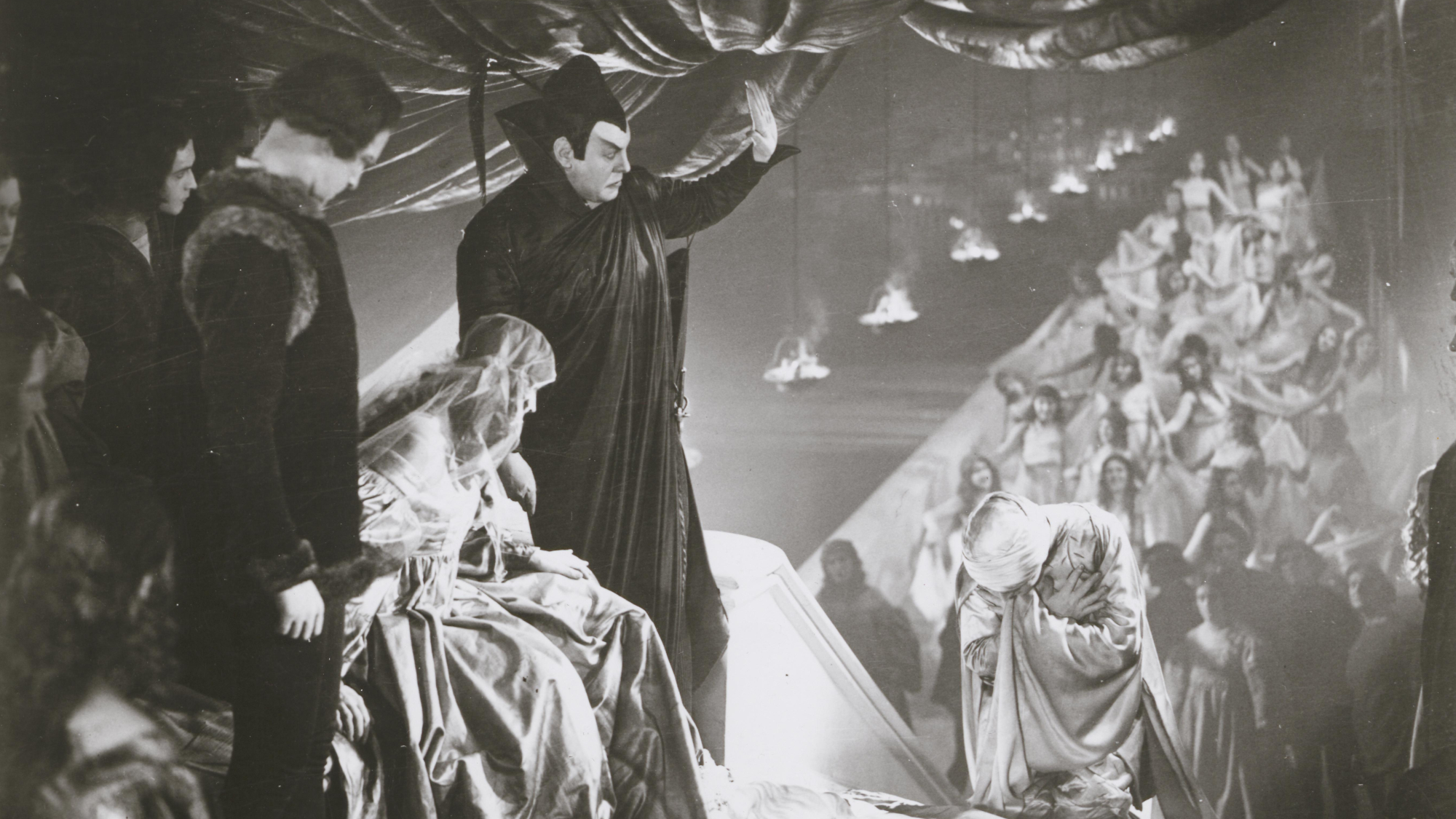
Alongside Fritz Lang’s Die Nibelungen (1924) and Metropolis (1927), Faust was one of a series of large-scale, big-budget productions, with which Germany’s leading film studio UFA hoped to demonstrate its strength in the international arena. Pre-production began as early as 1924, with director Ludwig Berger initially developing the project together with actor Emil Jannings. Difficulties marketing Die Nibelungen in the US convinced UFA that an American star would be vital to the success of Faust, and the studio hoped to cast Lillian Gish as Gretchen. Gish, however, was already under contract to MGM. In the meantime, UFA halted production for a year, replacing Ludwig Berger with F.W. Murnau along the way. Further efforts to borrow Lillian Gish from MGM proved to be unsuccessful, and the part of Faust difficult to cast. John Barrymore (Gish’s preference) and Ramón Novarro both declined, fearing they would be upstaged by Jannings. Swedish actor Gösta Ekman was cast only days before shooting started. Scenes from the first part of the film were shot first, while UFA continued to try to get Gish for the project, to no avail. A desperate Murnau, who had signed a contract with William Fox and was committed to start shooting his first Hollywood production in 1926, cast the young unknown actress Camilla Horn as Gretchen. After Murnau left for America in June 1926, UFA hired author Gerhart Hauptmann to revise the “sloppy” intertitles featured in the work print of Faust. Screenwriter Hans Kyser wrote an open letter condemning Hauptmann’s involvement, concerned that his rhyming titles would deter from the “visionary strength of the film’s visual design”. UFA ultimately did not include Hauptmann’s titles in the finished film but published them in the accompanying souvenir brochure to the premiere on 14 October. Although Faust was a box-office success and sold to several foreign territories, it only managed to recover around half of its production costs. Critics in Germany were sceptical to downright hostile towards the film. Foreign critics, meanwhile, hailed it as a masterpiece of cinematic art and a fascinating play of light and shadow.
Stefan Drössler