
Film notes
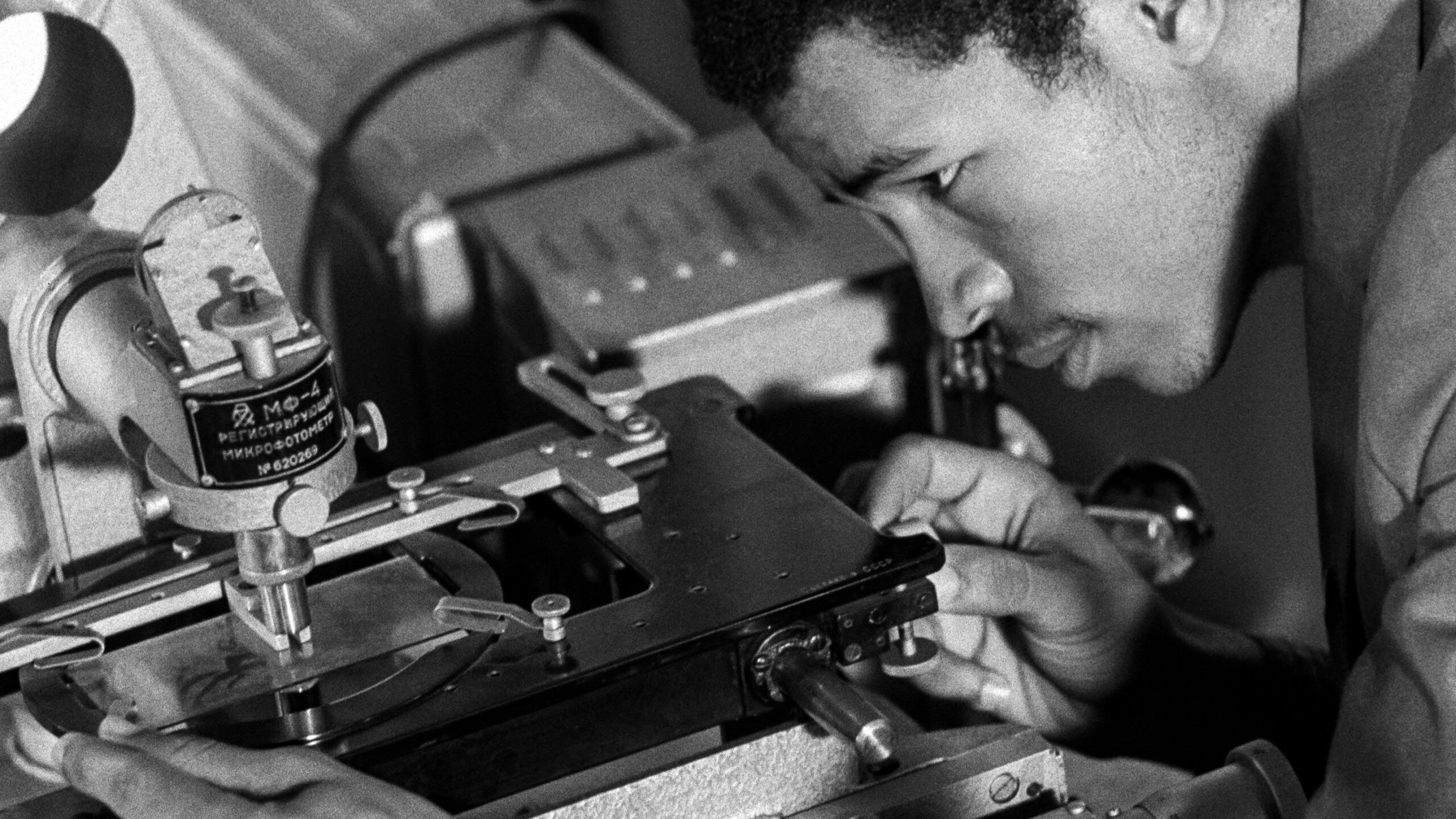
Conceived during Sékoumar Barry’s film school days in Belgrade in the early 1960s, Et vint la liberté, his first and only documentary feature film, was directed within the framework of the tenth anniversary celebrations of Guinea’s independence (1958-1968). Shot in Guinea and edited in Poland, the film is one of the prime examples of cinematic internationalism and symptomatic of some of the socialist routes of African film production from the 1960s, 70s and 80s. Seamlessly navigating between past and present and opening up to poetic futurity, Et vint la liberte offers a Masterclass in Guinean and African history, offering an image of a country boldly embracing modernity by anchoring it in a cultural revolution that embraces its glorious political, historical and cultural heritage of struggle, resistance and tremendous creativity. Among its most memorable sequences are the evocation of the long night of Atlantic enslavement and colonial domination; the rare depiction of Guinea’s historic “No” to De Gaulle’s referendum; and a striking montage of the country’s role in global historical processes including decolonization, the Pan Africanist project and Third World movements, featuring never- before-seen images of President Touré meeting leaders such as Ho Chi Minh, Che Guevara, Fidel Castro, Patrice Lumumba, Kwame Nkrumah, Gamal Abd el Nasser, and J.F. Kennedy. Released in January 1969, this epic documentary, embracing at least 800 years of history, is more than a city symphony. It is a “country/continental symphony,” which explores various registers of the documentary voice and form, at once expository, didactic, historical, poetic and meditative, brilliantly using archival footage and photographs, with extraordinary Guinean musical accompaniment. From a cinephilic standpoint, some scenes and sequences of the film converse with such giants of world cinema as Dziga Vertov, Sergei Eisenstein, Alain Resnais, and may be seen as anticipating aspects of Ousmane Sembène and Med Hondo, among others.
Aboubakar Sanogo