


Film notes
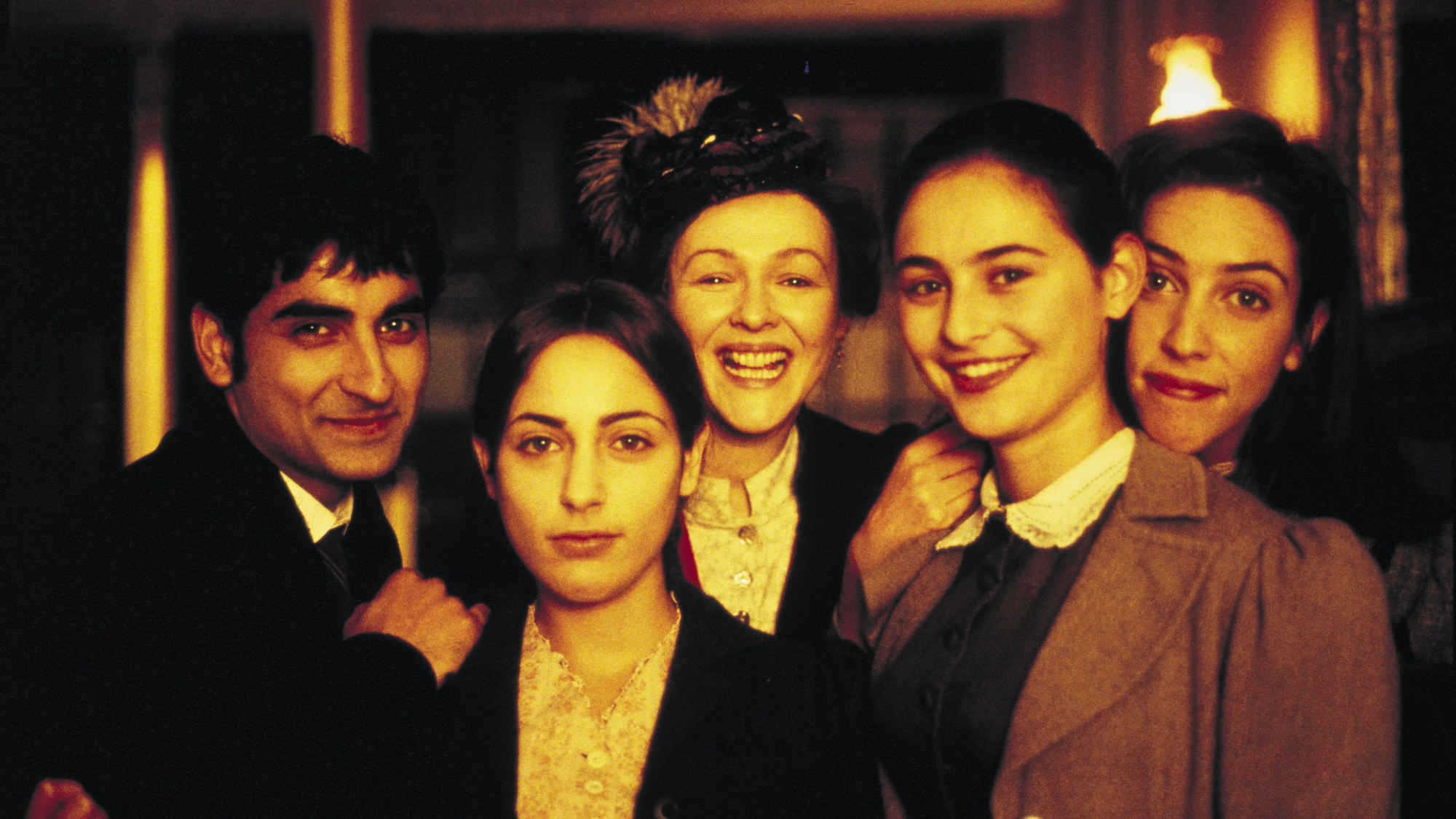
From the short story by Arthur Symons, Arnaud Desplechin and his co-screenwriter Emmanuel Bourdieu have pulled out a rich and captivating film saga that faithfully follows the original plot, while admirably enriching it. Born into a modest Jewish family in turn-of-the-century London, the young Esther Kahn, a somewhat plodding, solitary and withdrawn teenager, discovers the theatre and becomes an actress. She also discovers life and, above all, reasons for living. The structure resembles a double breath, of which there’s only a hint in the short story. The two main drivers are supplied by the original source, namely the character Nathan Quellen (Ian Holm), the old actor with a mere paragraph in Symons’s story, who becomes essential here; and the choice of the English adaptation of Ibsen’s Hedda Gabler as Esther’s first stage success. Adolescence and her first steps lead us to the first climactic moment of the film, a long scene, brilliantly written, acted and directed: Nathan’s acting classes. The second part seems to mark a regression in terms of narrative and form: the love affair with Philippe Haygard, critic, intellectual dandy, seducer… in short, the Frenchman. Lack of charisma, forced conviction and hurried delivery are noticeable in this actor’s portrayal but do not detract from the momentum of Esther’s career, powerfully felt from this point in the film. In fact, the ultimate tour de force (and second high point), the experience of the performance of Hedda Gabler, is breathtaking in its potency, its complexity in stark contrast to everything that came before – that is, it’s everything that makes Esther Kahn the most fluent, most focused film of its writer-director. This grand finale is like the last piece of the jigsaw or the answer to a riddle, and at the same time, an affirmation of maturity on more than one level: maturity of the female lead reaching the culmination of her journey; maturity of a story that finds its goal and raison d’être in this catharsis; maturity of a style of direction freed from the shadows and constraints of “period reconstruction”, to take its place triumphantly as fully rounded cinema.
Yann Tobin, Esther Kahn: Oublier le sens,“Positif ”, n. 476, October 2000