
Film notes
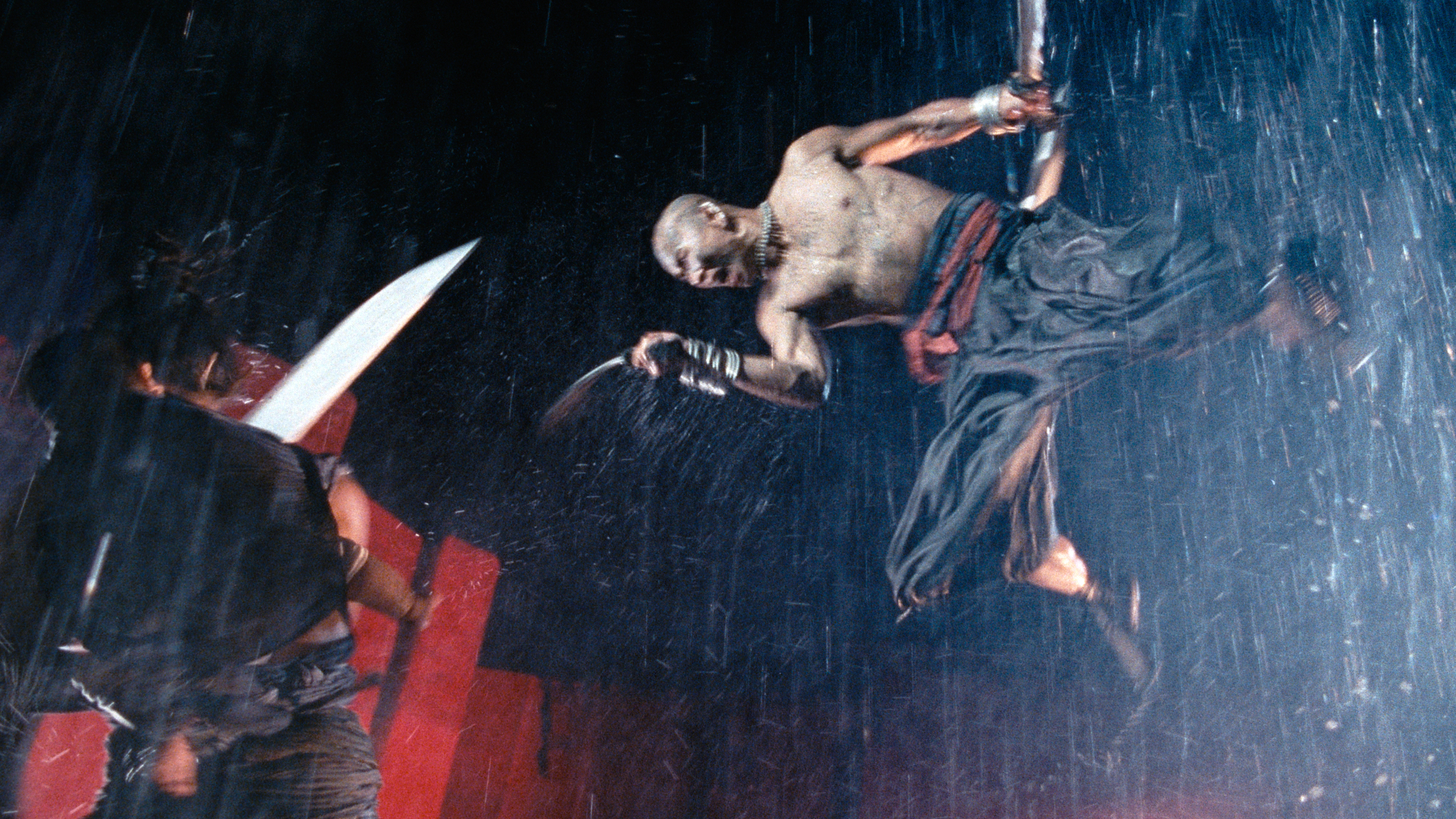
In the phenomenal film Dao, Tsui Hark (assisted by three martial arts directors: Yuen Bun, Mang Hoi and Stephen Tung Wai) dyes the “wuxiapian” with a style never seen before – realistic, raw and turbulent – as if an entire tradition had never existed … Tsui revives a modernist style built on sudden shifts in narrative speed, ellipses and spaces constructed hypothetically and turned inside out. In the frenzied action scenes he frequently omits the culminating moment; in the sequence in which Zhao Wenzhou (Chiu Man-cheuk in Cantonese) loses his arm, the mutilation is never shown, only extreme close-ups and details of the characters’ faces. Similarly, in the final duel between Zhao and Xiong Xinxin, alongside the requisite shots almost always in motion and with both combatants appearing within the frame, there are moments in which the violence of the clash is expressed solely through alternating close-ups, the whirlwind pace of leaps and unexpected details; … there is no longer a system of accents, a logic, however complex, but a way of proceeding that could be compared to a fractal. A cinema moving toward metonymy that returns again to the lesson of King Hu: reality is too fast to be grasped, and cinema, to capture its essence, must make itself equally illegible. Even if the underlying spirit is far darker, and the visionary redemption is gone. Tsui Hark uses elements of Zhang Che’s The One-Armed Swordsman and The New One-Armed Swordsman, and from a misogynistic epic draws a coming-of-age story with a delicate sentimental triangle among three young people, forced to discover in a traumatic way the forces that govern the world: sex and violence. […] Tsui paints a barbaric world, a mirror of the present, arriving in the end at a sense of loss that probably owes something both to Ashes of Time and to Once Upon a Time in America.
Alberto Pezzotta, Tutto il cinema di Hong Kong. Stili, caratteri, autori,
Baldini & Castoldi, Milan 1999