
Film notes
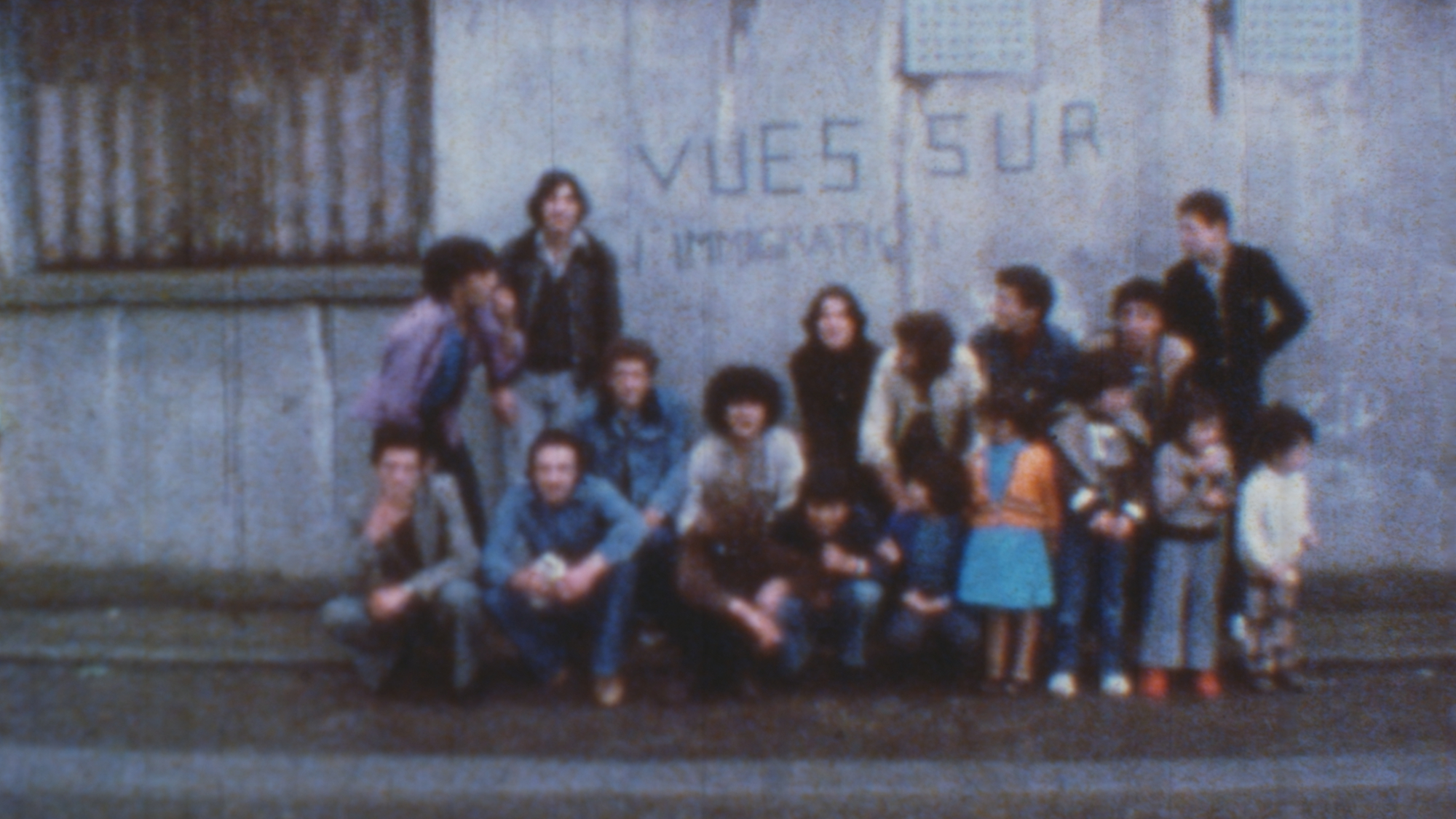
Between 1979 and 1980, a group of very young boys began filming their daily lives in a housing project in the Val-de- Marne on Super 8, using film stock borrowed from the cinema workshop at Jean Macé high school in Vitry. Le Garage was made in 1979, followed by Zone immigrée and Ils ont tué Kader, after a teenager was killed by the caretaker of his building in a stairwell. This triptych reveals a reality silenced at the time – and whose images still resonate today – capturing the pessimism of youth alongside moments of solidarity in the shadow of the tower blocks, the State’s contempt toward working-class neighbourhoods, police violence, and the voracity of the media. “Kader was murdered, and journalists from all three television channels arrived,” recalls Mohamed Salah Azzouzi, director of Zone immigrée and Ils ont tué Kader within the Collectif Mohamed. “TF1 filmed and presented its own version. Shocked by the way we were portrayed, when the Antenne 2 teams arrived we blocked them and took them to watch Zone immigrée in the basements. Faced with the film, they admitted they couldn’t do better: they wanted our images, but on their own terms. I filmed these confrontations because I understood what was at stake – I was afraid of their editing and of being appropriated. We were invisible, and for once that we could show our own images and tell our own stories, we didn’t want to become ‘image fodder’. We wanted our voice to be heard, to show that we were there, alive. We didn’t have an inferiority complex like our parents, nor a superiority complex, but an equality complex: we wanted to be treated like everyone else.” The films circulated in alternative venues before eventually being broadcast on television. Forty years later, Alice Diop, discovering these works, recognised in them a striking precursor to her own practice: “These children of immigrants, gathering scraps of film in the early 1980s to recount what they saw from their own experience, are my direct cinema parents. Their images stutter, but they have the grace of a first gesture.” Emblematic of the work undertaken by the Cinémathèque idéale des banlieues du monde to reshape an alternative history of cinema, the triptych made by the Collectif Mohamed stands as one of the project’s essential cornerstones.
Amélie Galli