

Film notes
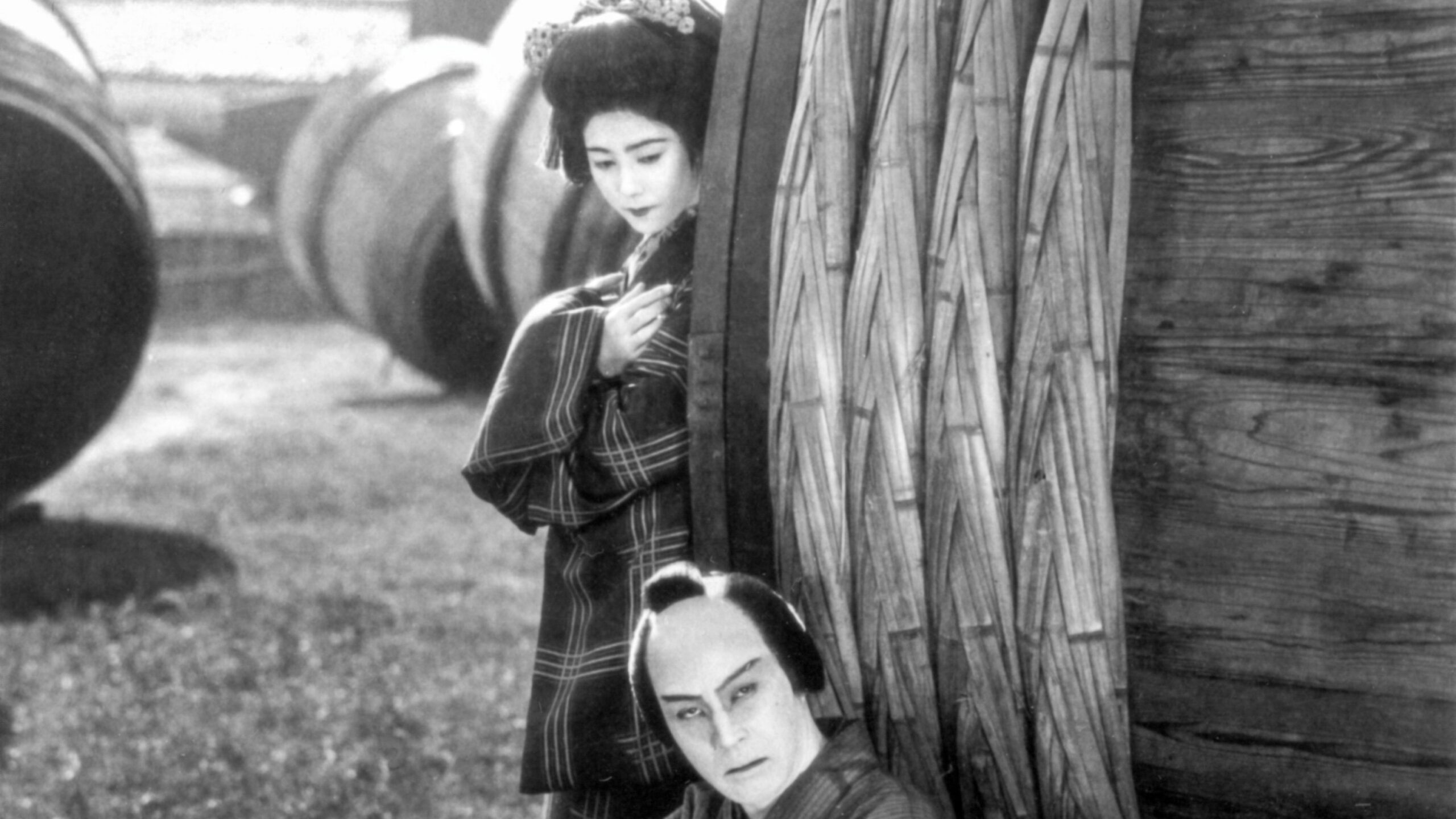
Described by S.A. Thornton as “a deeply pessimistic story of resistance and betrayal”, this is Ito’s most famous film and among the most famous of Japanese silent films. It was exemplary of the so-called shin-jidai-geki, (“new period film”), an innovative mode of socially conscious period film, which took for its protagonist a disgruntled, lonely, nihilistic drifter, pitted against society or the rigid sociopolitical structure of feudal times. Released only a year after the death of pioneering jidai-geki star Matsunosuke Onoe (1875-1926), who had himself played a more conventionally heroic interpretation of Chuji Kunisada in 1925, the film controversially replaced a “righteous Chuji” with a “ruffian Chuji”. The change heralded a fundamental shift in the tone of the period genre. The downbeat mood of Ito’s film owes much to the brooding performance of Denjiro Okochi, a leading light of the jidai-geki.
A three-part epic, Ito’s early masterpiece was for many decades known only by reputation, since no copy was believed to have survived. “Kinema Junpo”’s Kizuo Uchida remarked, prophetically, that the work “will long remain in memory as a classic of the period film”; when, in 1959, the magazine selected the Best Ten films of the Japanese cinema’s first sixty years, it topped the poll. For Junichiro Tanaka, it was “a work of unprecedented artistry”; for Akira Iwasaki, Ito had created a protagonist who gradually “becomes a tragic figure reminiscent of Greek drama”. These critics must have relied on memories of the film’s first release.
In 1991, however, a considerable part of Chuji tabi nikki resurfaced when eight reels of battered nitrate film were rediscovered in Hiroshima. The extant footage includes a section of the second episode and more than half of the concluding episode, including its climax. Although it is a pity that Ito’s epic is still incomplete, the surviving footage preserves, in Mariann Lewinsky’s words, tantalising hints of the original triptych’s “mood modulation in microcosm” and “some remnants of the network of recurring motifs”, which “demonstrate the director’s visual sense and creative power”.
Alexander Jacoby e Johan Nordström